trinka logo Vol 1 | April 2026 | View in Browser
Evaluate AI-assisted assignments with clarity
AI Use
The Shift: From Detection to Transparency
The "detection era" is ending.
Instructors are spending more time investigating than teaching and losing trust in the process.
This month, the signal is clear:
Academic integrity has moved beyond catching misconduct to making learning more visible.
Key Highlights: What’s Changing Right Now
01
Are College Essays Dying? Rethinking Integrity in the AI Era
A student journalist argues that academic integrity should move beyond policing outputs to understanding how AI is used centering transparency and disclosure. (Source: Daily Cardinal) Read More
02
Faculty burnout from AI investigation is now a named crisis
Detection-first strategies are creating constant investigation cycles. Workshops, reviews, disputes and it’s adding up. For many instructors, the workload is becoming unsustainable. (Source: Inside Higher Ed) Read More
03
Detection tools may be driving AI use and not preventing it
A professor at Hostos Community College found that students started experimenting with AI just to “beat the detector.” What was meant to prevent misuse is now encouraging it. (Source: Chronicle) Read More
04
AI Is Forcing a Rethink of What ‘Original Work’ Means
If AI can write the assignment, what does “original work” even mean anymore? Universities are starting to rethink how authorship is defined and what students are actually being evaluated on. (Source: World Economic Forum) Read More

01
How to Create AI Policies That Actually Work in Classrooms
Universities have AI policies on paper, but very few hold up in real teaching environments. The real gap lies in execution, not awareness. See how institutions are moving from broad guidelines to practical, course-level policies that actually work. Read More
02
Assessment is being redesigned from the ground up
At University of Cape Town, academic leaders are moving beyond detection toward assessment models that focus on learning outcomes, not just outputs. (Source: University of Cape Town) Read More
When Policy Isn't Enough: The Case for Process Transparency in Doctoral Exams
Graduate programs are restricting AI use in doctoral qualifying exams, and for good reason. These exams certify a student's knowledge and readiness for independent research; AI use undermines what they are designed to assess.
Graduate deans report a rise in suspected AI use in written qualifying exams, often identified when students cannot reconstruct their own arguments in oral components. This has resulted in expulsions and even costly litigation in which faculty must defend findings through expert judgment and textual comparison, inherently contestable grounds. DocuMark addresses this directly by documenting student writing in real time, creating unambiguous, contemporaneous evidence that protects students, faculty, and institutional reputation alike.
Most qualifying exam policies permit grammar and punctuation support. Doctoral students can responsibly use Trinka for exactly that purpose — precise writing assistance that complements, not replaces, their scholarly voice.
Graduate departments have the policies. Now they need the tools.
Rebecca Bryant, PhD

Rebecca Bryant, PhD

Vice President for Strategic Engagement, Trinka AI


Most Universities Have AI Policies.
But What Do They Really Say?
Access a centralized database of AI policies from top US universities, making it easy to compare how each institution defines responsible student use, coursework rules, and academic integrity standards in one place. Read More


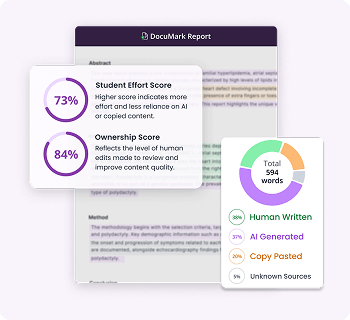
Verify Student Effort Without Detection Tools

See every draft, every revision, every step of how a student's work came together before it was submitted. DocuMark is the solution that gives faculty verifiable evidence of the writing process, so integrity decisions are grounded in what actually happened, not what a detector flagged.

Book a 15-min Demo

documark report
Missed a Past Edition?
Browse our complete archive of newsletters, feature updates, and academic resources
 
Read More
facebook     twitter    linkedin     instagram
support@trinka.ai | www.trinka.ai