trinka logo Vol 1 | June 2026 | View in Browser
Move Beyond AI Detection Scores
AI Use
Dear Academic Leaders,
AI detection scores are increasingly influencing academic misconduct decisions, despite growing evidence that they cannot reliably determine authorship. As institutions rethink their approach to academic integrity, one thing is becoming clear: a detection score alone is not evidence. This month, we examine the research, policies, and practices shaping this shift.

01
How Do Professors Detect AI in 2026? Tools, Accuracy, and False Positives
AI detection is no longer limited to software scores. Faculty are increasingly relying on writing patterns, revision history, and citations to make informed decisions. Read full article
02
AI Cheating Statistics 2026: Academic Misconduct Rates & Trends
Institutions are adapting to growing AI use by strengthening academic integrity policies. The report highlights why misconduct decisions require evidence beyond detection scores. Read full article
03
Universities Are Rethinking AI Policies
Institutions are moving beyond blanket AI restrictions toward policies that emphasize transparency, disclosure, and responsible AI use. Read full article
04
When False Accusations Undermine Trust
False AI accusations can damage student trust and place institutions at risk. An academic integrity process relies on multiple forms of evidence before making misconduct decisions. Read full article

01
What AI Detection Can't Tell You
New research shows that false accusations are an unavoidable limitation of text-only AI detectors, reinforcing the need for human judgment in academic integrity decisions. Read full article
02
Seeing the Writing Process Changes the Conversation
Understanding how a document evolves provides context that AI detectors cannot. Writing history helps faculty evaluate student work with greater confidence and fairness. Read full article
webinar
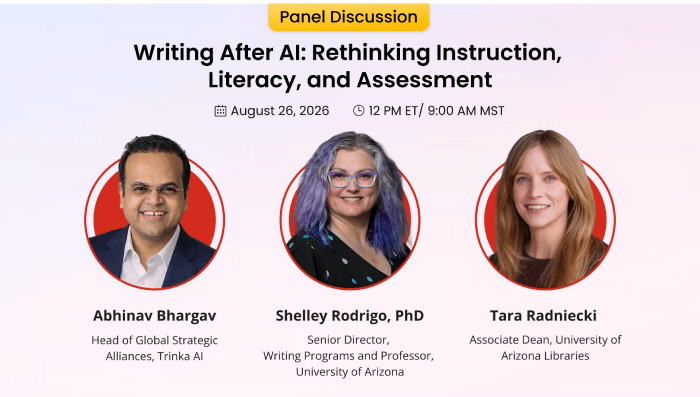
As AI becomes part of student writing, institutions are rethinking instruction, assessment, and academic integrity. Hear academic leaders from the University of Arizona share practical approaches to teaching, assessment, and AI literacy.
Register now


Verify Student Work Beyond AI Detection

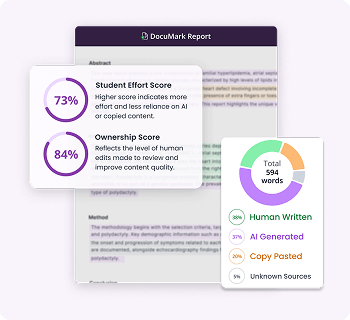
See every draft and revision behind a student's final submission. DocuMark provides verifiable writing evidence, helping faculty make informed academic integrity decisions based on documented student work and not AI detection scores.

Book a demo

documark report
Missed a Past Edition?
Browse our complete archive of newsletters, feature updates, and academic resources
 
Read more
facebook     twitter    linkedin     instagram
support@trinka.ai | www.trinka.ai