


What is Imagery? Meaning, Types and Simple Examples

Imagery is using words that create pictures in the reader’s mind, and using a reliable writing tool like Trinka grammar checker can help make these descriptions even clearer and more impactful.
When reading and visualizing words that appeal to the sense of sight, sound, smell, taste or touch, then you are using imagery.
You use it more than you think. In stories, poems and descriptions used by the author to bring their words to life.
Instead of showing what something is like, imagery lets us feel like we are actually there and is used to translate our flat description into a vivid and alive feeling.
Why is Imagery Important?
Imagery brings writing to life and is easy for the reader to remember and understand. It gives writers the ability to provide their reader with a vivid picture. It can also aid in remembering particular details. Without imagery, writing becomes monotonous and stale.
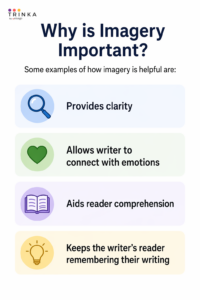
Some examples of how imagery is helpful are:
- Provides clarity
- Allows writer to connect with emotions
- Aids reader comprehension
- Keeps the writer’s reader remembering their writing
Good imagery makes the reader want to get further into the writing. It enables writers to immerse their audience and make them feel as part of the story.
Types of Imagery
There are five common types of imagery, each linked to a sense:
1. Visual Imagery (Sight)
Visual imagery uses words to describe how something appears.
Example:
‘The dark blackness of night seemed to swallow the streetlights’
This allows you to imagine what is being seen.
2. Auditory Imagery (Sound)
Auditory imagery allows you to hear the sound of something.
Example:
‘The loud music pulsed through my chest’
This allows you to feel and imagine how it sounded.
3. Olfactory Imagery (Smell)
Olfactory imagery involves your sense of smell and allows you to imagine how something smells.
Example:
‘The warm fresh bread smelt amazing’
This allows the reader to imagine the delicious smell.
4. Gustatory Imagery (Taste)
Gustatory imagery allows you to taste something that is being written.
Example:
‘The lemonade was sour and refreshing on my tongue’
This allows the reader to really imagine the taste.
5. Tactile Imagery (Touch)
Tactile imagery involves the reader being able to imagine what the written words feel like.
Example:
‘The rough bark scraped my hand’
This allows the reader to imagine how the writing would feel if touching the bark.
6. Kinesthetic Imagery (Movement)
Kinesthetic imagery can be described as the reader having the feeling of movement within the text.
Example:
‘The balloon drifted gently in the breeze’
This allows the writer to really visualize what the balloon was doing.
7. Organic Imagery (Internal Feelings)
Organic imagery is an experience the reader can not physically touch but feels a form of emotion or state such as hunger or fear.
Example:
‘A great sense of dread washed over me’
This allows the reader to visualize and feel a state of fear.
Simple Examples of Imagery
There are countless simple examples of imagery throughout everyday conversation. The following is just a few examples:
- The cool water felt soothing against my sunburnt skin.
- The flashing lights danced across the ceiling.
- The bitter, strong taste of the coffee shocked my taste buds.
How Imagery Works
Imagery can work on two levels: its ability to make a scene more vivid and clear to the reader, and its ability to provoke an emotional response in the writer, enabling them to connect more closely with the character they are writing about.
Using tools like Trinka grammar checker can also help writers refine such descriptions so their imagery feels stronger and more engaging.
Brain activity associated with viewing an image is not far removed from that produced by viewing certain words, as a result of our brains being well developed for translating these language-based words into physical sensations.
Good imagery does two things:
- It makes a scene vivid and memorable for the reader.
- It allows writers to generate emotions and feelings within their reader, provoking a sense of emotional connection between the writer, the character, and their writing.
Imagery vs Other Literary Devices
Imagery may seem a very basic literary device. However, many confuse it with other writing devices.
1. Imagery vs Metaphor
Imagery is when the writer appeals to your senses. A metaphor describes two dissimilar things, by likening them directly.
Example:
Imagery: “The snow felt cold on my hand.”
Metaphor: “The snow was ice.”
2. Imagery vs Simile
Imagery simply describes and evokes what is being read. Simile is a description of one thing in relation to another; it must contain the words “like” or “as”.
Example:
Imagery: “The air was damp and smelled of rain.”
Simile: “The air was as damp as the rest of the ground around me.”
How to Use Imagery in Writing
Imagery is an easy writing device to use and allows writers to translate everyday experience and descriptions to others. This gives others a better insight into their piece of writing.
Tips for Using Imagery
- Use concrete and exact language.
- Appeal to a specific sense.
- Be original.
- Don’t overload your writing.
- Use various senses.
Example:
Instead of: “The painting was attractive”
Use imagery: “The painting was bright and colorful, and the oil-based paints gave it a glossy finish”
Common Mistakes to Avoid
Imagery is not overly difficult to use, but sometimes we fall into bad habits.
Avoid these:
- Overloading your writing with images.
- Writing lengthy descriptions of images.
- Repetitive use of images.
- The use of abstract words rather than concrete nouns and verbs.
Quick Recap for Imagery:
- It is when the reader is able to see, feel, hear, smell and taste words through reading the writing.
- It is a literary device that adds description.
- It keeps the reader interested in the story/writing.
- It allows a writer to develop emotions and feelings within the reader.
Conclusion
Imagery is undoubtedly one of the most powerful tools available to writers of every discipline.
When used effectively, imagery has the power to transform simple descriptions into fully realized worlds for a reader to inhabit.
As technology develops to aid writers even more Trinka Grammar Checker and its effective use will continue to play an integral part in producing strong and compelling content.
Enhance Your Writing with Trinka’s Grammar Checker
Trinka’s Grammar Checker is designed to help writers produce clear, polished, and publication-ready content with ease. Whether you’re drafting academic papers, professional documents, or blog posts, Trinka ensures your writing is precise, consistent, and impactful, making it a trusted companion for anyone aiming to communicate effectively in English.
Frequent Asking Questions
What is imagery in simple words?▼
Imagery means using words to create pictures in the mind. It helps readers see and feel things.
Why is imagery important in writing?▼
Imagery makes writing interesting and clear. It helps readers imagine scenes easily.
What are the main types of imagery?▼
The main types of imagery are:
- Visual (sight)
- Auditory (sound)
- Olfactory (smell)
- Gustatory (taste)
- Tactile (touch)
Can imagery be used in non-fiction writing?▼
Yes, imagery can be used in essays and articles. It helps explain ideas clearly.
What is an example of imagery?▼
“The cold wind touched my face” is imagery. It helps you feel the scene.

-
Go beyond grammar & spelling
Get holistic language improvements - Write with Trinka