
Overview
AI use in higher education is no longer a fringe practice. Recent studies reveal that 92% of higher education students now use AI tools and 88% use Gen-AI for writing their assignments. In response, educators are now relying on AI-content detectors, which in-turn are proving to be unreliable. This is exemplified by the recent incident at the University of Buffalo and research revealing their biased nature towards ESL authors.
This roundtable calls for a shift beyond mere detection of AI cheating and adopt systems that support guided and responsible AI use.
Why is This Topic Relevant?
As academic misconduct becomes harder to detect and prevent, institutions need to rethink integrity frameworks. This discussion highlights the urgency of moving away from punitive detection models to embracing compliance, traceability, and ethical AI adoption. Unlike a webinar, this session is designed for dialogue— academic leaders, administrators, librarians, and industry experts will exchange perspectives, share institutional practices, and co-develop solutions.
Reserve Your Spot Today!
Be part of the conversation shaping the future of academic integrity in the age of AI. Don’t miss this opportunity to learn, engage, and lead the change at your institution.
Agenda Snapshot:
- Welcome & Introductions: Meet your fellow panelists and the moderator
- Framing the Issue: The current realities of AI use and misuse in student submissions
- Interactive Discussion: Challenges in detection, policy gaps, and institutional responses
- Solutions & Insights: Frameworks for authenticity, compliance, and guided AI use
- Wrap-Up & Next Steps: Key takeaways and collaborative actions
Discussion Outcomes:
- Gain clarity on the current state of AI in student submissions and its impact on academic integrity
- Overview of AI cheating and other emerging challenges affecting academic integrity in research and non-research submissions
- Understand the limitations of AI detectors and risks of bias
- Explore practical institutional frameworks and tools to address AI-generated content
- Learn strategies to balance AI as a support tool instead of a replacement
- Hear directly from faculty, administrators, and industry leaders on guiding students towards ethical AI use
Attend the Roundtable if You Are:
- University faculty and department heads
- Academic administrators and policy decision-makers
- Librarians and research ethics officers
- EdTech professionals and compliance experts
- Industry partners in academic publishing and higher education innovation
- AI literacy experts, ethicists, and scholars
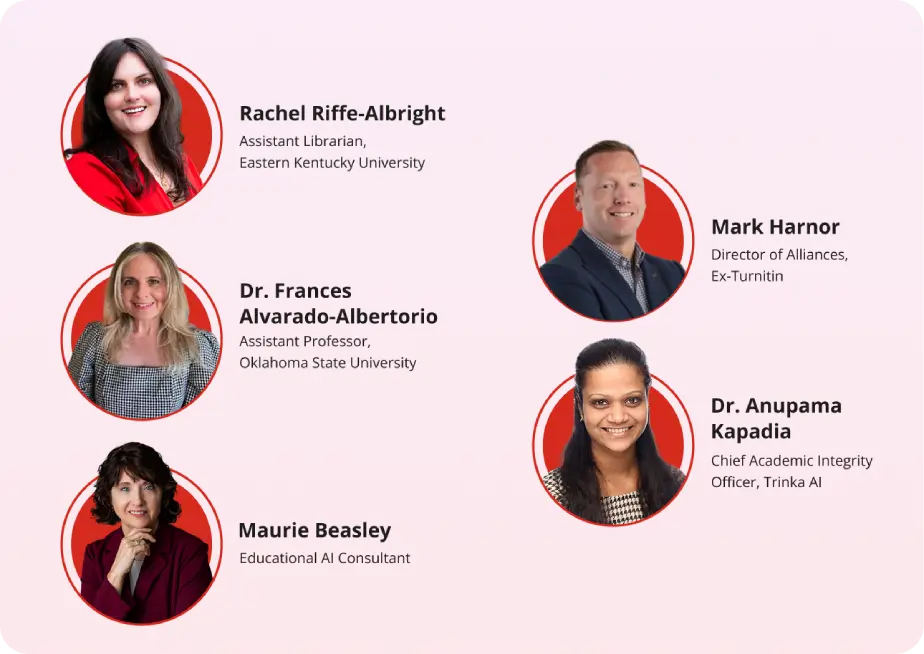
Speaker's Profile

Rachel Riffe-Albright
Assistant Librarian, Eastern Kentucky University
Rachel Riffe-Albright is a dedicated health sciences librarian and educator committed to ensuring equitable access to quality medical information. With a Master of Science in Library and Information Science from the University of Illinois at Urbana-Champaign, she has honed her expertise in information literacy, research support, and digital health resources.
Rachel's professional journey includes internships and practicums with organizations like Forge Biologics, where she contributed to advancing medical research and education. Her work emphasizes the importance of integrating information science principles into healthcare settings to enhance patient care and support medical professionals.
An advocate for the role of libraries in advancing healthcare knowledge, Rachel actively engages in discussions about the intersection of information science and health. She has participated in panels and discussions, such as those addressing the impact of AI training on librarians and publishers, highlighting her commitment to staying at the forefront of technological advancements in her field.
Through her work, Rachel strives to empower individuals and communities by providing access to reliable medical information, fostering informed decision-making, and promoting health literacy across diverse populations.

Maurie Beasley
Educational AI Consultant
Maurie Beasley is a dynamic educator, entrepreneur, and AI innovator with over two decades of experience transforming K–12 learning environments. She has served in critical roles—teacher, tech coach, school counselor, assistant principal, and system administrator—bringing a uniquely holistic perspective to academic leadership.
A gifted speaker, author, and advocate for equitable AI literacy, Maurie has delivered talks and workshops to prepare today’s students for tomorrow. Her impactful blend of educational insight, tech leadership, and empathy fuels her mission to empower educators, elevate student learning, and demystify AI for all.

Dr. Frances Alvarado-Albertorio
Assistant Professor - Graduate Initiatives & Engagement Librarian, Oklahoma State University
Dr. Frances Alvarado-Albertorio is a seasoned academic and educator at Oklahoma State University, with over a decade of expertise in teaching, research, and innovation in higher education. Her scholarly work spans critical areas such as organizational behavior, technology integration, blended and distance learning environments, information literacy, and open access—marking her as a distinguished thought leader in educational technology and information.
As a champion of educational equity and digital empowerment, Dr. Alvarado-Albertorio plays a pivotal role in shaping how institutions integrate pedagogy and technology. She is a dynamic speaker and collaborator, passionately advancing the intersections of research, teaching, and digital innovation. Her vision and expertise continue to inspire transformative change in learning communities everywhere.

Mark Harnor
Director of Alliances,
Ex-Turnitin
Mark Harnor is an EdTech leader best known for his impactful tenure at Turnitin, where he played a key role in advancing global conversations on academic integrity, assessment transformation, and digital feedback workflows. At Turnitin, he collaborated with universities and educators worldwide to champion solutions that not only safeguard research and learning standards but also reimagine how assessment and feedback can be delivered in the digital age.
Beyond Turnitin, Mark has continued to shape the education technology landscape by building strategic partnerships and supporting institutions in adopting next-generation tools that enhance learning outcomes. A regular speaker at leading industry forums, he is adept at translating complex EdTech innovations into accessible narratives, inspiring educators and policymakers alike with stories of how technology can elevate teaching, uphold integrity, and empower students.

Dr. Anupama Kapadia
Chief Academic Integrity Officer, Trinka AI
Dr. Anupama Kapadia is a licensed specialist in Physical Medicine and Rehabilitation (Orthopedics) by qualification and academic integrity specialist by vocation. With over 18 years of experience in academic and scholarly communications, she specializes in student and researcher training, including promoting academic integrity. She leads content and learning initiatives at Trinka AI and Enago, focusing on ethical writing & publishing, peer review, and research transparency. Dr. Kapadia is an active committee member of organizations like ISMPP, MAPS, COPE, ISMTE, ALPSP, C4DISC, etc., where she plays an active role in knowledge sharing within the community and helping establish best practices in education, research, and publishing.