


AI Detection vs Plagiarism Detection vs DocuMark: Which Should Universities Use?

The Real Problem Universities Face Today
As generative AI becomes part of everyday learning, educators are expected to make fair decisions about the authenticity of student work, often relying on AI detection and plagiarism detection tools to support those decisions.
AI detection looks for signs of AI-generated writing, while plagiarism detection identifies copied content. Both help address important academic integrity concerns, but they only evaluate the final submission by the student. They do not show how the assignment was developed or how the student arrived at the finished work.
Without visibility into the writing process, educators are making decisions based only on the final submission. Understanding what each approach does, and where its limitations lie, is the first step toward choosing the right solution for today’s academic environment.
Understanding the Three Approaches
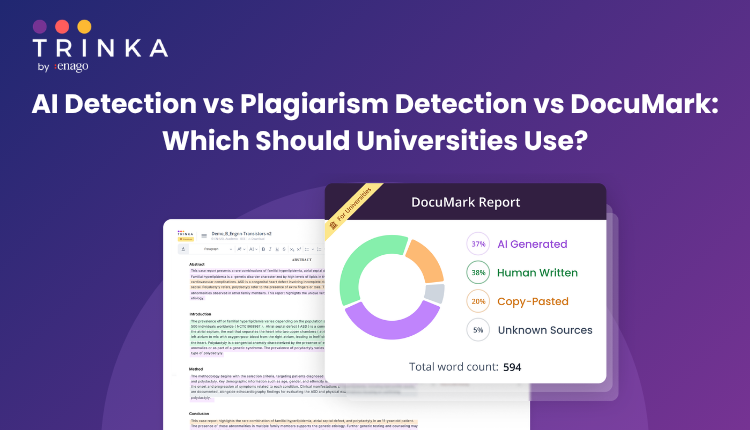
Universities today use different tools to protect academic integrity. AI detection helps identify AI-generated writing. Plagiarism detection identifies the originality of the user’s content. DocuMark takes a different approach by bringing transparency to the writing process, showing how an assignment was developed from start to finish.
Understanding what each approach does, and what it cannot show, helps universities choose the right tools for fair assessment.
What AI Detection Does
AI detection tools scan a finished essay and ask one question: Was this written by AI?
They look for writing patterns commonly associated with AI, such as consistent word choices, predictable sentence structure, and an even writing style. If these patterns are found, the tool may flag the submission.
The challenge is that AI detection cannot show how AI was used. A student may use AI to brainstorm ideas or create an outline and still write the assignment independently. The tool cannot always distinguish between appropriate assistance and overreliance on AI. False positives are another concern while using AI detectors. Studies have shown that some human-written work can be incorrectly flagged as AI-generated.
At its core, AI detection analyzes the final piece of writing and estimates the likelihood of AI use. It does not provide transparency of how the work was actually created.
What Plagiarism Detection Does
Plagiarism detection tools ask one question: Was this content copied from another source?
They compare a student’s submission against websites, published articles, books, and previously submitted papers. When matching text is found, the tool highlights it and shows where it came from.
This works well for identifying copied content. However, plagiarism detection does not identify AI-generated writing because AI-generated text is usually original and has nothing to match against.
It can also miss heavily paraphrased content. If a student rewrites someone else’s ideas without proper citation, enough changes may prevent the tool from finding a match.
The Gap Both Tools Leave Behind
AI detection identifies possible AI use in the student’s work. Plagiarism detection identifies copied content or closely matched text from existing sources. Together, they address important academic integrity concerns, but they still leave key questions unanswered.
Neither tool can show:
- How the assignment was created from first draft to final submission.
- Who actually completed the work and how much of it was the student’s own.
- The student’s writing process, including revisions, pauses, and effort.
- Documented insights that supports fair academic integrity decisions.
How DocuMark Works Differently
DocuMark is an academic integrity tool helping educators shift from inaccurate AI detection to learning outcomes, just like pre-ChatGPT era.
With DocuMark, educators can see:
- Writing process transparency: A complete view of how the assignment was developed over time.
- Writing activity: Keystrokes, revisions, pauses, and copy-and-paste actions that show the student’s writing journey.
- AI usage visibility: See how much of the assignment involved AI and where it was used.
- Citation verification: Automatic checks to help verify cited sources before the assignment is submitted.
- Documented insights: A documented record of the assignment’s development that supports educators in assessment and helps students understand their own writing journey.
Instead of estimating whether AI was used by analyzing the final document, DocuMark provides documented insights of how the work was created.
Comparing the Three Approaches
| Feature | AI Detection | Plagiarism Detection | DocuMark |
| Primary purpose | Identifies possible AI-generated writing | Identifies copied or closely matched text from existing sources | Brings transparency to the writing process |
| Analyzes | Final submission | Final submission | Entire writing journey |
| Shows | Probability of AI use | Matching text and sources | How the assignment was created, including revisions and AI interactions |
| Answers | Was AI likely used? | Was content copied? | How was the assignment created? |
| Supports | AI use review | Plagiarism review | Fair assessment through documented writing process |
Each approach serves a different purpose. AI detection and plagiarism detection help review the final submission, while DocuMark provides visibility into the writing process. Together, they give universities a more complete approach to supporting academic integrity.
Conclusion
AI detection and plagiarism detection remain common tools for reviewing the final submission. It cannot show how an assignment was actually developed or the effort behind it.
That is where writing process transparency adds value. By documenting the writing journey from the first draft to the final submission, DocuMark provides the context that final-document analysis alone cannot.
As AI continues to shape education, universities need approaches that go beyond evaluating the final document.
Enhance Your Writing with Trinka’s Grammar Checker
Trinka’s Grammar Checker is designed to help writers produce clear, polished, and publication-ready content with ease. Whether you’re drafting academic papers, professional documents, or blog posts, Trinka ensures your writing is precise, consistent, and impactful, making it a trusted companion for anyone aiming to communicate effectively in English.

-
Go beyond grammar & spelling
Get holistic language improvements - Write with Trinka