


Plagiarism Check: Why the Tool You Use Matters Most

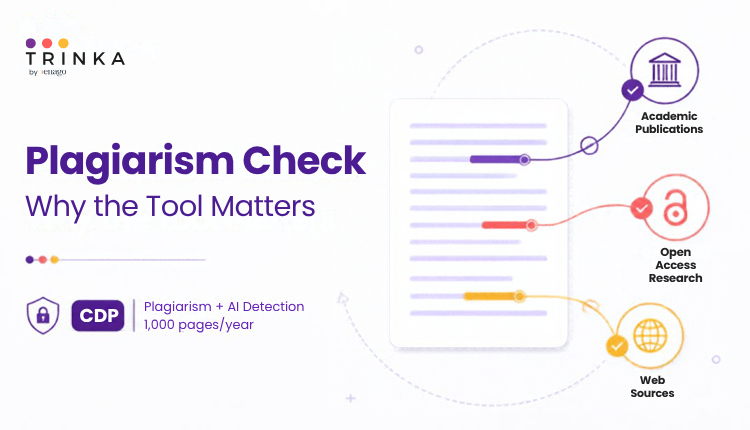
Running a plagiarism check has become a routine step before submitting a paper. Most people pick whatever tool is free or appears first in a search, run the check, and move on.
That approach misses something important. The same document can receive very different results depending on which tool checks it because the result depends on what the tool compares your work against.
Why Different Plagiarism Checkers Give Different Results
A plagiarism score is not a fixed, universal number. It is a measure of how much your text overlaps with the content available in the tool’s database.
A checker that only scans public web pages may miss overlap with a paywalled journal article. A checker with a small academic database may miss a paper published years ago in a niche publication. Two tools can run the same document and return very different scores, and both can be accurate based on the sources they searched.
This is why the tool matters as much as the act of checking itself.
What a Plagiarism Checker Actually Needs to Have
A few things separate a checker that can identify meaningful overlap from one that may provide a false sense of security.
Database Depth and Breadth
A strong checker should compare content against paid academic publications, open-access repositories, and general web content rather than relying on only one source type.
Real Publisher Coverage
Look at whether the tool has access to content from major academic publishers. Simply indexing web pages that contain journal content is not the same as having meaningful coverage of scholarly publications.
A Source-by-Source Report
A single percentage score tells you very little on its own. A useful report should show which sources matched, where the overlap appears, and how the matched content relates to the document being checked.
Detection Beyond Exact Text
Light rewording or paraphrasing should not automatically make overlapping content invisible. A capable checker should be able to identify meaningful similarities beyond straightforward copy-and-paste matches.
Clear Handling of Your Document
It is important to know what happens to your document after the report is generated. Check whether the tool stores uploaded content or adds it to a database that may be used for future comparisons.
Reliable File Support
A plagiarism checker should work reliably with common academic file formats, including Word and PDF, without disrupting the document’s structure during the checking process.
Where a Weak Tool Actually Costs You
The difference between tools is not just theoretical. A checker with limited database coverage can clear a paper that contains genuine, uncaught overlap.
That paper may then move forward to submission and encounter a journal’s or institution’s plagiarism checker, which may search a much broader collection of academic and web sources than the free tool used during the initial review.
At that point, the overlap gets flagged later, when more may be at stake. The initial check provided reassurance, but it did not necessarily test the document against the sources that mattered most.
Where Trinka Fits
For teams that regularly review research papers, manuscripts, or other sensitive content, Trinka’s Confidential Data Plan (CDP) brings plagiarism and AI detection together under one plan. It includes 1,000 pages of plagiarism or AI detection per year, along with 1 Advanced report every month, giving teams a larger allowance for recurring document checks.
This can be useful for researchers, medical writers, and organizations that need to check multiple documents throughout the year without relying on separate tools for plagiarism and AI detection.
Conclusion
A plagiarism score only has meaning in the context of the tool and database behind it. Before trusting a result, check what sources the tool compares against, how it reports matches, and what happens to your document after the check.
Choosing the right plagiarism checker is therefore not simply about finding a tool that produces a percentage. It is about making sure the check actually covers the sources and types of overlap that matter for your work.
Key Takeaways
- A plagiarism score reflects the database searched, not a universal measure of originality.
- A useful checker provides a source-by-source report, not just a percentage.
- Strong checkers can identify meaningful overlap beyond exact text matches.
- Choosing a checker with broad database coverage matters when evaluating plagiarism risk.
Enhance Your Writing with Trinka’s Grammar Checker
Trinka’s Grammar Checker is designed to help writers produce clear, polished, and publication-ready content with ease. Whether you’re drafting academic papers, professional documents, or blog posts, Trinka ensures your writing is precise, consistent, and impactful, making it a trusted companion for anyone aiming to communicate effectively in English.
Frequently Asked Questions
Why do different plagiarism checkers give different scores for the same paper?▼
Each tool compares your text against its own database, and no two databases are identical.
Is a low plagiarism score always a good sign?▼
Not necessarily. A low score from a tool with limited database coverage can miss genuine overlap.
Can paraphrasing help a paper avoid detection?▼
Light rewording may still be detected by tools that identify meaningful similarities beyond exact text matches.
What happens to my document after I run a plagiarism check?▼
It depends on the tool. Some services store submitted documents, so checking the tool’s data-handling policy is important.

-
Go beyond grammar & spelling
Get holistic language improvements - Write with Trinka