


Librarians and AI: helping first-year students own their work

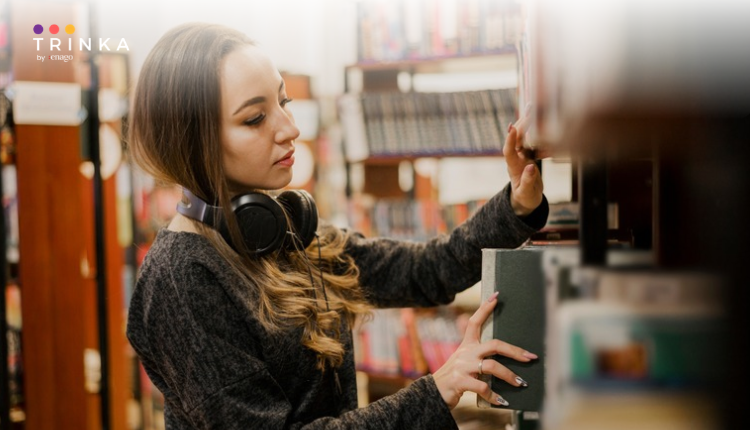
A first-year student stops at the library desk with her essay open on a laptop. She doesn’t want help finding sources. She wants to know whether her draft will get her accused of using AI.
Librarians help first-year students own their writing process by making the process visible and open to discussion. They already teach research and information literacy. Now they also guide students through responsible AI use, drafting, and revision. When students see how their work develops, academic integrity becomes part of learning instead of a final checkpoint.
Oklahoma State University (OSU) tested this idea in a librarian-led pilot. Librarians already support academic integrity and responsible authorship in ways most policies overlook. The pilot shows what the work looks like in a real classroom, and what students said about it afterward.
Why first-year students worry about AI accusations
First-year students arrive without a clear sense of what counts as their own work. One course allows AI for brainstorming. Another bans it outright. Students guess, and guessing breeds anxiety. Many avoid asking about AI use at all, because the question itself feels like an admission.
Detection tools score a finished essay and return a probability. A 2023 study in Patterns tested seven detectors on essays by non-native English writers and found an average false positive rate of 61%. People wrote every one of those essays. Times Higher Education reported the authors’ warning. Detectors penalize writers with a narrower range of vocabulary.
Why policy and detection alone leave students without guidance
Policies tell students what is forbidden. They rarely show students how to work. Faculty carry heavy loads, and policies lag behind the tools students use. The gap is structural, not a personal failure.
Detection-first approaches add suspicion after submission. Faculty receive a score and little else. Students receive a verdict with no way to respond. Nobody talks about the writing itself.
Treating the writing process as a learning resource
Librarians already teach research as a process. Students refine a question, search, weigh sources, and revise. Writing follows the same pattern, and it benefits from the same coaching. Librarians also sit outside the grading relationship. Students often ask them questions they would hold back from an instructor, which suits a conversation about AI use where honesty matters more than polish.
What the Oklahoma State pilot showed about writing process ownership
In an honors seminar, Rosser built a writing process documentation platform into a signature assignment on academic integrity, surveillance, and AI. Students didn’t treat the platform as a submission portal. They experienced process transparency while writing about it.
The essays covered surveillance, data ownership, and transparency, and the students’ own sessions were documented as they wrote. The assignment asked for reflection instead of compliance. A vertical flow with labeled stages: assignment and AI policy, outline, first draft, revision, student reflection with the librarian, instructor conversation. It shows librarians and faculty where process records fit at each stage, which matches Rosser’s idea of using the tool beyond final submission.
Students also saw their own sessions, revisions, and composition patterns. The development of the work became visible, not only the final file. Rosser summed up the lesson this way.
“Not the scores. The process.”
Confidence shifted too. Before using DocuMark platform, every surveyed student reported at least some concern about a false accusation of AI misuse. By the end of the pilot, 37.5% of students reported no concern at all. Students described the process record as evidence of their own work, not something to fear.
How process records improve classroom conversations
Rosser found the greatest value in reviewing how students worked, not only what they submitted. Process records supported more targeted feedback. Instructors responded to a student’s approach to writing, not only the finished essay. Records also give students language. A student who points to three revisions and a rewritten thesis has a concrete way to explain the work in a conversation about authorship.
In a first-year writing course, the approach might look like this. A librarian visits during drafting week. Students open their own session histories and mark where AI helped, where it didn’t, and where they changed direction. The instructor then meets each student with a shared record, and the conversation starts from evidence.
Rosser also sees room to apply the tool across outlines, first drafts, and revisions. Conversations about writing then become formative throughout the assignment instead of arriving after submission. One course is enough to start. No institution-wide rollout is required.
Privacy deserves a plain answer. Students should know from the syllabus what the record captures, who sees it, and how long the institution keeps it. The OSU assignment treated those questions as course content, which made the discussion honest from the first week.
What first-year students gain when the process is visible
The OSU pilot showed librarians helping first-year students understand and own their writing process. Students who see their own journey explain their work with more confidence. Academic integrity stops acting as a final checkpoint and becomes part of the learning.
Faculty and librarians working through the policy-to-practice gap use writing process documentation tools like DocuMark to replace probabilistic suspicion with structured, reviewable records.
A first-year student learns the most when someone asks how the work came together.
Enhance Your Writing with Trinka’s Grammar Checker
Trinka’s Grammar Checker is designed to help writers produce clear, polished, and publication-ready content with ease. Whether you’re drafting academic papers, professional documents, or blog posts, Trinka ensures your writing is precise, consistent, and impactful, making it a trusted companion for anyone aiming to communicate effectively in English.

-
Go beyond grammar & spelling
Get holistic language improvements - Write with Trinka