


Top Academic Integrity Tools for Faculty and Higher Education Institutions

Academic integrity in higher education is evolving with the rise of generative AI. Universities today need more than traditional approaches to maintain trust, support responsible AI use, and evaluate authentic student learning.
A strong academic integrity framework combines clear policies, faculty guidance, student AI literacy, and technology that helps institutions make informed decisions. The right tools can support educators across writing, research, learning, and assessment workflows.
- Academic Writing and Integrity Support Tools
Academic writing support tools help students and faculty improve writing quality while maintaining academic standards. These solutions support responsible writing practices through feedback, language improvement, and research-focused assistance.
Trinka AI
An AI-powered writing assistant designed for academic and technical writing. Trinka helps researchers, students, and faculty improve grammar, language clarity, and academic style while supporting responsible writing practices.
DocuMark
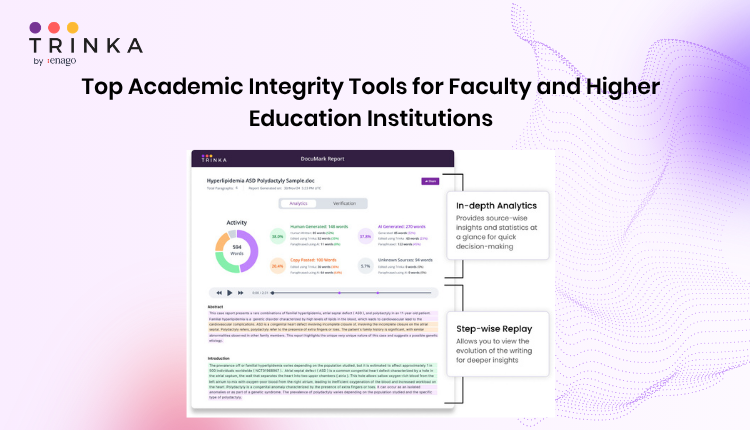
Helps universities verify student work by providing visibility into the writing process. It combines writing composition history, AI writing indicators, and text similarity insights to help faculty understand how assignments develop over time.
- Learning and Faculty Productivity Tools
Faculty manage multiple responsibilities, including course preparation, student engagement, documentation, and academic planning. Productivity tools can help streamline daily workflows and improve teaching efficiency.
Notion AI
A workspace tool that combines note-taking, documentation, planning, and collaboration features, helping faculty organize course materials, research notes, and academic projects.
Quizlet
Supports learning through digital flashcards, practice activities, and study resources that help students reinforce concepts beyond classroom sessions.
Otter.ai
Provides automated transcription for lectures, meetings, and discussions, helping faculty create accessible learning resources and capture important academic conversations.
- Research and Academic Discovery Tools
Research remains central to higher education. AI-powered research tools can help faculty and students discover relevant studies, explore evidence, and organize academic information more efficiently.
Google Scholar
A widely used academic search platform that helps users find scholarly articles, books, conference papers, and citation information across disciplines.
Perplexity AI
An AI-powered search assistant that provides summarized responses with source references, helping users explore topics and identify relevant information faster.
Consensus
Uses AI to analyze peer-reviewed research and provide evidence-based insights from scientific studies, helping users understand research findings more effectively.
- Assessment and Student Work Verification Tools
As AI changes how students create assignments, universities need approaches that go beyond reviewing only the final submission. Faculty need evidence that helps them understand student contribution, writing development, and learning progress.
DocuMark
Helps faculty verify student work by providing visibility into the complete writing journey. It captures writing history, revisions, AI writing indicators, and text similarity insights, allowing educators to make evidence-based academic decisions.
By understanding how an assignment was created, faculty can support fair evaluation while reducing dependence on a single detection score.
Building a Balanced Academic Integrity Strategy
Technology is only one part of maintaining academic integrity. Universities need a balanced approach that combines:
- Clear AI usage policies
- Faculty training and guidance
- Student AI literacy
- Evidence-based evaluation methods
Tools should support academic judgment, not replace it. The goal is to help institutions create transparent learning environments where students understand expectations and faculty have the context needed to evaluate work fairly.
Conclusion: Supporting Authentic Learning in the AI Era
Academic integrity in higher education requires more than identifying potential issues. Universities need tools that support responsible writing, effective teaching, meaningful research, and transparent assessment.
By combining the right technology with clear policies and faculty guidance, institutions can strengthen academic practices while preparing students for an AI-enabled future.
Enhance Your Writing with Trinka’s Grammar Checker
Trinka’s Grammar Checker is designed to help writers produce clear, polished, and publication-ready content with ease. Whether you’re drafting academic papers, professional documents, or blog posts, Trinka ensures your writing is precise, consistent, and impactful, making it a trusted companion for anyone aiming to communicate effectively in English.

-
Go beyond grammar & spelling
Get holistic language improvements - Write with Trinka