


Why Which AI Detector You Use Actually Matters

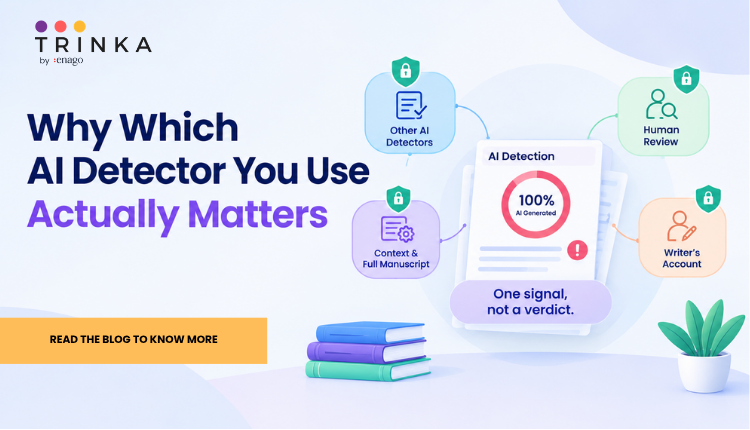
In February 2026, a New York state court ruled on a case that’s worth paying attention to if you rely on AI detection for anything serious. In Matter of Newby v. Adelphi University, a Nassau County Supreme Court judge found that the university’s disciplinary finding against a student was without merit, and ordered the record expunged.
The finding had rested on a single data point: an AI detector had scored the student’s paper as 100% AI-generated. The student maintained he wrote it himself, using only a grammar tool. Two other detectors he ran the same paper through cleared it as human-written.
What Actually Happened
The student, a first-year at Adelphi, submitted a history paper that a professor ran through Turnitin’s AI detection feature. The tool returned a 100% AI-generated score. The student was found in violation of the university’s academic integrity policy, given a failing grade on the assignment, and required to complete an anti-plagiarism course, with a second offense carrying the risk of suspension.
The court’s review found the process itself was the problem. A single detector’s score had been treated as conclusive evidence, without weighing the student’s denial, the conflicting results from other tools, or the broader unreliability documented in AI detection generally.
This Isn’t an Isolated Story
The Newby case is notable, but it isn’t unique. Independent research over the past two years has repeatedly found that AI detectors misfire more often than their marketing suggests.
- A widely cited Stanford study found detectors flagged writing from non-native English speakers as AI-generated at a far higher rate than writing from native speakers, since simpler vocabulary and more predictable sentence structure often resemble the patterns detectors are trained to flag.
- Research compiled by Common Sense Media found detectors flagged essays from Black students at a noticeably higher rate than essays from white students.
- Detector vendors, including Turnitin, have publicly stated their tools should not be used as the sole basis for an academic integrity decision, even while advertising accuracy rates near 99%.
None of this means detection tools are useless. It means the specific tool, and how its score gets used, carries real consequences.
The Real Lesson From This Case
The court didn’t rule that AI detection is invalid. It ruled that treating one tool’s score as final proof, without context or corroboration, was not a defensible process.
That distinction matters for anyone using these tools, whether it’s a university reviewing student work, a journal screening submissions, or a researcher checking their own manuscript before sending it anywhere. A detector score is a signal, not a verdict. Treating it as anything more is where these cases keep going wrong.
What to Look for in an AI Detector
A few questions are worth asking before trusting any detector’s output, whether you’re an institution choosing one or an individual relying on one for your own peace of mind.
- Is the accuracy figure independently verified, or only self-reported? A vendor’s own claimed accuracy rate is not the same as a third-party evaluation run across a large, diverse set of writing samples.
- How does it perform across different writing styles? A detector tuned mainly on casual or marketing text will behave differently on dense academic or technical writing.
- What does the vendor itself say about how the score should be used? If a company’s own guidance says not to treat the score as sole evidence, that’s worth taking seriously before anyone else does.
- Does it explain its reasoning, or just output a number? A detector that shows which sections triggered a flag is easier to review critically than one that returns a single percentage.
Where Independent Benchmarking Comes In
This is where third-party benchmarks matter more than vendor claims. Trinka’s AI Detector is ranked #1 on the RAID Benchmark, an independent evaluation testing detectors across more than 600,000 text samples spanning 11 different AI models, including paraphrased and lightly edited text. That kind of testing, run outside the vendor’s own marketing, is a meaningfully different form of evidence than a company stating its own accuracy figure.
For researchers and writers handling unpublished or sensitive material, it also matters that a check doesn’t create a new copy of the document somewhere else. For teams on Trinka’s Confidential Data Plan, that detection runs under the same confidentiality terms as the rest of the platform: content isn’t stored beyond the session or used to train any model.
Conclusion
The Adelphi case is a reminder that an AI detector’s score is only as good as the process built around it, and the tool behind that score deserves real scrutiny before anyone treats it as fact. Choosing a detector with independently verified accuracy, and using its output as one part of a decision rather than the whole decision, is what actually protects both institutions and the people whose work gets checked.
Key Takeaways
- A court found that treating a single AI detector’s score as conclusive proof was not a defensible process.
- Independent research has repeatedly documented uneven false-positive rates across detectors, particularly for non-native English and Black students.
- Even detector vendors caution against using their own score as sole evidence.
- Independently verified accuracy, such as a RAID Benchmark ranking, is a stronger signal than a vendor’s self-reported number.
Enhance Your Writing with Trinka’s Grammar Checker
Trinka’s Grammar Checker is designed to help writers produce clear, polished, and publication-ready content with ease. Whether you’re drafting academic papers, professional documents, or blog posts, Trinka ensures your writing is precise, consistent, and impactful, making it a trusted companion for anyone aiming to communicate effectively in English.
Frequently Asked Questions
What happened in the Newby v. Adelphi case?▼
A New York state court found a university’s AI plagiarism finding against a student was without merit, after the finding relied solely on one detector’s score.
Was this a federal court ruling?▼
No, it was a New York State Supreme Court (Nassau County) decision, not a federal case.
Does this mean AI detectors shouldn't be used at all?▼
No, the ruling addressed how the score was used, not whether detection tools have value as one input among several.
What should I look for when choosing an AI detector?▼
Independently verified accuracy, transparent methodology, and clear guidance from the vendor on how the score should and shouldn’t be used.

-
Go beyond grammar & spelling
Get holistic language improvements - Write with Trinka