Teaching & Learning
- Use of AI in graded coursework is determined by the instructor
- The university also advises instructors to make clear what level of AI use is acceptable for assignments and whether disclosure is required
- Students are expected to follow the AI expectations stated in each course syllabus, and using AI in a way that violates those expectations can be treated as academic dishonesty
At the University of Idaho, whether AI can be used in a class is up to each instructor. Students should review their syllabus for AI use guidance and should ask their professor if they are unsure.
It is a violation of academic integrity policy to use AI in a class if the syllabus or the instructor has specifically forbidden or limited the use of AI.
Faculty should communicate expectations to students. This can include whether and how AI tools may be used for learning, assignments, and assessments as well as your expectations for disclosure and attribution.
Consider the specific learning goals of your course and determine what level of AI use should be permitted in your class.
- Assessment-related AI use is not governed by a single university-wide permission rule; instructors are directed to decide whether AI use is appropriate based on the kind of assessment
- The university recommends clarifying whether AI is allowed, restricted, or prohibited in exams and other assessments, and warns that AI use against instructor rules is an academic integrity violation
Faculty should communicate expectations to students. This can include whether and how AI tools may be used for learning, assignments, and assessments as well as your expectations for disclosure and attribution.
Assess the type of assessment and if AI use is appropriate.
It is a violation of academic integrity policy to use AI in a class if the syllabus or the instructor has specifically forbidden or limited the use of AI.
- Students may use AI for learning support when an instructor allows it, but the university does not set one universal rule across all courses
- Institutional guidance frames AI as a tool that can support learning and asks faculty to explain how students may use it for learning activities
At the University of Idaho, whether AI can be used in a class is up to each instructor. Students should review their syllabus for AI use guidance and should ask their professor if they are unsure.
Faculty should communicate expectations to students. This can include whether and how AI tools may be used for learning, assignments, and assessments as well as your expectations for disclosure and attribution.
AI cannot replace good teaching and learning. However, we can use AI to support learning.
- The reviewed university sources do not set a specific policy for AI-assisted coding or programming assignments
- Any programming-related use would therefore fall under general course-level instructor expectations rather than a distinct university rule
not defined
Research
- A graduate handbook also prohibits using AI to compose thesis or dissertation text without the committee's permission
- AI cannot be listed as an author, and users are told to verify accuracy, watch for bias or fabricated citations, and follow publisher disclosure rules
- The university permits researchers to use AI tools in manuscript preparation, such as drafting, editing, summarizing, and revising, but requires human responsibility for the final work
AI can be helpful for brainstorming, editing, and improving writing style, but it also creates important challenges around accuracy, authorship, and transparency.
AI should not be listed as an author on any scholarly work. Authors are responsible for everything in the manuscript.
Many journals now require authors to disclose how AI was used in preparing a manuscript. This usually includes naming the tool and describing what it was used for.
Researchers should verify all outputs from AI, including text, citations, and analysis. AI tools can generate false or biased information.
Any direct AI-generated content should be clearly identified if submitted to a journal, conference, or publisher.
Do not use any AI source to write your thesis/dissertation for you without your major professor and/or committee's knowledge and permission. This can constitute academic dishonesty.
- The university allows AI to be used in research administration and research-related analytical tasks, but requires human verification and careful handling of sensitive information
- Researchers are told not to upload confidential, proprietary, or personally identifiable information into public AI tools and to verify AI-generated analyses because outputs may be inaccurate or biased
Potential Uses of AI in Research Administration
• Drafting reports, summaries, or routine communications
• Brainstorming project ideas or outreach language
• Summarizing policy or sponsor guidance
• Organizing literature or reference material
• Assisting with early-stage data analysis or coding support
Never upload confidential, proprietary, or personally identifiable information (PII) into public AI tools.
Researchers should verify all outputs from AI, including text, citations, and analysis. AI tools can generate false or biased information.
- The university's research guidance requires researchers to protect confidential and regulated information when using AI and to remain accountable for the accuracy and integrity of AI-assisted outputs
- It also states that sponsor, publisher, and institutional rules may impose disclosure or approval requirements, and a graduate handbook warns that undisclosed AI writing in theses or dissertations can be academic dishonesty
Never upload confidential, proprietary, or personally identifiable information (PII) into public AI tools.
Always follow agency, sponsor, and institutional rules before using AI in proposal development, review, or reporting.
Researchers should verify all outputs from AI, including text, citations, and analysis. AI tools can generate false or biased information.
Do not use any AI source to write your thesis/dissertation for you without your major professor and/or committee's knowledge and permission. This can constitute academic dishonesty.
Academic Integrity
- Faculty are encouraged to tell students what disclosure and attribution standards apply in their courses
- Disclosure and attribution expectations are required when instructors set them for coursework, and the university provides citation guidance for AI-generated content
- It recommends acknowledging both the AI tool and the prompts used, and for research manuscripts it states that many journals require disclosure of the specific tool and its use
If a course syllabus states that AI is allowed with attribution, then failing to disclose/cite the use of AI as instructed by the professor would be a violation of academic integrity policy.
In cases where AI use is permitted, students should make sure to follow all instructor guidelines. If your professor expects you to cite or disclose your use of AI and you fail to do so, that could constitute academic dishonesty.
When using AI-generated content, include a statement acknowledging the AI tool used and the prompts provided.
Acknowledge the AI and human contributions clearly.
Faculty should communicate expectations to students. This can include whether and how AI tools may be used for learning, assignments, and assessments as well as your expectations for disclosure and attribution.
Many journals now require authors to disclose how AI was used in preparing a manuscript. This usually includes naming the tool and describing what it was used for.
- Undisclosed or prohibited AI use can be pursued through the university's academic integrity process
- The university cautions that AI detection tools are unreliable and says they should not be used as the sole evidence of misconduct; instead, faculty should rely on multiple forms of evidence and follow the student code and academic dishonesty procedures
It is a violation of academic integrity policy to use AI in a class if the syllabus or the instructor has specifically forbidden or limited the use of AI.
If a course syllabus states that AI is allowed with attribution, then failing to disclose/cite the use of AI as instructed by the professor would be a violation of academic integrity policy.
AI detection tools have significant limitations and should not be relied on as the sole basis for an accusation of academic misconduct.
These tools can produce false positives and false negatives.
Faculty should use multiple forms of evidence and follow university academic dishonesty procedures when concerns arise.
Students accused of AI-related misconduct are entitled to the same due process protections as in other academic integrity cases.
Institutional & Administrative
- Faculty are encouraged to use AI in teaching-related work with intentional human oversight and clear communication to students
- Research administration guidance also allows staff use for routine drafting and summarization tasks, subject to institutional rules and data protections
- The university directs instructors to decide where AI is appropriate in course design and assessment, to review AI outputs for accuracy and bias, and to avoid using AI as a substitute for their own judgment
Faculty should communicate expectations to students. This can include whether and how AI tools may be used for learning, assignments, and assessments as well as your expectations for disclosure and attribution.
Consider the specific learning goals of your course and determine what level of AI use should be permitted in your class.
Assess the type of assessment and if AI use is appropriate.
AI cannot replace good teaching and learning. However, we can use AI to support learning.
Potential Uses of AI in Research Administration
• Drafting reports, summaries, or routine communications
• Brainstorming project ideas or outreach language
• Summarizing policy or sponsor guidance
• Organizing literature or reference material
• Assisting with early-stage data analysis or coding support
Always follow agency, sponsor, and institutional rules before using AI in proposal development, review, or reporting.
- The university permits use of institutionally provided Google AI tools and separately warns users not to place restricted data into public AI systems
- University guidance states that protected, confidential, proprietary, or personally identifiable data must not be uploaded to public AI tools, and campus knowledge-base materials identify approved Google Gemini access for university users
Never upload confidential, proprietary, or personally identifiable information (PII) into public AI tools.
Student Access to Google AI Tools Now Available
University of Idaho students, faculty and staff now have access to Google AI tools through their university accounts.
Google Gemini Education is available to all current University of Idaho students, faculty and staff through their university Google account.
- The university has established formal AI governance through presidential working groups and an AI Execution Group, and it presents AI adoption as an institutional strategy across academic and administrative functions
- Its public AI initiative provides university-wide guidance on teaching, assessment, academic integrity, attribution, and campus access to AI tools, showing an organized institutional approach rather than isolated course-level guidance
President's Working Groups
Artificial Intelligence and Emerging Technologies
University of Idaho AI Execution Group Formed
The University of Idaho has formed an AI Execution Group to coordinate the thoughtful, strategic implementation of artificial intelligence across the university.
The group will work to identify opportunities, assess risks, and help guide AI-related decisions, resources and practices in ways that support the university's mission.
The University of Idaho AI website is a central resource for guidance, tools and updates related to artificial intelligence across teaching, learning, research and operations.
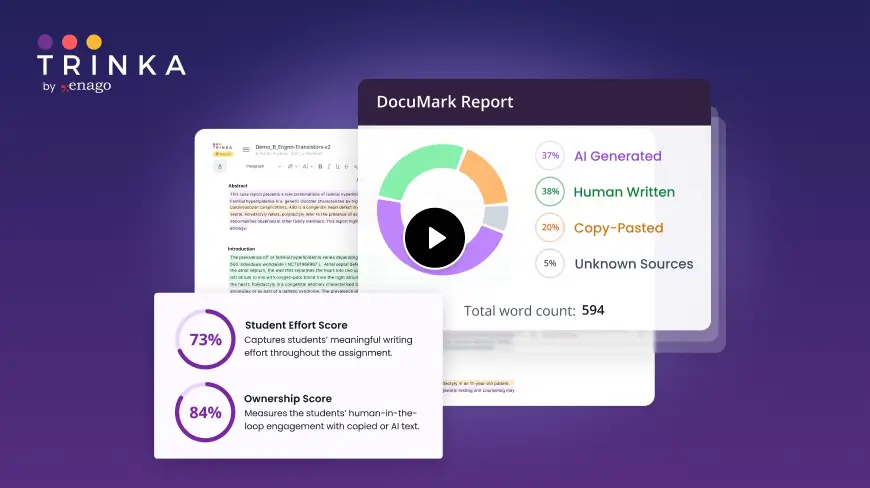
DocuMark: Responsible AI Use for Academic Integrity
Knowing your institution's AI policy is step one. DocuMark helps enforce it fairly by empowering universities to manage AI-generated content, prevent cheating, and support student writing through responsible AI use.
Common Questions About University of Idaho's AI Policies
University of Idaho has defined AI policies in 12 of 12 categories, with an overall coverage score of 100%.
Disclosure and attribution expectations are required when instructors set them for coursework, and the university provides citation guidance for AI-generated content. It recommends acknowledging both the AI tool and the prompts used, and for research manuscripts it states that many journals require disclosure of the specific tool and its use. Faculty are encouraged to tell students what disclosure and attribution standards apply in their courses.
Undisclosed or prohibited AI use can be pursued through the university's academic integrity process. The university cautions that AI detection tools are unreliable and says they should not be used as the sole evidence of misconduct; instead, faculty should rely on multiple forms of evidence and follow the student code and academic dishonesty procedures.
The university permits use of institutionally provided Google AI tools and separately warns users not to place restricted data into public AI systems. University guidance states that protected, confidential, proprietary, or personally identifiable data must not be uploaded to public AI tools, and campus knowledge-base materials identify approved Google Gemini access for university users.