


Sharing Manuscript Drafts Safely With Co-Authors

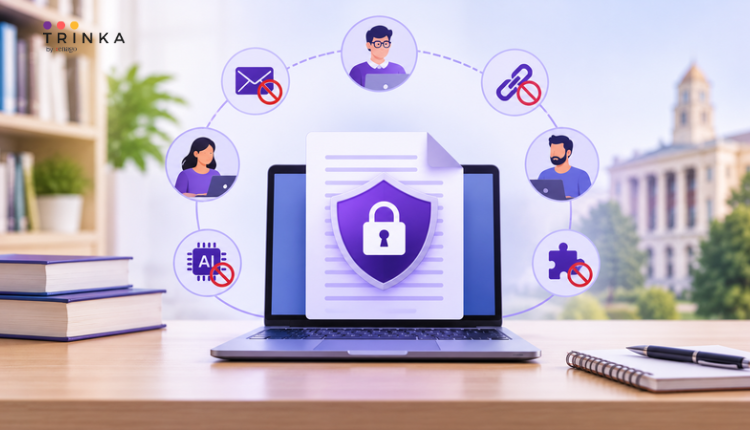
You can be careful with your own draft and still lose control of it. Once a manuscript is shared with co-authors, supervisors, or colleagues at other institutions, its privacy depends on every tool and habit in the chain.
That is worth a few minutes of agreement at the start of a project, before the first draft circulates.
Where Leaks Actually Happen
Most leaks are not dramatic. They are small, ordinary steps:
- Email attachments forwarded onward, or sent to the wrong address.
- Shared links set to “anyone with the link” and left that way.
- A co-author’s own tools, such as pasting a section into a public AI assistant for a quick language fix.
- Browser extensions and add-ins that can read the pages or documents they run on.
- Personal devices and cloud sync, where a copy lands in an account nobody else knows about.
- Hidden metadata, such as comments, tracked changes, and author details in a file you send outside the group.
None of these takes bad intent. Each one is a normal convenience.
Why Co-Authors Matter Most
You control your own tools. You do not control a co-author’s. A draft you have kept offline can still reach a public AI tool if a collaborator pastes a section into one.
That is why a short shared agreement works better than individual caution.
A One-Page Draft Handling Agreement
At the start of a project, agree on a few points and write them down:
- Where the draft lives. One shared location, with a named list of people who have access.
- Which tools are allowed. Name the writing, editing, and AI tools the team may use on drafts.
- What never goes into other tools. For example, unpublished results, participant data, and anything under a data agreement.
- How changes are shared. Use the shared document rather than forwarding attachments.
- How AI use is recorded. Note which tool was used, by whom, and for what, in case a journal asks.
- What to do after a slip. Who to tell, and what to ask the tool’s vendor.
It takes ten minutes to agree, and it is easier than sorting out a leak later.
Checks for Shared Documents
- Share with named people, not open links.
- Review who has access at each stage, and remove people who no longer need it.
- Remove comments, tracked changes, and author metadata before a file leaves the group.
- Keep outside collaborators on a separate, limited copy where possible.
- Check which browser extensions and add-ins are active on the devices you use for drafts.
Choosing Tools the Whole Team Can Use
If everyone needs language and consistency checks, a single agreed tool beats five personal ones. Look for clear terms on storage and training, a written agreement, and central controls so a team lead can see who is using it.
For the most sensitive sections, an offline option keeps the text on the device while it is checked.
Where Trinka’s Confidential Data Plan Fits
Trinka’s Confidential Data Plan suits a team that wants one agreed tool. Content is processed in memory with zero data retention and is never used to train a model. The plan includes a usage analytics dashboard and user access management, so a team lead can manage who has access, and the Windows offline grammar checker keeps text on a device for the most sensitive sections.
Confidential Data Plan does not control how documents are shared between co-authors, so the agreement above still matters. It reduces one risk: a co-author’s language check creating a stored copy somewhere else.
Conclusion
Keeping a manuscript private is a team effort. Agree where the draft lives, which tools are allowed, and what never goes into any other tool, and your co-authors become part of the protection instead of the weak point.
Enhance Your Writing with Trinka’s Grammar Checker
Trinka’s Grammar Checker is designed to help writers produce clear, polished, and publication-ready content with ease. Whether you’re drafting academic papers, professional documents, or blog posts, Trinka ensures your writing is precise, consistent, and impactful, making it a trusted companion for anyone aiming to communicate effectively in English.
Frequently Asked Questions
Where do manuscript drafts most often leak? ▼
Usually through ordinary steps, such as forwarded attachments, open shared links, and a co-author’s personal tools or browser add-ins.
Why does a co-author’s tool matter to my draft? ▼
Once shared, the draft can be pasted into any tool a collaborator uses, however careful you have been with your own, which is why a shared agreement helps.
What should a draft handling agreement include?▼
Where the draft lives, which tools are allowed, what never goes into other tools, how AI use is recorded, and what to do after a slip.
Does a privacy-first tool replace these rules?▼
No. It protects text during checks, while sharing habits between authors still need to be agreed in advance by everyone on the author list.

-
Go beyond grammar & spelling
Get holistic language improvements - Write with Trinka