


When Novo Nordisk Got Breached, the Real Story Wasn’t the Data. It Was the Credential.

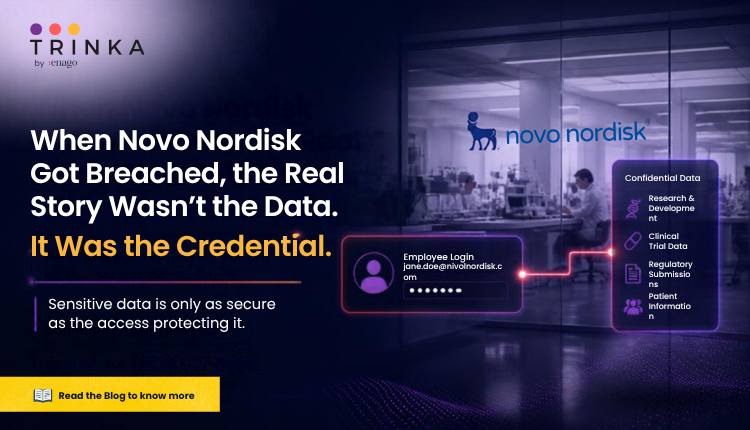
In June 2026, Novo Nordisk confirmed a cybersecurity incident: unauthorized access to internal systems, traced back to a single leaked developer credential. Pseudonymized data from participants in some clinical trials was confirmed copied. A threat actor separately claimed to have taken drug research and AI models using that same access, though the company hasn’t confirmed the full scope of those broader claims.
It’s tempting to file this under “another breach happened.” That undersells what actually changed. This wasn’t an employee pasting sensitive text into a public AI tool, the failure mode most EU pharma compliance conversations have focused on. It was an attacker walking in through a credential that should never have granted that much access in the first place. For pharma organizations across Germany, Ireland, and Denmark, that distinction matters more than it might seem.
Quick answer:Novo Nordisk’s June 2026 breach originated from a leaked developer credential, not an AI tool misuse incident, and it exposed pseudonymized clinical trial data. The lesson for EU pharma isn’t about AI paste-in behavior, it’s that the infrastructure and credentials sitting behind AI-adjacent systems, R&D platforms, developer tools, internal APIs, are now active attack targets, and GDPR’s 72-hour breach notification clock doesn’t care which failure mode caused the exposure.
What We Know
The breach was credential-based. A single leaked developer credential provided the access point, standard attacker tradecraft, not a novel technique. What made it consequential was what that credential could reach: internal systems connected to clinical trial data.
Novo Nordisk confirmed the pseudonymized trial participant data exposure directly. The broader claims, drug research and AI models allegedly taken by the threat actor, remain unconfirmed by the company as of this writing. That distinction matters for accuracy: confirmed exposure and an attacker’s unverified claims are not the same category of fact, and treating them identically overstates what’s actually been established.
What’s Still Genuinely Unclear
The full scope of what was accessed beyond the confirmed trial data hasn’t been publicly established. Whether the AI model and research theft claims hold up, how the credential was leaked in the first place, and what internal access controls failed to contain the blast radius once that credential was compromised, all remain open questions.
What is clear, independent of those open questions, is the pattern: a single point of compromised access reached further than it should have. That’s an access architecture problem, not a data classification problem, and it’s the part every EU pharma organization can act on regardless of how Novo Nordisk’s specific investigation concludes.
Why This Is a Different Risk Than the One Most Compliance Teams Are Watching
Much of the EU pharma compliance conversation around AI has focused on shadow AI, employees pasting sensitive content into public tools, and on regulatory deadlines, like the AI Act’s Digital Omnibus timeline. Both are real. Neither one is what happened here.
This breach targeted the infrastructure layer: developer credentials, internal systems, the access pathways that sit underneath and around AI-adjacent tools rather than the tools themselves. An organization can have a perfect AI usage policy, zero shadow AI incidents, full staff training, and still be exposed if a single credential with excessive reach gets compromised.
For Germany, Ireland, and Denmark specifically, all EU jurisdictions where GDPR’s 72-hour breach notification requirement applies without exception, this isn’t a theoretical distinction. A credential-based breach reaching clinical trial data triggers the same regulatory clock regardless of whether the root cause was an employee’s AI tool choice or an attacker’s stolen access key.
What To Actually Do About It
Audit which credentials and access tokens can reach clinical trial or research systems, and specifically check whether any single credential grants more access than its actual use case requires.
Treat AI-adjacent infrastructure, developer tools, internal APIs, research platforms, as part of the same access review process applied to any system touching regulated data, not a separate, lower-scrutiny category.
Confirm your organization’s GDPR breach notification process is ready to move on the 72-hour clock regardless of the breach’s root cause, credential theft and AI misuse should trigger the identical response process, not two different ones.
Conclusion
The instinct to file this under “AI risk” misses the actual lesson. This was an access control failure that happened to touch systems adjacent to AI and research infrastructure. For pharma organizations across the EU, the useful response isn’t tightening AI usage policy further, it’s asking a more basic question: which credentials in your organization can reach more than they should, and would you know if one of them already had.
Key Takeaways
- Novo Nordisk’s June 2026 breach originated from a leaked developer credential, not AI tool misuse, exposing pseudonymized clinical trial data.
- Broader claims about stolen research and AI models remain unconfirmed and shouldn’t be treated as established fact.
- The real lesson is about access architecture: a single compromised credential reached further than it should have.
- GDPR’s 72-hour breach notification requirement applies regardless of root cause, credential theft included.
- EU pharma organizations should audit credential scope for systems touching clinical and research data as a distinct action from AI usage policy.
Enhance Your Writing with Trinka’s Grammar Checker
Trinka’s Grammar Checker is designed to help writers produce clear, polished, and publication-ready content with ease. Whether you’re drafting academic papers, professional documents, or blog posts, Trinka ensures your writing is precise, consistent, and impactful, making it a trusted companion for anyone aiming to communicate effectively in English.
Frequently Asked Questions
Was the Novo Nordisk breach caused by AI tool misuse?▼
No. It originated from a leaked developer credential providing unauthorized access to internal systems, a traditional credential-based attack, not an AI data handling failure.
What data was confirmed exposed?▼
Pseudonymized data from participants in some clinical trials. Broader claims about stolen drug research and AI models have not been confirmed by the company.
Does GDPR's 72-hour breach notification rule apply regardless of how a breach happened?▼
Yes. The notification clock is triggered by the breach itself, not by which specific technical failure caused it.
What should EU pharma organizations actually change because of this?▼
Review access scope for credentials reaching clinical or research systems, and ensure AI-adjacent infrastructure gets the same security scrutiny as any other system touching regulated data.

-
Go beyond grammar & spelling
Get holistic language improvements - Write with Trinka