


How to Choose the Right AI Integrity Solution for Your University

As generative AI becomes part of everyday learning, universities are rethinking how they maintain academic integrity. Students now use AI for brainstorming, drafting, editing, and refining assignments, making it harder to evaluate authentic learning from the final submission alone.
The challenge for institutions is no longer only identifying AI use. It is understanding how student work was created and whether it reflects genuine learning. 90% of Harvard faculty suspected students had submitted AI-generated work, yet only 12% formally reported those cases because proving AI misuse remained difficult. This highlights the need for solutions that provide meaningful evidence beyond a single detection score.
What Should Universities Look for in an AI Integrity Solution?
1. Writing Process Visibility
A final submission only shows the outcome, not the journey behind it. Universities should look for solutions that provide visibility into writing history, revisions, and assignment development to help faculty understand student contribution and learning.
2. Multiple Sources of Evidence
No single indicator should determine academic integrity. The right solution should combine multiple insights, including writing process evidence, AI writing indicators, and text similarity analysis, giving faculty a more complete view of student work.
3. Support for Responsible AI Use
AI is becoming part of modern learning, and universities need approaches that recognize its role in education. The right solution should help faculty understand how AI was used rather than simply identify its presence.
4.Integration With Existing University Workflows
Academic integrity solutions should fit naturally into existing teaching environments. Integration with learning management systems such as Moodle, Blackboard, and Canvas helps faculty review assignments without disrupting their current workflows.
5.Evidence That Supports Faculty Decisions
Technology should provide context, not replace academic judgment. Solutions should help faculty review evidence, have informed conversations with students, and make fair decisions based on the complete picture of student work.
6.Scalability Across the Institution
Universities need solutions that can support individual courses, departments, and institution-wide adoption. Features such as consistent evaluation methods, centralized insights, and flexible deployment help maintain academic integrity across different learning environments.
7. Moving Beyond AI Detection With Process-Based Verification
AI detection can provide useful signals, but it does not explain how an assignment was created. Universities should look for solutions that help faculty understand the writing process.
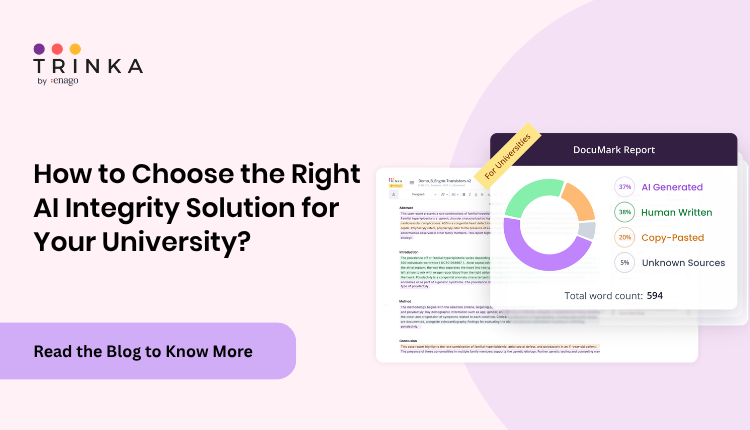
DocuMark helps institutions move beyond detection by combining writing composition history, AI writing indicators, and text similarity insights within a single workflow. This gives faculty visibility into how assignments develop and supports evidence-based academic decisions.
Conclusion: Choose a Solution That Supports Authentic Learning
The right AI integrity solution should do more than generate a score. It should help universities understand student work, support faculty decision-making, and create a fair approach to academic evaluation.
As AI continues to reshape higher education, institutions need solutions that focus on evidence, transparency, and authentic learning. By combining technology with faculty expertise, universities can strengthen academic integrity while preparing students for an AI-enabled future.
Enhance Your Writing with Trinka’s Grammar Checker
Trinka’s Grammar Checker is designed to help writers produce clear, polished, and publication-ready content with ease. Whether you’re drafting academic papers, professional documents, or blog posts, Trinka ensures your writing is precise, consistent, and impactful, making it a trusted companion for anyone aiming to communicate effectively in English.

-
Go beyond grammar & spelling
Get holistic language improvements - Write with Trinka