Teaching & Learning
- The university states that using AI on assignments without authorization or acknowledgment can be treated as academic misconduct
- Students may use generative AI for coursework only with instructor permission and only if all AI-generated material is clearly identified and cited
Use of AI in assignments is only authorized if permitted by the instructor and all AI-generated content is clearly identified and properly acknowledged.
Unauthorized use of AI in the completion of assessments, exams, and assignments is considered a form of cheating and will be subject to disciplinary action.
Examples of Unauthorized Assistance include, but are not limited to, use of: Artificial intelligence tools where prohibited or not properly acknowledged
Allowed and appropriately acknowledged as determined by the instructor and course requirements
- AI use during exams and assessments is prohibited unless specifically authorized
- The university treats unauthorized AI use in assessments and exams as cheating subject to disciplinary action
Unauthorized use of AI in the completion of assessments, exams, and assignments is considered a form of cheating and will be subject to disciplinary action.
Use or attempted use of unauthorized materials, information, or study aids in any academic exercise.
Examples of Unauthorized Assistance include, but are not limited to, use of: Artificial intelligence tools where prohibited or not properly acknowledged
- Students are also directed to verify AI-generated information because outputs may be inaccurate or fabricated
- The university provides guidance that students may use AI as a support tool for brainstorming, outlining, and improving understanding, but it should not replace their own thinking or writing
Artificial intelligence (AI) tools can be valuable resources for brainstorming, outlining, and improving your writing. However, it's important to use them ethically and responsibly.
Use AI as a support tool, not as a replacement for your own ideas or writing.
Use AI-generated suggestions to help you think critically, but make sure your final work reflects your own understanding.
Always fact-check AI-generated content. These tools can make mistakes or generate inaccurate information.
Research
- It also states that AI may assist with drafting or editing text if institutional rules are followed and authors remain responsible for the final content
- The university's general AI policy requires users to verify AI outputs before relying on them for professional or official purposes and bars listing AI systems as authors
Verify all AI-generated outputs for accuracy before using them in professional, academic, or official capacities.
Artificial intelligence (AI) tools may assist in drafting, editing, or generating text, but all use must comply with Alabama A&M University's policies and standards.
Authors are fully responsible for all submitted work, including any portions assisted by AI, and should ensure content integrity, originality, and proper acknowledgment where applicable.
AI systems may not be listed as authors or co-authors on theses, dissertations, manuscripts, or publications, as they cannot assume responsibility for the work.
Use in thesis/dissertation writing must align with guidance from the Office of Graduate Studies and, where applicable, publication or disciplinary standards.
- Sensitive or regulated data may not be entered into public AI tools without institutional approval, and AI outputs must be verified before use
- The university permits AI for data analysis and interpretation only when users maintain oversight and comply with research and confidentiality requirements
Alabama A&M University recognizes the growing role of artificial intelligence (AI) in academic, research, administrative, and operational activities.
Use of AI in research, including data analysis, literature synthesis, manuscript preparation, and idea generation, must adhere to applicable ethical, legal, funding, and scholarly standards.
Users must evaluate AI-generated outputs for bias, inaccuracy, incompleteness, or fabrication before relying on them in decision-making, teaching, research, or administrative work.
Do not input restricted, confidential, student, personnel, health, legal, or research data into public AI platforms unless explicitly authorized under University policy and applicable law.
Researchers using AI tools must ensure compliance with institutional review board (IRB) protocols, grant conditions, data use agreements, confidentiality obligations, and publication standards.
- The university also requires accountability for submitted work and prohibits naming AI systems as authors
- Research-related AI use must comply with ethical, legal, funding, and scholarly standards, including IRB protocols, grant terms, data use agreements, confidentiality obligations, and publication standards
Use of AI in research, including data analysis, literature synthesis, manuscript preparation, and idea generation, must adhere to applicable ethical, legal, funding, and scholarly standards.
Researchers using AI tools must ensure compliance with institutional review board (IRB) protocols, grant conditions, data use agreements, confidentiality obligations, and publication standards.
Authors are fully responsible for all submitted work, including any portions assisted by AI, and should ensure content integrity, originality, and proper acknowledgment where applicable.
AI systems may not be listed as authors or co-authors on theses, dissertations, manuscripts, or publications, as they cannot assume responsibility for the work.
Academic Integrity
- When AI use is permitted, the university requires disclosure
- For student assignments, all AI-generated content must be clearly identified and acknowledged
- The university's general policy is that AI use for university purposes should be disclosed appropriately, and students are reminded to follow instructor rules on citation
When AI is used to produce work for University purposes, its use should be disclosed in a manner appropriate to the context.
Use of AI in assignments is only authorized if permitted by the instructor and all AI-generated content is clearly identified and properly acknowledged.
Examples of Unauthorized Assistance include, but are not limited to, use of: Artificial intelligence tools where prohibited or not properly acknowledged.
Cite AI assistance if required by your instructor or course policy.
- It does not provide a specific institutional rule on AI detection software in the provided sources
- The university states that unauthorized or improperly acknowledged AI use is a form of cheating and may lead to disciplinary action
Unauthorized use of AI in the completion of assessments, exams, and assignments is considered a form of cheating and will be subject to disciplinary action.
Examples of Unauthorized Assistance include, but are not limited to, use of: Artificial intelligence tools where prohibited or not properly acknowledged
Institutional & Administrative
- The policy requires users to review AI-generated outputs before relying on them in teaching or administrative contexts
- Faculty and staff may use AI to support instruction and administrative work, but they remain responsible for human judgment, verification, and compliance with university policy
Alabama A&M University recognizes the growing role of artificial intelligence (AI) in academic, research, administrative, and operational activities.
Use of AI to support instruction, learning, and assessment must preserve academic integrity, protect student privacy, and remain under the professional judgment of faculty and instructional staff.
Faculty and staff are responsible for reviewing AI-generated recommendations, communications, analytics, or content before use in decision-making, student support, human resources, finance, or institutional operations.
Verify all AI-generated outputs for accuracy before using them in professional, academic, or official capacities.
- AI tools must be used in compliance with data security, privacy, and records requirements, but the provided sources do not name a specific approved platform list
- The university prohibits entering restricted, confidential, student, personnel, health, legal, or research data into public AI platforms unless expressly authorized
Use of AI tools must comply with all applicable laws and University policies related to data security, privacy, records management, intellectual property, procurement, accessibility, and information technology.
Do not input restricted, confidential, student, personnel, health, legal, or research data into public AI platforms unless explicitly authorized under University policy and applicable law.
Users are accountable for protecting University information and for ensuring that AI use does not expose institutional data, personally identifiable information, or other protected content to unauthorized parties.
- Alabama A&M has a university-wide general AI policy that establishes guiding principles for responsible AI use across academic, research, administrative, and operational functions
- The policy frames AI use around compliance, human accountability, accuracy review, and protection of institutional information, but the provided sources do not identify a separate AI committee or roadmap
Alabama A&M University recognizes the growing role of artificial intelligence (AI) in academic, research, administrative, and operational activities.
This policy establishes a framework for the responsible, ethical, secure, and effective use of AI technologies across the University.
This policy applies to all University employees, students, contractors, vendors, and other authorized users of University systems, data, or resources.
The use of AI at Alabama A&M University must align with the institution's mission, values, strategic priorities, legal obligations, and commitment to academic freedom, integrity, and student success.
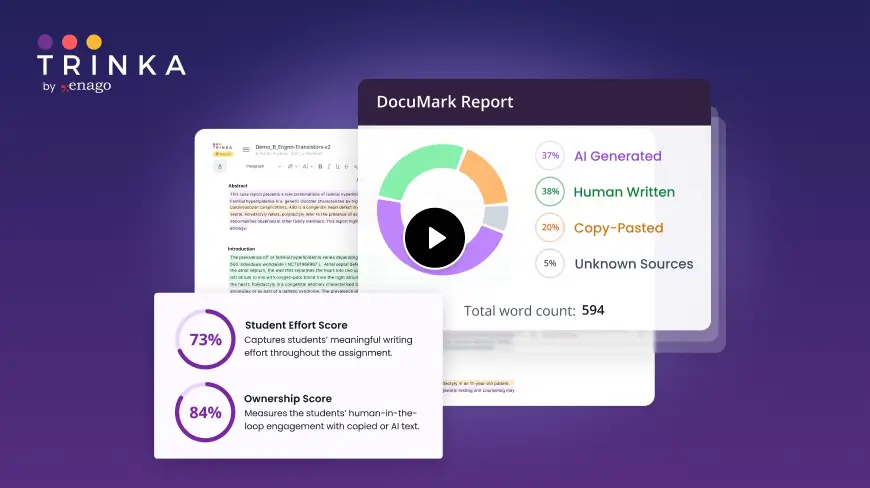
DocuMark: Responsible AI Use for Academic Integrity
Knowing your institution's AI policy is step one. DocuMark helps enforce it fairly by empowering universities to manage AI-generated content, prevent cheating, and support student writing through responsible AI use.
Common Questions About Alabama A&M University's AI Policies
Alabama A&M University has defined AI policies in 11 of 12 categories, with an overall coverage score of 92%.
When AI use is permitted, the university requires disclosure. For student assignments, all AI-generated content must be clearly identified and acknowledged. The university's general policy is that AI use for university purposes should be disclosed appropriately, and students are reminded to follow instructor rules on citation.
The university states that unauthorized or improperly acknowledged AI use is a form of cheating and may lead to disciplinary action. It does not provide a specific institutional rule on AI detection software in the provided sources.
The university prohibits entering restricted, confidential, student, personnel, health, legal, or research data into public AI platforms unless expressly authorized. AI tools must be used in compliance with data security, privacy, and records requirements, but the provided sources do not name a specific approved platform list.