Teaching & Learning
- In the Respiratory Therapy Program, AI use is encouraged as a supplemental learning tool, and some assignments may suggest or require it
- More generally, student academic honesty rules require students to do their own work and treat plagiarism and other dishonest conduct as misconduct
The use of AI tools, such as ChatGPT, is encouraged to enhance learning in the program. AI can
assist students by:
• Providing quick access to information and clarifications on complex topics.
• Supporting research and study preparation.
• Offering personalized learning resources.
Students should use AI as a supplementary tool to deepen their understanding of respiratory
therapy concepts. Some assignments may suggest or require the use of AI tools.
The Respiratory Therapy Program complies with Coastal Alabama Policy 05.06. Academic honesty is
absolute for the student to advance in the program. Because of the nature of the healthcare profession,
dishonesty or unprofessional conduct could affect the health or safety of clients. To promote professional
conduct and personal integrity, it is imperative that each student do their own work.
Plagiarism: Claiming as one’s own the ideas, words, data, computer programs, creative compositions, artwork, etc., done by someone else. Examples include improper citation of referenced works, use of commercially available scholarly papers, failure to cite sources, or copying another’s ideas;
- The college also uses Honorlock AI in online proctored exams to monitor webcam, audio, and screen activity, with flagged behaviors sent for instructor review
- In the Respiratory Therapy Program, AI tools are prohibited during module exams and formal assessments, and violations are subject to academic integrity penalties
Restricted Use on Module Exams:
AI tools are prohibited during module exams and formal assessments to ensure individual
knowledge is evaluated. During exams:
• No AI access is allowed.
• External materials (notes, books) are restricted unless permitted by the instructor.
• Scratch paper and calculators will be provided by the instructor.
• Honorlock will be used on all module exams including seated exams with the instructor
present.
Violation of this policy will result in penalties as per academic integrity guidelines.
In an Honorlock proctored exam, students are not connected to a specific proctor for observation. Before taking the exam, students must verify their identity through an automated system. To determine suspicious behavior, Honorlock AI monitors the student's webcam, audio, and screen while they work. In some cases, a live proctor will pop into the student's session to assist the student and secure the testing environment when these behaviors are flagged for instructor review.
- This guidance is program-specific rather than stated as a college-wide rule
- The Respiratory Therapy Program encourages students to use AI tools as supplemental support for learning, including clarifying complex topics, study preparation, and personalized learning resources
The use of AI tools, such as ChatGPT, is encouraged to enhance learning in the program. AI can
assist students by:
• Providing quick access to information and clarifications on complex topics.
• Supporting research and study preparation.
• Offering personalized learning resources.
Students should use AI as a supplementary tool to deepen their understanding of respiratory
therapy concepts.
Research
- No broader college research-writing AI policy is defined in the provided sources
- The Respiratory Therapy Program states that AI may support research and study preparation, but it does not set a specific rule for using AI to draft, edit, or prepare scholarly manuscripts
The use of AI tools, such as ChatGPT, is encouraged to enhance learning in the program. AI can
assist students by:
• Providing quick access to information and clarifications on complex topics.
• Supporting research and study preparation.
• Offering personalized learning resources.
Academic Integrity
- In the Respiratory Therapy Program, students are expected to do their own work, but no separate AI attribution format is stated
- The college’s general academic dishonesty rules require proper citation and prohibit claiming others’ ideas or work as one’s own, but the sources do not define any AI-specific disclosure or citation requirement
Plagiarism: Claiming as one’s own the ideas, words, data, computer programs, creative compositions, artwork, etc., done by someone else. Examples include improper citation of referenced works, use of commercially available scholarly papers, failure to cite sources, or copying another’s ideas;
The Respiratory Therapy Program complies with Coastal Alabama Policy 05.06. Academic honesty is
absolute for the student to advance in the program. Because of the nature of the healthcare profession,
dishonesty or unprofessional conduct could affect the health or safety of clients. To promote professional
conduct and personal integrity, it is imperative that each student do their own work.
- The college uses Honorlock AI for online exam monitoring, and flagged behaviors may be reviewed by instructors
- In the Respiratory Therapy Program, violating the AI exam restriction results in penalties under academic integrity guidelines; broader student conduct rules also allow disciplinary sanctions for cheating, plagiarism, and related academic dishonesty
In an Honorlock proctored exam, students are not connected to a specific proctor for observation. Before taking the exam, students must verify their identity through an automated system. To determine suspicious behavior, Honorlock AI monitors the student's webcam, audio, and screen while they work. In some cases, a live proctor will pop into the student's session to assist the student and secure the testing environment when these behaviors are flagged for instructor review.
Violation of this policy will result in penalties as per academic integrity guidelines.
Violation of this code may result in disciplinary action against the student.
Acts of dishonesty, including but not limited to the following:
* Cheating, plagiarism, or other forms of academic dishonesty as referenced in the Grade and Readmission Appeals Policy.
Institutional & Administrative
- The only staff-related technology rules in the provided materials concern account security, software authorization, and confidentiality, not AI use
- The provided sources do not set a general AI-use policy for faculty or staff in grading, feedback, lesson planning, recommendation letters, or administrative communication
Under the terms of this policy, employees of the College are given access to the Coastal Alabama Community College Network System. If network resource access (such as network attached storage or email) is required, a user ID and password will be assigned to the employee, coordinated by the Technology Services Department, under the direction of the Alabama Community College System (ACCS).
The username and password, including those used to access email or an instructional platform such as Canvas, are the responsibility of the individual to whom they are assigned. Employees are responsible for network account use and password confidentiality.
To prevent computer viruses from being transmitted through the system, no unauthorized downloading or installation of any software is permitted. Software downloads and installation will be done only after approval and/or assistance from the appropriate Technology Services personnel.
- The college does not define approved AI platforms in the provided sources, but it does impose technology and data-protection limits that would govern use of external tools
- Confidential or proprietary college information may not be transmitted over the internet, users must comply with FERPA restrictions on personal and academic information, and unauthorized software installation is not permitted without technology-services approval
Unauthorized release or disclosure of information through the internet or through any other means is strictly prohibited. Proprietary or confidential information pertaining to the college will not be transmitted over the internet.
All users should be aware of and comply with the Family Educational Rights and Privacy Act (FERPA) as well as its restrictions on the use and dissemination of personal and academic information.
To prevent computer viruses from being transmitted through the system, no unauthorized downloading or installation of any software is permitted. Software downloads and installation will be done only after approval and/or assistance from the appropriate Technology Services personnel.
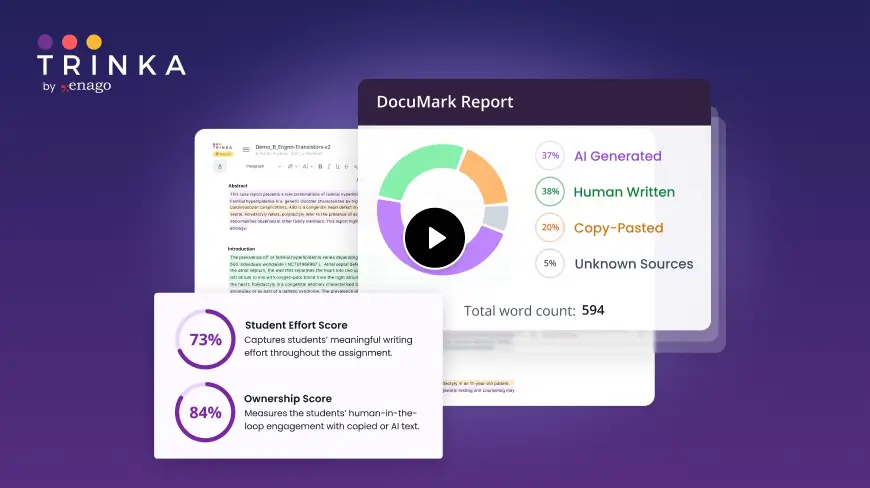
DocuMark: Responsible AI Use for Academic Integrity
Knowing your institution's AI policy is step one. DocuMark helps enforce it fairly by empowering universities to manage AI-generated content, prevent cheating, and support student writing through responsible AI use.
Common Questions About Alabama Southern Community College's AI Policies
Alabama Southern Community College has defined AI policies in 8 of 12 categories, with an overall coverage score of 67%.
The college’s general academic dishonesty rules require proper citation and prohibit claiming others’ ideas or work as one’s own, but the sources do not define any AI-specific disclosure or citation requirement. In the Respiratory Therapy Program, students are expected to do their own work, but no separate AI attribution format is stated.
The college uses Honorlock AI for online exam monitoring, and flagged behaviors may be reviewed by instructors. In the Respiratory Therapy Program, violating the AI exam restriction results in penalties under academic integrity guidelines; broader student conduct rules also allow disciplinary sanctions for cheating, plagiarism, and related academic dishonesty.
The college does not define approved AI platforms in the provided sources, but it does impose technology and data-protection limits that would govern use of external tools. Confidential or proprietary college information may not be transmitted over the internet, users must comply with FERPA restrictions on personal and academic information, and unauthorized software installation is not permitted without technology-services approval.