Teaching & Learning
- Alamo Colleges does not provide a uniform institution-wide rule in the provided sources for general student coursework
- In the San Antonio College Nursing Student Handbook, use of AI-generated information in coursework is allowed only if the student verifies and validates the information independently and cites the source in APA style; failure to cite can be treated as plagiarism under faculty discretion
Artificial intelligence can provide useful information, but users are responsible for independently verifying and validating all information because AI generated data can be inaccurate or incomplete. If AI generated information is used in academic work, the source must be cited in APA format.
A student who cites an artificial intelligence source (i.e. no author, no date, or no source) in APA style may not be considered plagiarism at faculty discretion. AI generated information should be independently verified and validated because the generated information can be inaccurate or incomplete.
Plagiarism includes, but is not limited to, the following:
Submitting a paper purchased from a term paper service, essays/papers from AI generated websites (uncited, if allowed by faculty), or another student’s work as one’s own work.
- The only explicit condition stated is that AI-generated information should be independently verified and validated
- The provided sources discuss AI as a tool that can provide useful information, but they do not set a specific institutional policy for students using AI as a tutor or study aid
Artificial intelligence can provide useful information, but users are responsible for independently verifying and validating all information because AI generated data can be inaccurate or incomplete.
AI generated information should be independently verified and validated because the generated information can be inaccurate or incomplete.
Research
- The provided sources do not set a research-specific rule for manuscript drafting or editing with AI
- However, the Nursing Student Handbook requires any AI-generated information used in academic work to be cited in APA format and independently verified, which is the closest explicit statement available in the provided materials
Artificial intelligence can provide useful information, but users are responsible for independently verifying and validating all information because AI generated data can be inaccurate or incomplete. If AI generated information is used in academic work, the source must be cited in APA format.
AI generated information should be independently verified and validated because the generated information can be inaccurate or incomplete.
- The Nursing Student Handbook also requires verification and citation for any AI-generated information used in academic work, framing it as an integrity issue
- Alamo Colleges prohibits the use of AI tools for making final decisions in high-impact situations that could affect an individual's rights or well-being, which is relevant to research ethics
Artificial Intelligence (AI) tools shall not be used for making final decisions in applications involving consequential or high impact situations, such as employment, housing, education, lending, healthcare, legal services, insurance, and other applications where decisions can significantly affect an individual's rights or well-being.
If AI generated information is used in academic work, the source must be cited in APA format.
Academic Integrity
- The handbook also notes that whether a cited AI source is treated as plagiarism may be determined at faculty discretion
- In the provided sources, the clearest attribution rule is from the San Antonio College Nursing Student Handbook: if AI-generated information is used in academic work, the source must be cited in APA format
If AI generated information is used in academic work, the source must be cited in APA format.
A student who cites an artificial intelligence source (i.e. no author, no date, or no source) in APA style may not be considered plagiarism at faculty discretion.
- The provided sources do not mention AI detection software
- Enforcement language appears in the Nursing Student Handbook, which treats uncited AI-generated essays or papers as a form of plagiarism, while leaving some judgment about cited AI sources to faculty discretion
Plagiarism includes, but is not limited to, the following:
Submitting a paper purchased from a term paper service, essays/papers from AI generated websites (uncited, if allowed by faculty), or another student’s work as one’s own work.
A student who cites an artificial intelligence source (i.e. no author, no date, or no source) in APA style may not be considered plagiarism at faculty discretion.
Institutional & Administrative
- The Alamo Colleges District has a formal procedure governing faculty and staff use of AI
- Furthermore, AI tools are forbidden for making final decisions in high-impact areas like employment
- The district also provides professional development to support faculty in exploring AI for teaching
Employees, students, and community members may use Artificial Intelligence (AI) software and tools in accordance with all applicable Board policies, Administrative Procedures, and local, state, and federal laws.
The Alamo Colleges District confidential and personally identifying information, as defined under Alamo Colleges District policy, cannot be entered into public AI systems unless there is an approved agreement between the district and the service provider and the use is approved by the relevant executive leader.
Artificial Intelligence (AI) tools shall not be used for making final decisions in applications involving consequential or high impact situations, such as employment, housing, education, lending, healthcare, legal services, insurance, and other applications where decisions can significantly affect an individual's rights or well-being.
- The only explicit institution-wide rule in the provided sources is a district procedure that prohibits entering certain confidential or personally identifying information into public AI systems and requires an approved agreement before using confidential information with AI
- It also bars using AI tools to make final decisions in high-impact contexts such as employment, housing, education, lending, healthcare, legal services, and insurance, and states that faculty, staff, and students may use AI only in ways consistent with board policy, procedures, and laws
Employees, students, and community members may use Artificial Intelligence (AI) software and tools in accordance with all applicable Board policies, Administrative Procedures, and local, state, and federal laws.
The Alamo Colleges District confidential and personally identifying information, as defined under Alamo Colleges District policy, cannot be entered into public AI systems unless there is an approved agreement between the district and the service provider and the use is approved by the relevant executive leader.
Artificial Intelligence (AI) tools shall not be used for making final decisions in applications involving consequential or high impact situations, such as employment, housing, education, lending, healthcare, legal services, insurance, and other applications where decisions can significantly affect an individual's rights or well-being.
- The district has an institutional procedure governing AI use and has also publicly framed AI as part of its digital learning strategy through district events focused on human-centered and ethical AI use in education
- The provided sources do not identify a dedicated university-wide AI committee or task force, but they do show an overarching governance document plus strategic programming around AI adoption in teaching and learning
Employees, students, and community members may use Artificial Intelligence (AI) software and tools in accordance with all applicable Board policies, Administrative Procedures, and local, state, and federal laws.
This year's theme, "Human and AI in Sync: The New Frontier of Digital Learning," explores how artificial intelligence can enhance teaching, learning, and student support—while emphasizing the essential role of human connection, critical thinking, and ethical practice in education.
The 2025 conference theme is: "The New Frontier of Digital Learning: Human and AI in Sync"
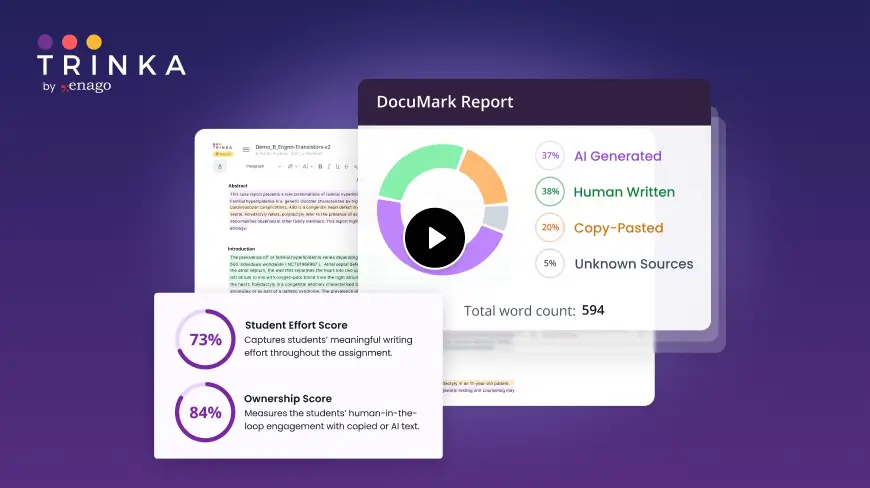
DocuMark: Responsible AI Use for Academic Integrity
Knowing your institution's AI policy is step one. DocuMark helps enforce it fairly by empowering universities to manage AI-generated content, prevent cheating, and support student writing through responsible AI use.
Common Questions About Alamo Colleges's AI Policies
Alamo Colleges has defined AI policies in 9 of 12 categories, with an overall coverage score of 75%.
In the provided sources, the clearest attribution rule is from the San Antonio College Nursing Student Handbook: if AI-generated information is used in academic work, the source must be cited in APA format. The handbook also notes that whether a cited AI source is treated as plagiarism may be determined at faculty discretion.
The provided sources do not mention AI detection software. Enforcement language appears in the Nursing Student Handbook, which treats uncited AI-generated essays or papers as a form of plagiarism, while leaving some judgment about cited AI sources to faculty discretion.
The only explicit institution-wide rule in the provided sources is a district procedure that prohibits entering certain confidential or personally identifying information into public AI systems and requires an approved agreement before using confidential information with AI. It also bars using AI tools to make final decisions in high-impact contexts such as employment, housing, education, lending, healthcare, legal services, and insurance, and states that faculty, staff, and students may use AI only in ways consistent with board policy, procedures, and laws.