Teaching & Learning
- Overall, a uniform policy for coursework use is not defined
- The only explicit statement tied to student assignments appears in Academic Senate minutes about academic integrity and fraudulent enrollment
- It states that AI-generated responses were being submitted for assignments in that context, but it does not set a general college-wide rule on when students may or may not use AI for regular coursework
Another issue is fraudulent enrollment to get financial aid, mainly in DE courses. The Chancellor’s office and our Admissions and Records. Fraudulent registration has happened for years, and now with AI, they are submitting generated responses for assignments.
- A direct AI exam policy is not defined
- The college references exam oversight only through proctoring software mentioned in Academic Senate minutes
- The minutes say HonorLock is the new proctoring software replacing Proctorio, but they do not state a specific rule about whether AI use is permitted or prohibited during exams or assessments
He shared that HonorLock is the new proctoring software and replaces Proctorio. Watch for upcoming training sessions.
- The institutional position is educational and supportive rather than regulatory
- Allan Hancock College provides AI-related learning support and encourages AI literacy through summit programming, professional development, and library resources
- The materials describe AI tools being used to support students and faculty and include AI research guides, but they do not impose a formal student policy governing personal study use
This concise workshop will showcase practical AI solutions that faculty, staff, students, and industry partners can immediately implement to enhance productivity and problem-solving. Whether you're new to AI or looking to refine your skills, you'll leave with specific strategies to effectively integrate these technologies into your classroom, research, or workplace. These AI tools can help streamline workflows, enhance productivity, and transform how you work and support students. Topics include Database Research, California History, AI, Dance, Children's Lit and so much more!
Research
- AI is presented as something that can be integrated into research-related work, and the library offers AI research guides, but no manuscript rule is defined
- The college mentions research use of AI in professional-development and summit materials, but it does not set a formal policy for drafting, editing, or preparing scholarly manuscripts
Whether you're new to AI or looking to refine your skills, you'll leave with specific strategies to effectively integrate these technologies into your classroom, research, or workplace. This session focuses on practical AI applications for faculty including the basics of prompt engineering and better research techniques with AI tools. Topics include Database Research, California History, AI, Dance, Children's Lit and so much more!
Academic Integrity
- A formal AI disclosure rule is not defined
- This indicates attention to citation practices, but the sources do not define a college-wide requirement for disclosing or citing AI use specifically
- The only explicit statement relevant to attribution is a faculty comment in Academic Senate minutes about teaching students to research and cite sources
J. Joswiak shared that she frontloads the semester with information on researching and citing sources.
- The evidence shows active discussion and tooling rather than a defined enforcement policy
- Allan Hancock College addresses AI within academic integrity discussions and notes the use of HonorLock as proctoring software
- Professional-development materials also highlight Turnitin Clarity as a tool for academic integrity and ethical AI use, but the provided sources do not state a binding institutional enforcement rule, penalty structure, or official AI-detection policy
F. Patrick presented information about the impact of new technologies that impact classroom management, specifically plagiarism and integrity. He shared that HonorLock is the new proctoring software and replaces Proctorio. This webinar introduces Turnitin Clarity – a new add-on to Feedback Studio and a substantial step forward when it comes to guaranteeing academic integrity and enabling students to deliver their best, original work! With Clarity's Composition Space, instructors gain insight into the writing process of each student in detail, and the 'guardrails' of the in-built AI Assistant teach students about the ethical use of AI - as a support, not a shortcut.
Institutional & Administrative
- Allan Hancock College supports faculty and staff use of AI through training and professional development
- No formal restrictions on grading, feedback, or other specific faculty administrative uses are defined in the provided sources
- The materials explicitly state that faculty and staff have access to Google AI tools through a statewide rollout and describe AI as something that can streamline workflows, support students, and be integrated into classroom practice
As part of this MOU, Google is offering no-cost, hands-on training for faculty and staff on Gemini and NotebookLM. These AI tools can help streamline workflows, enhance productivity, and transform how you work and support students. This session focuses on practical AI applications for faculty including the basics of prompt engineering and better research techniques with AI tools. In this hands-on session faculty will develop a personal tech philosophy (using the framework of a teaching philosophy) that will serve as a personal rubric for how to approach current and future AI/tech conversations and decisions in your classroom.
- A data protection policy is not defined in the supplied sources
- However, the materials do not state data-classification rules, privacy restrictions, or a formal approved-versus-prohibited platform policy for institutional data
- The provided sources identify specific AI platforms being made available to faculty and staff through statewide and professional-development channels, including Gemini and NotebookLM, and mention ChatGPT in a training description
The Chancellor’s Office is pleased to share an update on the California Community Colleges’ Google Tools and Certifications Rollout, a systemwide initiative providing all 116 colleges with no-cost access to Google AI tools and industry-recognized credentials through a statewide Memorandum of Understanding. As part of this MOU, Google is offering no-cost, hands-on training for faculty and staff on Gemini and NotebookLM. The presenter will discuss the initial creation of the agent within ChatGPT, the importance of reviewing and refining the outputs, and how to integrate AI in effective ways without replacing a student’s own intellectual thoughts or ideas.
- These sources show strategic engagement and participation, but they do not define a standalone Allan Hancock College AI governance policy or internal AI committee rule
- Allan Hancock College shows institution-level AI engagement through an AI Summit and references broader California Community Colleges governance structures and Vision 2030
- The materials mention the Chancellor’s AI team and AI Council and frame AI as relevant across operations, curriculum, teaching and learning, student support, and infrastructure
On April 18, 2025 Allan Hancock College welcomed leading experts from the Chancellor’s office, LinkedIn, Moorpark College, Berkeley, Cal Poly, and Colorado State University Pueblo to provide insights into the latest AI trends, practical applications for teaching and learning, and engage in discussions on the ethical considerations surrounding this rapidly evolving technology. Don Daves-Rougeaux champions workforce innovation as the Chancellor's Senior Advisor on Workforce Development and Strategic Partnerships, while spearheading AI initiatives through his leadership on the system's AI team and AI Council. A message from the Chancellor's office focusing on Vision 2030, the three strategies, and how we intend to move the work via four key buckets: people, systems, resources, and policy. “AI is here; it’s in everything we are doing now, and it’s really critical for us to explore the use of AI in our operational areas, our curriculum development, our teaching and learning, our student support and even our infrastructure,” Daves-Rougeaux said.
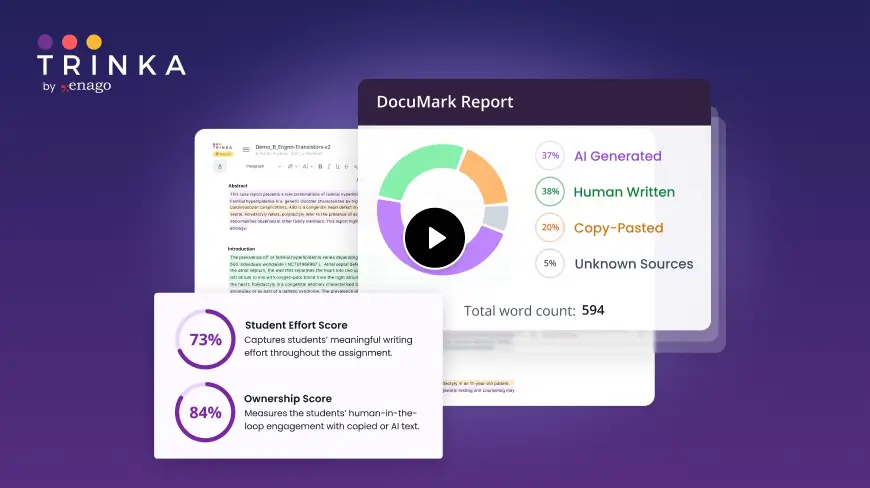
DocuMark: Responsible AI Use for Academic Integrity
Knowing your institution's AI policy is step one. DocuMark helps enforce it fairly by empowering universities to manage AI-generated content, prevent cheating, and support student writing through responsible AI use.
Common Questions About Allan Hancock College's AI Policies
Allan Hancock College has defined AI policies in 9 of 12 categories, with an overall coverage score of 75%.
The only explicit statement relevant to attribution is a faculty comment in Academic Senate minutes about teaching students to research and cite sources. This indicates attention to citation practices, but the sources do not define a college-wide requirement for disclosing or citing AI use specifically. A formal AI disclosure rule is not defined.
Allan Hancock College addresses AI within academic integrity discussions and notes the use of HonorLock as proctoring software. Professional-development materials also highlight Turnitin Clarity as a tool for academic integrity and ethical AI use, but the provided sources do not state a binding institutional enforcement rule, penalty structure, or official AI-detection policy. The evidence shows active discussion and tooling rather than a defined enforcement policy.
The provided sources identify specific AI platforms being made available to faculty and staff through statewide and professional-development channels, including Gemini and NotebookLM, and mention ChatGPT in a training description. However, the materials do not state data-classification rules, privacy restrictions, or a formal approved-versus-prohibited platform policy for institutional data. A data protection policy is not defined in the supplied sources.