Teaching & Learning
- While AI is not explicitly mentioned, its unauthorized use in coursework would constitute a violation of this policy
- The college's academic integrity policy prohibits the use of unauthorized materials and submitting another's work as one's own in academic exercises
Academic dishonesty includes, but is not limited to, the following: Cheating – intentionally using or attempting to use unauthorized materials, information, or study aids in any academic exercise. Plagiarism – the adoption or reproduction of ideas, words, or statements of another person without acknowledgment. Submitting another person’s work as one’s own.
- Misuse of generative AI during assessments would fall under this definition
- The college's academic integrity policy prohibits cheating, defined as using unauthorized materials or study aids in any academic exercise, which would include examinations
Academic dishonesty includes, but is not limited to, the following: Cheating – intentionally using or attempting to use unauthorized materials, information, or study aids in any academic exercise.
Research
Academic Integrity
- This general requirement for attribution applies to all sources, which would implicitly include generative AI
- The academic integrity policy defines plagiarism as reproducing the ideas, words, or statements of another person without acknowledgment
Plagiarism – the adoption or reproduction of ideas, words, or statements of another person without acknowledgment.
- However, the documents provided do not define AI-specific detection tools or AI-specific enforcement procedures
- The college's academic integrity policy prohibits unauthorized assistance and submitting work that is not the student's own, and it states that students can face disciplinary action for policy violations
Academic dishonesty includes, but is not limited to, the following:
Cheating – intentionally using or attempting to use unauthorized materials, information, or study aids in any academic exercise.
Fabrication – intentional and unauthorized falsification or invention of any information or citation in an academic exercise.
Facilitating academic dishonesty – intentionally or knowingly helping or attempting to help another to violate a provision of this policy.
Plagiarism – the adoption or reproduction of ideas, words, or statements of another person without acknowledgment.
Submitting work completed for another course without the permission of the current instructor.
Submitting another person’s work as one’s own.
Violations to this policy are considered a serious matter and are subject to institutional disciplinary sanctions as outlined in the Student Code of Conduct.
Institutional & Administrative
- As part of its 2025-2028 Educational Master Plan, the college intends to provide training for faculty on the use of AI in teaching and learning
Provide training for faculty on the use of AI in teaching and learning.
- The college's 2025-2028 Educational Master Plan includes a strategic objective to harness the potential of Generative AI while developing a formal policy for its appropriate and ethical use by faculty, staff, and students
Artificial Intelligence: To harness the potential of Generative AI, while developing policy for appropriate and ethical use by faculty, staff, and students.
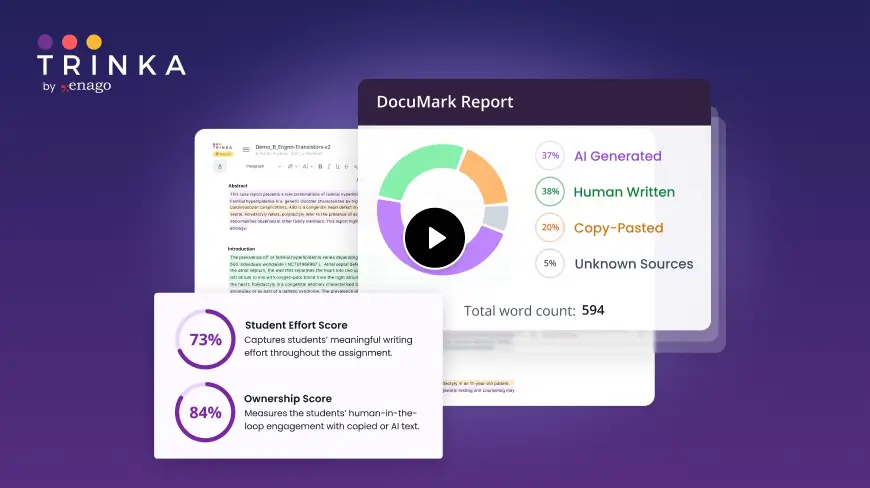
DocuMark: Responsible AI Use for Academic Integrity
Knowing your institution's AI policy is step one. DocuMark helps enforce it fairly by empowering universities to manage AI-generated content, prevent cheating, and support student writing through responsible AI use.
Common Questions About Allegany College of Maryland's AI Policies
Allegany College of Maryland has defined AI policies in 6 of 12 categories, with an overall coverage score of 50%.
The academic integrity policy defines plagiarism as reproducing the ideas, words, or statements of another person without acknowledgment. This general requirement for attribution applies to all sources, which would implicitly include generative AI.
The college's academic integrity policy prohibits unauthorized assistance and submitting work that is not the student's own, and it states that students can face disciplinary action for policy violations. However, the documents provided do not define AI-specific detection tools or AI-specific enforcement procedures.
No explicit data protection or approved AI platform policy is currently defined in the available policy sources.