Teaching & Learning
- AI use in graded coursework is prohibited unless the instructor gives permission
- The policy treats misuse of AI as plagiarism, and instructors set classroom academic honesty policies in the syllabus
vi. Artificial Intelligence: Technology such as artificial intelligence (AI) will be prohibited unless the instructor gives permission for its use. The abuse of AI will be treated as a form of plagiarism.
d. Use technology ethically, including abstaining from the use of artificial intelligence (AI) without permission of the instructor.
a. Instructors are responsible for establishing classroom policies regarding academic honesty and for adequately preparing their students for the challenges assignments provide.
c. Each instructor must inform students of the classroom policy regarding academic honesty in writing at the beginning of the semester through the course syllabus.
- The policy does not specifically mention AI use during exams or quizzes
- It does state that students must avoid unauthorized materials during testing, and instructors may determine course consequences for academic dishonesty
f. Avoid using unauthorized material during testing
e. Instructors have the full authority to determine the effect that academic dishonesty incident have on the student's standing in the course.
- AI use for learning or study assistance is not separately defined
- The only stated rule is that AI use is prohibited unless the instructor gives permission
vi. Artificial Intelligence: Technology such as artificial intelligence (AI) will be prohibited unless the instructor gives permission for its use. The abuse of AI will be treated as a form of plagiarism.
d. Use technology ethically, including abstaining from the use of artificial intelligence (AI) without permission of the instructor.
Research
- It does prohibit AI unless an instructor permits it and treats AI abuse as plagiarism
- The policy does not address AI in research papers, theses, dissertations, or manuscript preparation specifically
vi. Artificial Intelligence: Technology such as artificial intelligence (AI) will be prohibited unless the instructor gives permission for its use. The abuse of AI will be treated as a form of plagiarism.
d. Use technology ethically, including abstaining from the use of artificial intelligence (AI) without permission of the instructor.
- AI use for research data or analysis is not specifically defined
- The policy separately prohibits fabrication, including creation or alteration of experimental data, and generally prohibits AI unless the instructor gives permission
d. Fabrication- The use of invented or misrepresentative information. Fabrication includes but is not limited to the creation or alteration of experimental data and listing a source in the works cited that were not actually used in the research.
vi. Artificial Intelligence: Technology such as artificial intelligence (AI) will be prohibited unless the instructor gives permission for its use. The abuse of AI will be treated as a form of plagiarism.
- The university does not provide AI-specific rules for grant proposals, IRB materials, or research ethics declarations
- The source only states general academic honesty rules, including that AI is prohibited unless the instructor gives permission and that abuse of AI is treated as plagiarism
vi. Artificial Intelligence: Technology such as artificial intelligence (AI) will be prohibited unless the instructor gives permission for its use. The abuse of AI will be treated as a form of plagiarism.
Academic Integrity
- The policy requires proper crediting of sources and explicitly states that the abuse of AI is treated as plagiarism
- While it does not provide AI-specific citation formats, it implies that any permitted use of AI must be credited to avoid being considered plagiarism
vi. Artificial Intelligence: Technology such as artificial intelligence (AI) will be prohibited unless the instructor gives permission for its use. The abuse of AI will be treated as a form of plagiarism.
b. Plagiarism- To steal and pass off (the ideas or words of another) as one's own; use (another's production) without crediting the source.
g. Avoid sharing the ideas of others without giving proper credit through citations.
- The policy sets an instructor-led enforcement process for suspected academic dishonesty, including AI misuse
- Instructors first meet with the student, determine consequences when sufficient evidence exists, and may escalate for institutional sanctions; no AI detection tools are mentioned
When an instance of academic dishonesty is suspected, the instructor should first meet with the student. If the student is not responsible for academic dishonesty, no action is taken. If the instructor believes sufficient evidence exists and the student has violated the academic honesty policy, consequences will be determined by the instructor.
Sanctions will be addressed at the instructor level first. If the instructor has determined that the violation of the academic honesty policy has been exceeded, then institution sanctions will be applied. Students with repeated violations should also be considered for institutional sanctions.
If the instructor seeks sanctions for the academic dishonesty incident an Academic Dishonesty Violation Form will be submitted to the Dean for Distance and General Education or the Dean for CTE and Industry Partnerships.
Consequences for violating the academic honesty policy can include, but are not limited to the following:
a. The instructor will allow the student to repeat the course work.
b. The instructor will assign a lowered grade for an assignment.
c. The instructor will assign partial credit for revising an assignment.
d. The instructor will assign a failing grade on an assignment.
Consequences for violating the academic honesty policy can include, but are not limited to the following:
a. The instructor will make a recommendation to the Vice President for Academic Affairs (VPAA) for the dismissal of the student from the course.
b. The instructor will make a recommendation to the VPAA for the dismissal of the student from the course with a grade of XF. The student will not be allowed to receive a W on their transcript.
c. The instructor will make a recommendation to the VPAA for the student to be placed on probation, suspended, or dismissed from the institution.
Institutional & Administrative
- The source does not set rules for faculty or staff using AI for grading, feedback, lesson planning, or administrative work
- It only states instructor responsibilities for establishing and communicating classroom academic honesty policies and handling violations
a. Instructors are responsible for establishing classroom policies regarding academic honesty and for adequately preparing their students for the challenges assignments provide.
b. Instructors also provide support for students with questions concerning academic honesty and take steps to minimize the temptation of academic dishonesty in the classroom.
c. Each instructor must inform students of the classroom policy regarding academic honesty in writing at the beginning of the semester through the course syllabus.
d. Instructors should be consistent in applying the academic honesty policy, protect the identity of students accused of academic dishonesty, and use reason in making consequences match the offense.
e. Instructors have the full authority to determine the effect that academic dishonesty incident have on the student's standing in the course.
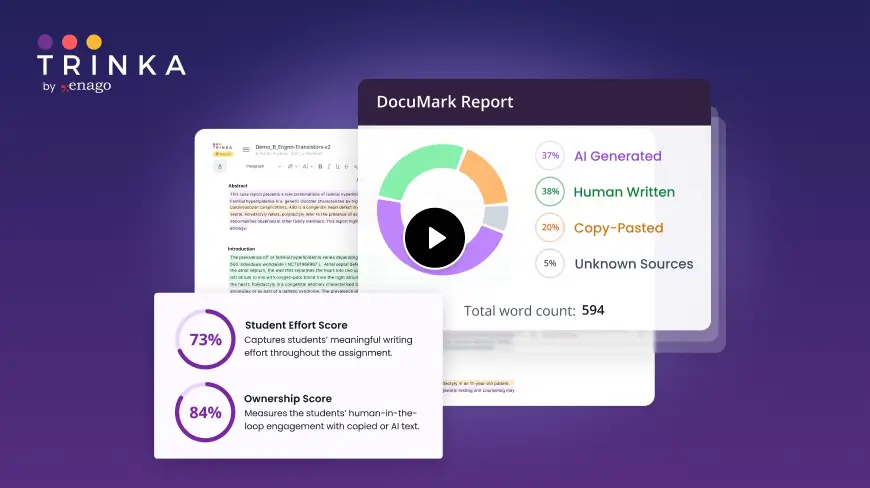
DocuMark: Responsible AI Use for Academic Integrity
Knowing your institution's AI policy is step one. DocuMark helps enforce it fairly by empowering universities to manage AI-generated content, prevent cheating, and support student writing through responsible AI use.
Common Questions About Allen County Community College's AI Policies
Allen County Community College has defined AI policies in 9 of 12 categories, with an overall coverage score of 75%.
The policy requires proper crediting of sources and explicitly states that the abuse of AI is treated as plagiarism. While it does not provide AI-specific citation formats, it implies that any permitted use of AI must be credited to avoid being considered plagiarism.
The policy sets an instructor-led enforcement process for suspected academic dishonesty, including AI misuse. Instructors first meet with the student, determine consequences when sufficient evidence exists, and may escalate for institutional sanctions; no AI detection tools are mentioned.
No explicit data protection or approved AI platform policy is currently defined in the available policy sources.