Teaching & Learning
- The catalog only notes that active participation in distance learning may include taking an exam, without tying that to AI use
- The catalog states that AI-generated content rules apply to students, but it does not provide a specific AI rule for exams, quizzes, tests, or other formal assessments
not defined
- This is presented as guidance, not a formal academic policy
- A university blog post encourages students to use AI as a support tool for learning
- The post describes AI as useful for studying, outlining, drafts, and research, while expecting students to add their own critical thinking and voice
Most reputable universities, Amberton included, care about learning, not surveillance. We expect students to do their own work, think critically, and develop real skills. Using AI as a tutor-like tool for studying and outlining can transform your learning experience.
At Amberton, we recognize that AI is the cornerstone of a new age of business, education, and even humanity. We’re neither expecting nor pretending that it’s going away. Our focus is to help students understand AI so you can use it wisely.
Our students are encouraged to deploy AI to help build their best work. Outlines, drafts, and research can be enhanced and expedited by it. Adding your own critical thinking and voice is what makes your work your own.
Research
Academic Integrity
- Amberton states student work may be submitted to plagiarism detection services like Turnitin
- Plagiarism is a serious violation of the student code of conduct and may result in disciplinary action
- The university also notes in a blog post that AI detectors are not fully reliable and emphasizes learning over surveillance
[From Student Catalog:] Amberton University and its instructors monitor student work for plagiarism and reserve the right to submit such work to technology-based plagiarism detection services and applications at any time. Students agree that by taking this course, all required assignments may be subject to submission for a textual similarity review to Turnitin.com for the detection of plagiarism... Plagiarism is a violation of the University’s code of student ethical conduct and is one that is taken seriously. Violations of the ethical standards expected of students may result in disciplinary action...
[From Blog Post:] But AI detectors aren’t perfect. They often produce false positives where human writing is mistaken for AI... No AI detector is 100% accurate.
Institutional & Administrative
- The catalog states that improper or non-academic use of Amberton technologies is unethical, but it does not define an AI-specific data protection policy, list approved AI platforms, or set restrictions on entering university information into AI tools
The improper or non-academic use of Amberton’s equipment and/or technologies is unethical.
- The provided sources do not define a formal university-wide AI governance framework, committee, or roadmap
- In a blog post, Amberton presents an institutional stance that AI is an important and lasting part of education, and its focus is to help students use AI wisely and responsibly
At Amberton, we recognize that AI is the cornerstone of a new age of business, education, and even humanity. We’re neither expecting nor pretending that it’s going away. Our focus is to help students understand AI so you can use it wisely.
At Amberton University, we teach working adults how to adapt, think critically, and apply new tools responsibly, helping you graduate ready for whatever tech comes next.
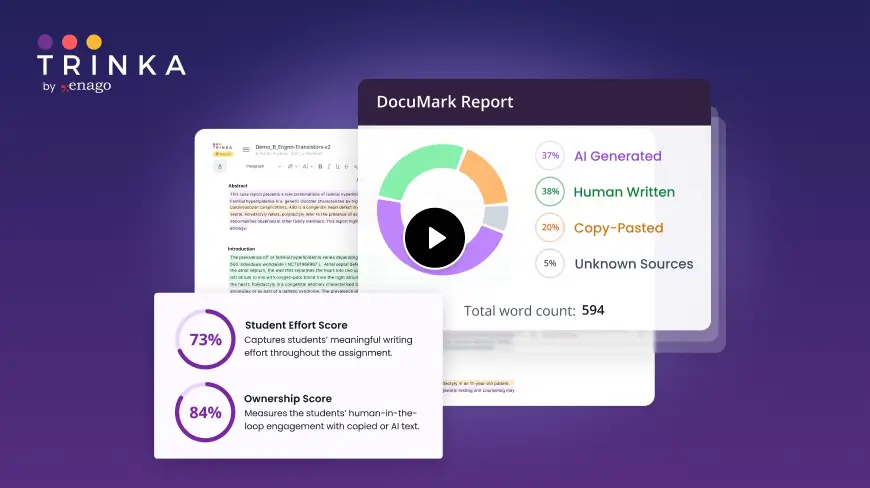
DocuMark: Responsible AI Use for Academic Integrity
Knowing your institution's AI policy is step one. DocuMark helps enforce it fairly by empowering universities to manage AI-generated content, prevent cheating, and support student writing through responsible AI use.
Common Questions About Amberton University's AI Policies
Amberton University has defined AI policies in 5 of 12 categories, with an overall coverage score of 42%.
No explicit disclosure requirement is currently defined in the available policy sources.
Amberton states student work may be submitted to plagiarism detection services like Turnitin. Plagiarism is a serious violation of the student code of conduct and may result in disciplinary action. The university also notes in a blog post that AI detectors are not fully reliable and emphasizes learning over surveillance.
The catalog states that improper or non-academic use of Amberton technologies is unethical, but it does not define an AI-specific data protection policy, list approved AI platforms, or set restrictions on entering university information into AI tools.