Teaching & Learning
- The catalog does not mention AI specifically for coursework or assignments
- It does state that academic dishonesty is prohibited, including submitting ideas, papers, or information from the internet as one's own, collaborating contrary to course rules, and having work submitted by another person under a student's name
Since the primary goal of education is to increase one’s own knowledge, academic dishonesty will not be tolerated at American Baptist College.
2. Collaborating with others in work to be presented, contrary to the stated rules of the course;
3. Plagiarizing, including the submission of ideas, papers or information from the internet,
(whether purchased, borrowed, or otherwise obtained) as one’s own. When direct
quotations are used in themes, essays, term papers, tests, book reviews, and other similar
work, they must be indicated; and when the ideas of another are incorporated in any paper,
they must be acknowledged, according to a style of documentation appropriate to the
discipline;
7. Knowingly and intentionally assisting another student in any of the above, including
assistance in an arrangement whereby any work, classroom performance, examination, or
other activity is submitted or performed by a person other than the student under whose
name the work is submitted or performed.
- The catalog does not specifically mention AI in the context of examinations or assessments
- However, it explicitly prohibits cheating on an examination as a form of academic dishonesty
Since the primary goal of education is to increase one’s own knowledge, academic dishonesty will not be tolerated at American Baptist College. Academic dishonesty is defined as, but not limited to the following: 1. Cheating on an examination;
Research
- The catalog does not define any AI policy for research writing or manuscript preparation
- It includes a general academic dishonesty rule that applies to research and prohibits plagiarism, including submitting ideas, papers, or information from the internet as one's own, and requires acknowledgment of others' ideas and indication of direct quotations
American Baptist College acknowledges the need to preserve an orderly process with regard to
teaching, research, and public service, as well as the need to preserve and monitor students’
academic rights and responsibilities.
3. Plagiarizing, including the submission of ideas, papers or information from the internet,
(whether purchased, borrowed, or otherwise obtained) as one’s own. When direct
quotations are used in themes, essays, term papers, tests, book reviews, and other similar
work, they must be indicated; and when the ideas of another are incorporated in any paper,
they must be acknowledged, according to a style of documentation appropriate to the
discipline;
- The catalog does not define any AI policy for research data or analysis
- It does state as part of academic dishonesty that falsifying records, laboratory results, or other data is prohibited
American Baptist College acknowledges the need to preserve an orderly process with regard to
teaching, research, and public service, as well as the need to preserve and monitor students’
academic rights and responsibilities.
5. Falsifying records, laboratory results, or other data;
- The catalog does not define any AI-specific research ethics or integrity policy
- It does state generally that academic dishonesty will not be tolerated in relation to teaching, research, and public service
American Baptist College acknowledges the need to preserve an orderly process with regard to
teaching, research, and public service, as well as the need to preserve and monitor students’
academic rights and responsibilities. Since the primary goal of education is to increase one’s own
knowledge, academic dishonesty will not be tolerated at American Baptist College.
Academic Integrity
- The catalog does not provide AI-specific disclosure or citation rules
- It does require that direct quotations be indicated and that another person's ideas incorporated into a paper be acknowledged according to the documentation style appropriate to the discipline
When direct
quotations are used in themes, essays, term papers, tests, book reviews, and other similar
work, they must be indicated; and when the ideas of another are incorporated in any paper,
they must be acknowledged, according to a style of documentation appropriate to the
discipline;
- The catalog does not mention AI detection tools
- It does establish enforcement procedures for academic dishonesty: sanctions can range from assignment revision or reprimand to failing grades, suspension, or exclusion, and suspected violations may be handled by faculty, the Academic Dean, and the Honor Council through a formal process with appeal rights
Possible consequences of academic dishonesty, depending on the seriousness of the offense, may
range from a revision of an assignment, and or a reprimand, a written reprimand, an F or zero for
grade work, removal from the course with a grade of F, to possible suspension or exclusion from the
College.
1. Should a faculty member suspect a student of violating the Honor System, s/he may
choose to meet with the student to see if the matter can be resolved.
1a. If the matter is not resolved satisfactorily, the faculty member should provide a brief written
summary of the issue to the Academic Dean.
The council will decide guilt and disciplinary action.
Appeals of the council’s decision must be made in writing and directed to the Vice
President of Academic Affairs within five days of the time of the decision.
Institutional & Administrative
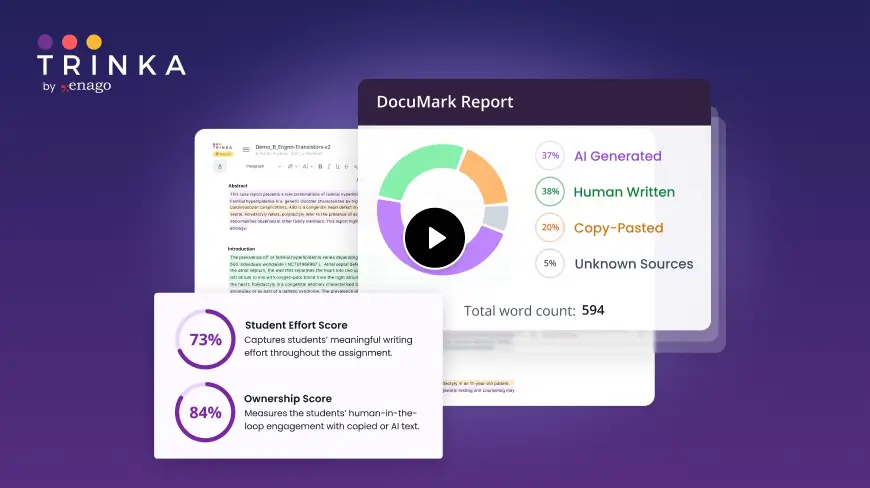
DocuMark: Responsible AI Use for Academic Integrity
Knowing your institution's AI policy is step one. DocuMark helps enforce it fairly by empowering universities to manage AI-generated content, prevent cheating, and support student writing through responsible AI use.
Common Questions About American Baptist College's AI Policies
American Baptist College has defined AI policies in 7 of 12 categories, with an overall coverage score of 58%.
The catalog does not provide AI-specific disclosure or citation rules. It does require that direct quotations be indicated and that another person's ideas incorporated into a paper be acknowledged according to the documentation style appropriate to the discipline.
The catalog does not mention AI detection tools. It does establish enforcement procedures for academic dishonesty: sanctions can range from assignment revision or reprimand to failing grades, suspension, or exclusion, and suspected violations may be handled by faculty, the Academic Dean, and the Honor Council through a formal process with appeal rights.
No explicit data protection or approved AI platform policy is currently defined in the available policy sources.