Teaching & Learning
- Faculty have the discretion to prohibit or restrict the use of generative AI for any assignment
- The unauthorized use of generative artificial intelligence for coursework and assignments is a violation of the Academic Honesty Policy
- Submitting work generated in whole or substantial part by an AI program is considered a serious breach of academic honesty and plagiarism
The unauthorized use of generative artificial intelligence is considered a violation of AIC's Academic Honesty Policy. AIC students are expected to submit work that is their own. Faculty have the right to prohibit or restrict the use of generative artificial intelligence for all or part of any assignment. ... Submitting work generated in whole or substantial part by an artificial intelligence program is considered a serious breach of academic honesty and plagiarism.
- The university's Academic Honesty Policy applies to submitted work, including examinations and assessments
- Unauthorized use of generative AI is a violation, and faculty have the authority to prohibit or restrict its use for all or part of an assignment or assessment
The unauthorized use of generative artificial intelligence is considered a violation of AIC's Academic Honesty Policy. ... Faculty have the right to prohibit or restrict the use of generative artificial intelligence for all or part of any assignment.
- This applies to programming assignments unless an instructor explicitly permits or restricts such use
- While not specifically mentioning code generation, the university's general policy prohibits unauthorized use of generative AI in submitted work
The unauthorized use of generative artificial intelligence is considered a violation of AIC's Academic Honesty Policy. ... Faculty have the right to prohibit or restrict the use of generative artificial intelligence for all or part of any assignment.
Research
- Submitting research work generated in whole or substantial part by AI is a serious breach of academic honesty
- Unauthorized use is prohibited, and students must, at a minimum, cite any use of generative AI in submitted work
- The use of generative AI in research writing, including theses and dissertations, is governed by the university's Academic Honesty Policy
The unauthorized use of generative artificial intelligence is considered a violation of AIC's Academic Honesty Policy. ... At a minimum, all students must cite their use of generative artificial intelligence in any submitted work. ... Submitting work generated in whole or substantial part by an artificial intelligence program is considered a serious breach of academic honesty and plagiarism.
- The university's Academic Honesty Policy serves as the applicable research integrity rule for submitted research work involving generative AI
- Unauthorized use of generative AI is a violation, students must cite such use in submitted work, and submitting work generated in whole or substantial part by AI is considered a serious breach of academic honesty and plagiarism
The unauthorized use of generative artificial intelligence is considered a violation of AIC's Academic Honesty Policy. ... At a minimum, all students must cite their use of generative artificial intelligence in any submitted work. ... Submitting work generated in whole or substantial part by an artificial intelligence program is considered a serious breach of academic honesty and plagiarism.
Academic Integrity
- The policy also states that the faculty member should provide a written citation guide to assist the student
- The university requires that, at a minimum, all students must cite their use of generative artificial intelligence in any submitted work
At a minimum, all students must cite their use of generative artificial intelligence in any submitted work. The faculty member should provide a written citation guide to assist the student.
- Using generative AI without authorization or submitting work generated in whole or substantial part by AI is treated as a serious breach of academic honesty and plagiarism
- Sanctions are handled under the Academic Honesty Policy and can range from a failing grade on the assignment to a failing grade in the course, with referral for additional sanctions up to and including dismissal from the College
Submitting work generated in whole or substantial part by an artificial intelligence program is considered a serious breach of academic honesty and plagiarism. Sanctions for violations can range from a failing grade on the assignment to a failing grade in the course and a referral to the Dean for additional sanctions up to and including dismissal from the College.
Institutional & Administrative
- The provided sources include a privacy policy, but they do not define any explicit rules about entering university data into AI tools, approved AI platforms, or prohibited AI systems
not defined
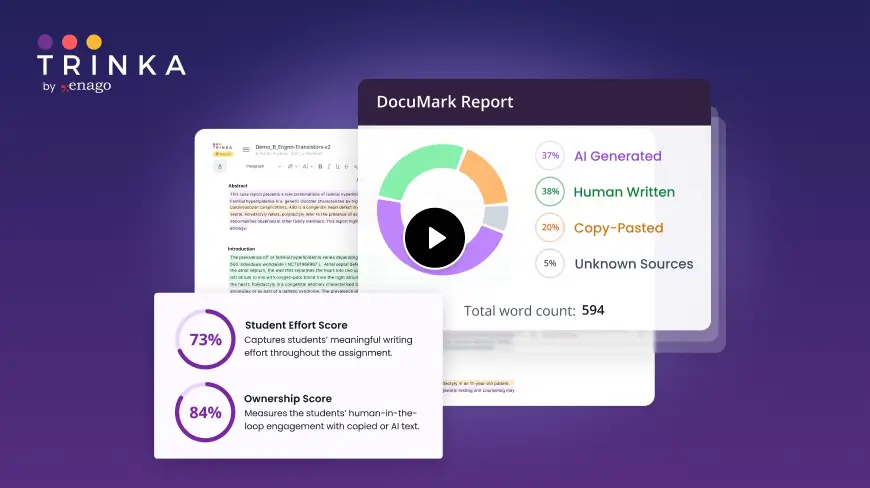
DocuMark: Responsible AI Use for Academic Integrity
Knowing your institution's AI policy is step one. DocuMark helps enforce it fairly by empowering universities to manage AI-generated content, prevent cheating, and support student writing through responsible AI use.
Common Questions About American International College's AI Policies
American International College has defined AI policies in 8 of 12 categories, with an overall coverage score of 67%.
The university requires that, at a minimum, all students must cite their use of generative artificial intelligence in any submitted work. The policy also states that the faculty member should provide a written citation guide to assist the student.
Using generative AI without authorization or submitting work generated in whole or substantial part by AI is treated as a serious breach of academic honesty and plagiarism. Sanctions are handled under the Academic Honesty Policy and can range from a failing grade on the assignment to a failing grade in the course, with referral for additional sanctions up to and including dismissal from the College.
The provided sources include a privacy policy, but they do not define any explicit rules about entering university data into AI tools, approved AI platforms, or prohibited AI systems.