Teaching & Learning
- Amherst College states that inappropriate use of generative artificial intelligence in academic work is a violation of academic integrity
- The policy is framed broadly at the student conduct level and does not provide assignment-specific permission rules or instructor-discretion language in the provided sources
Amherst College considers it a violation of the requirements of academic integrity to submit work that is not one’s own or otherwise to undermine the conditions under which academic work is performed by oneself or by others.
Violations of academic integrity include, but are not limited to, academic dishonesty, including the fabrication, falsification, or forgery of academic work; cheating; plagiarism, including ghostwritten or contracted work; inappropriate use of generative artificial intelligence; or the facilitation of other academic violations.
- Amherst College does not provide a separate AI rule for exams or assessments in the provided sources
- The only explicit statement is the general academic-integrity prohibition on inappropriate use of generative artificial intelligence
Amherst College considers it a violation of the requirements of academic integrity to submit work that is not one’s own or otherwise to undermine the conditions under which academic work is performed by oneself or by others.
Violations of academic integrity include, but are not limited to, academic dishonesty, including the fabrication, falsification, or forgery of academic work; cheating; plagiarism, including ghostwritten or contracted work; inappropriate use of generative artificial intelligence; or the facilitation of other academic violations.
- However, they do not define a university rule specifically permitting or prohibiting student use of AI for personal studying or tutoring
- The provided Amherst sources offer general educational guidance about using generative AI responsibly, including that users should make informed choices, understand tool limitations, and mitigate privacy and data risks
This guide provides a basic overview of generative AI, including ethical issues and responsible use, in order to help you make informed choices about using AI tools.
Generative AI tools differ in their levels of security, privacy, and accessibility features. Before you start using a tool, make sure you understand its privacy, security, and accessibility levels, along with associated risks.
Check Amherst IT's generative AI tool ratings and review the recommendations on that page in order to mitigate risks to yourself and others.
Research
Academic Integrity
- The provided sources do not mention AI detection tools, but they do establish that such conduct falls within enforceable misconduct procedures
- Amherst College treats inappropriate use of generative artificial intelligence as an academic-integrity violation under the Student Code of Conduct
Amherst College considers it a violation of the requirements of academic integrity to submit work that is not one’s own or otherwise to undermine the conditions under which academic work is performed by oneself or by others.
Violations of academic integrity include, but are not limited to, academic dishonesty, including the fabrication, falsification, or forgery of academic work; cheating; plagiarism, including ghostwritten or contracted work; inappropriate use of generative artificial intelligence; or the facilitation of other academic violations.
All participants in College adjudications are required to be truthful.
Participants in adjudication processes are required to participate throughout the process unless the Office of Community Standards provides a written exemption.
Institutional & Administrative
- Library guidance also directs users to Amherst IT's tool ratings and college recommendations to mitigate privacy, security, and accessibility risks
- Amherst guidance warns users not to enter personal or copyrighted information into AI platforms and advises reviewing platform data policies and using systems with strong privacy and security protections
Data uploaded to generative AI platforms becomes public, and it is difficult to know how that data can or will be used for future purposes. Therefore, do not put personal or copyrighted information onto any AI platform. Read a platform’s data policies before using it, and only use systems with strong privacy and security measures.
Generative AI tools differ in their levels of security, privacy, and accessibility features. Before you start using a tool, make sure you understand its privacy, security, and accessibility levels, along with associated risks.
Check Amherst IT's generative AI tool ratings and review the recommendations on that page in order to mitigate risks to yourself and others.
- The provided sources show that Amherst has campus recommendations and IT tool ratings related to generative AI, but they do not define a broader university AI governance framework, committee structure, or strategic roadmap in the accessible text provided
Check Amherst IT's generative AI tool ratings and review the recommendations on that page in order to mitigate risks to yourself and others.
### Additional Resources
Generative AI Recommendations for the Amherst College Campus
Amherst College IT’s Information on Generative AI Tools’ Accessibility, Privacy & Security
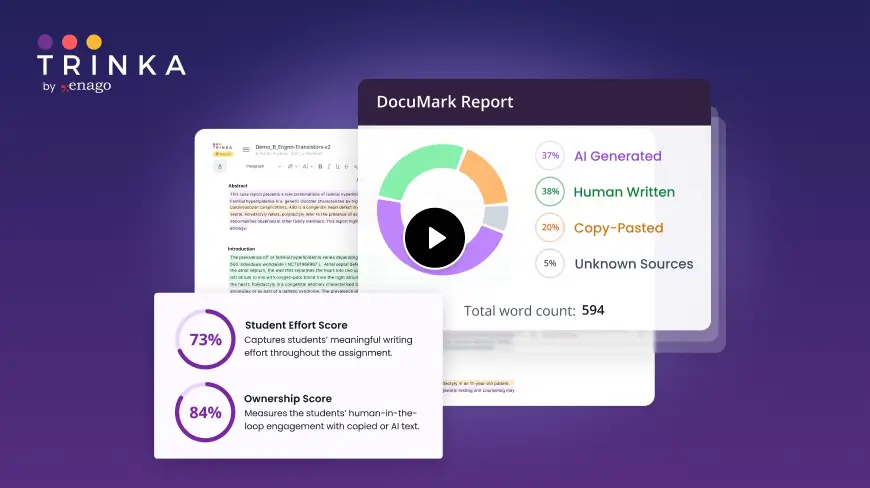
DocuMark: Responsible AI Use for Academic Integrity
Knowing your institution's AI policy is step one. DocuMark helps enforce it fairly by empowering universities to manage AI-generated content, prevent cheating, and support student writing through responsible AI use.
Common Questions About Amherst College's AI Policies
Amherst College has defined AI policies in 6 of 12 categories, with an overall coverage score of 50%.
No explicit disclosure requirement is currently defined in the available policy sources.
Amherst College treats inappropriate use of generative artificial intelligence as an academic-integrity violation under the Student Code of Conduct. The provided sources do not mention AI detection tools, but they do establish that such conduct falls within enforceable misconduct procedures.
Amherst guidance warns users not to enter personal or copyrighted information into AI platforms and advises reviewing platform data policies and using systems with strong privacy and security protections. Library guidance also directs users to Amherst IT's tool ratings and college recommendations to mitigate privacy, security, and accessibility risks.