Teaching & Learning
- Use of generative AI in coursework is primarily set at the course level
- Whether AI use is permitted or constitutes academic dishonesty depends on the course syllabus and any applicable student conduct rules
- Faculty may require AI tools in coursework, but they cannot force students to accept a third-party contract, and they must provide an alternative if a student refuses
Faculty may assign coursework that requires the use of ChatGPT or similar free tools. However, faculty cannot compel students to enter into a contract, such as terms of use or an end user license agreement. If a student refuses to sign or “clickthrough” such a contract, faculty must provide alternative course materials that allow the objecting student to participate in the course.
Whether a particular use of generative AI constitutes academic dishonesty is contingent upon the acceptable use parameters established in a course syllabus.
Similarly, a faculty member may choose to prohibit all uses of generative AI for essay writing in one course. However, that same faculty may choose to permit the use of generative AI in another course for ideation or as a developmental tool for essay writing.
- AI use in exams and assessments is not governed by a single blanket rule; it depends on the acceptable-use parameters set in the course syllabus
- The guidance specifically states that using AI on an examination may be academic dishonesty in one course but allowed in another if the instructor permits it in assessments
Whether a particular use of generative AI constitutes academic dishonesty is contingent upon the acceptable use parameters established in a course syllabus. For instance, students using generative AI to complete a multiple-choice examination may constitute academic dishonesty in one course, but the same use may not constitute academic dishonesty in another course where a faculty member permits the use of generative AI in assessments.
- The college also offers human writing tutoring and essay feedback, but it does not define a specific standalone policy on student use of AI for non-graded study assistance
- The university's system guidance supports responsible exploration and ethical use of generative AI and describes using AI to support lower-level tasks so students can focus on higher-level thinking
Minnesota State supports the responsible exploration and ethical use of generative AI services.
Consider ways to incorporate generative AI tools to support students in accomplishing low-level tasks in order to focus their efforts on high-level thinking, like analysis, evaluation, and synthesis.
Anoka-Ramsey students can get free writing tutoring in a variety of classes.
Upload your essay through our online form, and a writing tutor will email you feedback within 2 business days.
- As with other coursework, acceptable use would depend on course-level expectations and syllabus rules
- The guidance identifies GitHub Copilot as an available AI coding tool, but it does not set a university-wide rule for student use of AI in programming assignments
Whether a particular use of generative AI constitutes academic dishonesty is contingent upon the acceptable use parameters established in a course syllabus.
• Copilot for Github to assist with writing code
Research
- The sources do not define a research-manuscript-specific AI policy for theses, dissertations, or scholarly papers
- The closest university-wide guidance is that users should cite generative AI in academic and professional work and should validate outputs for accuracy, including where material may be relied on for research
Users should always cite their use of generative AI services in academic and professional work consistent with standards set forth by the American Psychological Association (APA), the Chicago Manual of Style, the Modern Language Association (MLA), and similar guiding organizations.
Users should independently validate the outputs of generative AI services for accuracy and fidelity to fact, especially in circumstances where generated material may be presented in a slidedeck, report, application, or any other format where observers may rely on the information for business, academics, or research.
- The sources do not define a specific AI policy for research data analysis or synthetic data generation
- The system guidance does require users to validate AI-generated outputs for accuracy in research contexts and to protect sensitive data through contracts and practices such as anonymization and restricted access
Users should independently validate the outputs of generative AI services for accuracy and fidelity to fact, especially in circumstances where generated material may be presented in a slidedeck, report, application, or any other format where observers may rely on the information for business, academics, or research.
Providing or using highly restricted or restricted data in any third-party application or service, including generative AI services, requires a contractual agreement with the third party that ensures adherence to data security and data sharing protocols.
In circumstances where a contract may provide authorized use of sensitive data, users should consider practices that protect the subject of the data when using generative AI services. This could include practices such as anonymizing data and/or restricting data access to specific roles.
- The sources do not define a research-ethics-specific AI policy for grant proposals, IRB applications, or ethics declarations
- The available institution-wide guidance is that AI use should be cited in academic and professional work and that outputs should be independently validated for accuracy when used in research-related contexts
Users should always cite their use of generative AI services in academic and professional work consistent with standards set forth by the American Psychological Association (APA), the Chicago Manual of Style, the Modern Language Association (MLA), and similar guiding organizations.
Users should independently validate the outputs of generative AI services for accuracy and fidelity to fact, especially in circumstances where generated material may be presented in a slidedeck, report, application, or any other format where observers may rely on the information for business, academics, or research.
Academic Integrity
- Citation of AI use is required in academic and professional work
- The guidance states that submitting AI output as one's own work without proper citation is plagiarism, and example syllabus language requires AI contributions to be properly quoted and cited every time they are used
Users should always cite their use of generative AI services in academic and professional work consistent with standards set forth by the American Psychological Association (APA), the Chicago Manual of Style, the Modern Language Association (MLA), and similar guiding organizations.
Submitting the outputs from generative AI as one’s own work in the absence of proper citation is plagiarism.
All work submitted during this course must be your own. Contributions from anyone or anything else, including AI sources, must be properly quoted and cited every time they are used.
- The guidance allows course-level use of AI detection services, but faculty are encouraged to disclose that possibility in the syllabus and course description
- Enforcement for improper AI use proceeds under institutional academic misconduct or student conduct processes, and the document notes that AI detection is complicated by hallucinations and AI humanizers
In courses where AI detection services may be used, faculty are encouraged to include a statement in their syllabus and the course description that indicates student work may be submitted to an AI or plagiarism detection service.
Failure to do so violates the institution's academic misconduct/integrity policy. Any allegations of academic misconduct will be adjudicated using the process outlined in the institution’s student handbook.
The presence of this information can be an indicator of generative AI use, but educators should take care not to confuse generative AI hallucinations with a student’s authentic (but uninformed) response.
The presence of AI humanizers further complicates the use of AI detection services.
Institutional & Administrative
- Faculty and staff use of generative AI is permitted within institutionally communicated expectations and applicable system policies
- Faculty are encouraged to define acceptable AI use in syllabi, disclose required AI use in course materials, confirm whether a service is approved before using it for work-related tasks, and seek permission before submitting faculty-authored materials to AI tools
Institutions should communicate expectations and parameters for employee use of generative AI services. These expectations and parameters should be informed by applicable system policies and procedures (as identified in this document) along with institution policies related to employee conduct.
Faculty should also consider including a syllabus statement defining acceptable use of generative AI services in their course.
Faculty are encouraged to clearly note the required use of generative AI services in their course descriptions and course syllabus so students can make an informed enrollment decision based on the required use.
Faculty and staff should confirm a service’s approval status prior to using it for work-related tasks.
Submitting faculty work to a generative AI service without the permission of the author may infringe on copyrights to that work.
- Only approved AI services should be used in virtual meetings, and faculty and staff must verify approval status before work-related use
- The guidance also identifies approved or authorized platforms such as Microsoft Copilot services and Zoom AI Companion under enterprise agreements
- Minnesota State sets three data classification levels and requires a contractual agreement before highly restricted or restricted data can be used in third-party AI services
Minnesota State has established three (3) data classification levels consistent with the MGDPA. The classification levels are highly restricted, restricted, and low.
Providing or using highly restricted or restricted data in any third-party application or service, including generative AI services, requires a contractual agreement with the third party that ensures adherence to data security and data sharing protocols.
To protect the security and privacy of Minnesota State students, employees, and partners, only approved AI services should be used within virtual meetings. These include the Zoom AI Summary tool and Microsoft Copilot in Teams.
Faculty and staff should confirm a service’s approval status prior to using it for work-related tasks.
The Minnesota State Microsoft 365 agreement authorizes the use of generative AI services that Microsoft Corporation officially provides.
The Zoom AI Companion specializes at notetaking and creating summaries of meetings hosted in Zoom. This service is available to all employees in Minnesota State and approved for use through the system’s enterprise Zoom agreement.
- The college relies on Minnesota State system-level AI guidance rather than a separate Anoka-Ramsey-specific AI governance document in the provided sources
- The system guidance states support for responsible exploration and ethical use of generative AI, says unanswered questions should be directed through the Minnesota State Service Portal, and frames institutional parameters through applicable board policies, procedures, and approval processes
Minnesota State supports the responsible exploration and ethical use of generative AI services. In situations where this document does not provide guidance to specific questions about generative artificial intelligence, persons are encouraged to contact system office representatives for further guidance through the Minnesota State Service Portal.
If an institution has approved the use of ChatGPT, then users can use it within the parameters set by the institution.
Institutions should communicate expectations and parameters for employee use of generative AI services. These expectations and parameters should be informed by applicable system policies and procedures (as identified in this document) along with institution policies related to employee conduct.
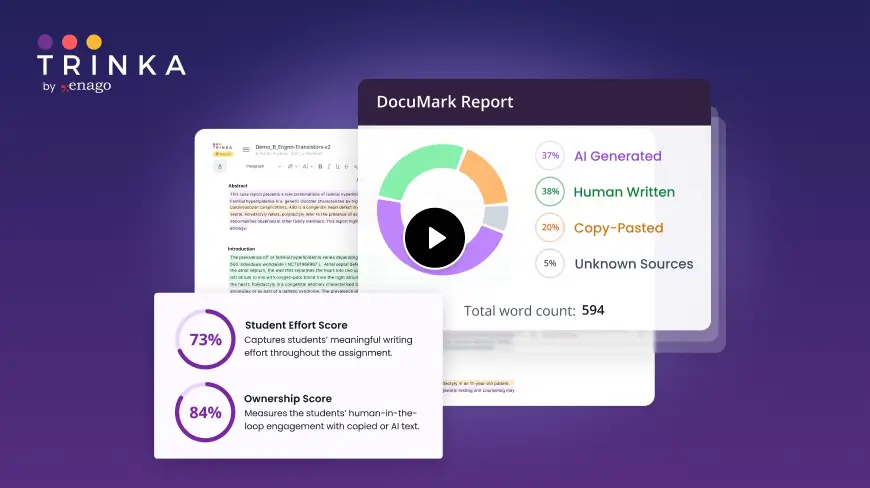
DocuMark: Responsible AI Use for Academic Integrity
Knowing your institution's AI policy is step one. DocuMark helps enforce it fairly by empowering universities to manage AI-generated content, prevent cheating, and support student writing through responsible AI use.
Common Questions About Anoka-Ramsey Community College's AI Policies
Anoka-Ramsey Community College has defined AI policies in 12 of 12 categories, with an overall coverage score of 100%.
Citation of AI use is required in academic and professional work. The guidance states that submitting AI output as one's own work without proper citation is plagiarism, and example syllabus language requires AI contributions to be properly quoted and cited every time they are used.
The guidance allows course-level use of AI detection services, but faculty are encouraged to disclose that possibility in the syllabus and course description. Enforcement for improper AI use proceeds under institutional academic misconduct or student conduct processes, and the document notes that AI detection is complicated by hallucinations and AI humanizers.
Minnesota State sets three data classification levels and requires a contractual agreement before highly restricted or restricted data can be used in third-party AI services. Only approved AI services should be used in virtual meetings, and faculty and staff must verify approval status before work-related use. The guidance also identifies approved or authorized platforms such as Microsoft Copilot services and Zoom AI Companion under enterprise agreements.