Teaching & Learning
- AI-generated material submitted as a student's own work is prohibited under the university's plagiarism rules
- The policy treats content from AI generators such as ChatGPT as material from another source that must not be presented as original student work, and assignment collaboration depends on whether the instructor expressly permits it
d. Plagiarism: Presenting another’s material as one’s own, including using another’s words, results, processes or ideas, in whole or in part, without giving appropriate credit. Plagiarism is contingent on the content of the submitted work product, regardless of whether the unattributed material was included intentionally or unintentionally. The use of material taken from any source—whether directly quoted, paraphrased, or otherwise adapted—must be attributed to that source. Plagiarism also includes the submission of material generated by others. This may include artificial intelligence (AI) content generators and generative AI tools such as ChatGPT; websites with a question-and-answer feature such as Course Hero, Chegg, and Bing; assistance from tutors or online language translators that results in unoriginal work; and work that is purchased or otherwise prepared by another individual.
e. Unauthorized Collaboration: Working with others in the submission of an assignment, exercise, or other academic requirement for assessment when not expressly permitted by the instructor.
- AI use during exams or other assessments would therefore be prohibited when the tool is unauthorized
- The university does not provide an AI-specific exam rule, but it prohibits use of unauthorized tools or information in assessments
a. Cheating: Accessing or using unauthorized materials, information, tools, or study aids.
Cheating is giving or receiving unauthorized information prior, during or after an exam or assignment. Examples include but are not limited to copying answers from another student’s work, communication via voice or electronic devices to other students before, during or after an exam, using hidden notes and/or stored information on electronic devices during an exam, signaling answers, taking pictures of an exam or another student’s work, and unauthorized use of internet access.
- The university explicitly encourages some forms of collaborative study so long as students still produce their own assessed work
- Separately, the Writing Center publishes materials labeled "Honest Uses of ChatGPT," indicating that at least some academic support resources contemplate acceptable ChatGPT use for learning support
Unless expressly prohibited by the instructor, such collaboration is encouraged to the extent that students remain able to submit work for assessment which reflects their own individual interpretations, analysis, and conclusions.
### Honest Uses of ChatGPT
Research
Academic Integrity
- The policy does not provide a separate AI citation format, but it makes clear that unattributed AI-derived material violates plagiarism rules
- The university requires attribution for material taken from any source, including AI-generated material, and it requires disclosure and citation when reuse of prior work is specifically authorized
If authorized, appropriate disclosure and citation is required.
The use of material taken from any source—whether directly quoted, paraphrased, or otherwise adapted—must be attributed to that source. Plagiarism also includes the submission of material generated by others. This may include artificial intelligence (AI) content generators and generative AI tools such as ChatGPT; websites with a question-and-answer feature such as Course Hero, Chegg, and Bing; assistance from tutors or online language translators that results in unoriginal work; and work that is purchased or otherwise prepared by another individual.
- No AI detection tool policy is defined in the provided sources
- The university enforces AI-related misconduct through its academic integrity process by classifying unauthorized AI-generated submission as plagiarism
- It states that alleged violations may be reported to the Dean, that the Dean decides whether further response is warranted, and that the standard of proof is preponderance of the evidence
Behavior that may constitute a violation of the CSE may be reported to the Dean at any time, whether or not the Alleged is currently enrolled or registered. The Dean has the authority to determine whether or not the allegation merits further response.
The University uses the “preponderance of the evidence” standard to determine if a reported behavior is in violation of the CSE.
Plagiarism also includes the submission of material generated by others. This may include artificial intelligence (AI) content generators and generative AI tools such as ChatGPT; websites with a question-and-answer feature such as Course Hero, Chegg, and Bing; assistance from tutors or online language translators that results in unoriginal work; and work that is purchased or otherwise prepared by another individual.
Institutional & Administrative
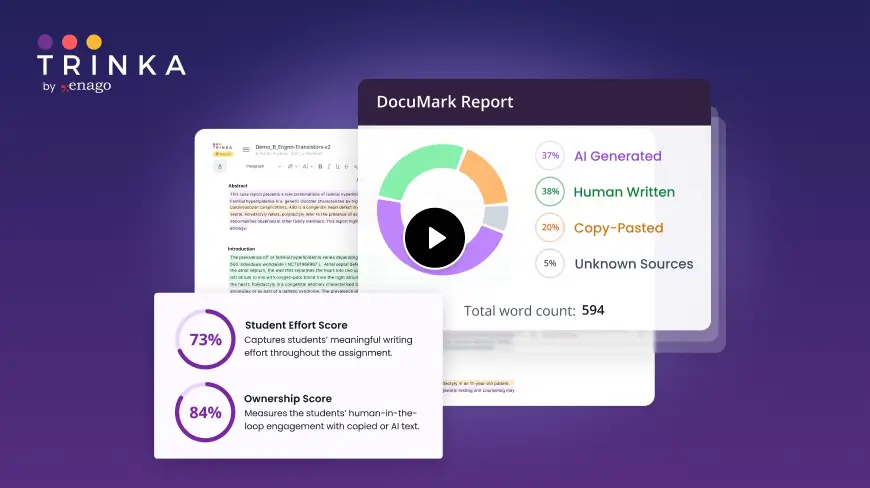
DocuMark: Responsible AI Use for Academic Integrity
Knowing your institution's AI policy is step one. DocuMark helps enforce it fairly by empowering universities to manage AI-generated content, prevent cheating, and support student writing through responsible AI use.
Common Questions About Avila College's AI Policies
Avila College has defined AI policies in 5 of 12 categories, with an overall coverage score of 42%.
The university requires attribution for material taken from any source, including AI-generated material, and it requires disclosure and citation when reuse of prior work is specifically authorized. The policy does not provide a separate AI citation format, but it makes clear that unattributed AI-derived material violates plagiarism rules.
The university enforces AI-related misconduct through its academic integrity process by classifying unauthorized AI-generated submission as plagiarism. It states that alleged violations may be reported to the Dean, that the Dean decides whether further response is warranted, and that the standard of proof is preponderance of the evidence. No AI detection tool policy is defined in the provided sources.
No explicit data protection or approved AI platform policy is currently defined in the available policy sources.