Teaching & Learning
- Bowdoin does not set a single college-wide rule for student use of AI on coursework and assignments
- Instead, course-level faculty determine teaching and learning policies, and students must follow the guidance given in each course
Please note that guidelines specific to teaching and learning uses are the purview of Bowdoin faculty. Students are required to abide by faculty guidance for their courses.
Faculty should be clear and explicit about their policies on generative AI with the students they are teaching and advising.
- Bowdoin does not provide a separate institution-wide AI rule for exams and assessments in the cited materials
- Exam-related expectations are governed through faculty course policies, and students are expected to follow the Academic Honor Code when submitting work or putting their names on examinations
Please note that guidelines specific to teaching and learning uses are the purview of Bowdoin faculty. Students are required to abide by faculty guidance for their courses.
Each time a student submits academic work or places their name on examinations, papers, laboratory assignments, and other academic work, they acknowledge their responsibility and commitment to the Academic Honor Code.
- Bowdoin does not impose a single college-wide rule for enrolled students using AI for learning or study assistance; faculty course policies govern such use
- For prospective applicants, Bowdoin explicitly permits AI to learn about colleges or the application process, to brainstorm essay ideas, and to review grammar after a draft is written, while prohibiting AI from writing application materials on the student's behalf
Please note that guidelines specific to teaching and learning uses are the purview of Bowdoin faculty. Students are required to abide by faculty guidance for their courses.
For applicants — You may use AI to: learn more about colleges or the application process (be aware that AI can generate untrue, biased, inaccurate, and fictional content); brainstorm ideas or reflect on possible essay topics; review grammar or provide feedback after you have written a draft. In these ways, AI can play a role similar to a teacher, counselor, or mentor. It can guide you, but it should not do the writing for you.
- Bowdoin does not define a distinct college-wide policy for student AI use on programming assignments
- The materials acknowledge that AI tools can generate code, but classroom use is still governed by faculty-set course policies
Please note that guidelines specific to teaching and learning uses are the purview of Bowdoin faculty. Students are required to abide by faculty guidance for their courses.
These generative AI tools can be used as a thought partner for a variety of purposes from writing and research development to summarizing text and generating code.
Research
- The faculty guide advises transparency about AI use in scholarly work and notes that citation styles provide guidance on citing generative AI
- Bowdoin provides AI resources for research generally, but the cited materials do not establish a specific institutional policy governing AI use for drafting or editing research papers, theses, dissertations, or manuscripts
Much assistance is available for faculty, instructional staff, and students, to help with integrating AI into their teaching, learning, and research.
○ Be open about your generative AI use with students, colleagues, and in your scholarly work
○ Some citation styles, like MLA, APA, and Chicago, provide guidance on how to cite generative AI. If you have citation questions, reach out to Beth Hoppe at the library
- For human-subjects research, Bowdoin permits AI use only through Bowdoin's LibreChat account
- Data must be de-identified before AI analysis, and a human member of the research team must review both inputs and outputs for confidentiality and accuracy
The Bowdoin IRB only permits the use of Artificial Intelligence (AI) platforms that can be accessed through Bowdoin's LibreChat account. If the AI platform is not accessible through LibreChat, it cannot be used for any part of the human subjects research study at Bowdoin.
AI Data Anaylsis:
* Data must be de-identified (e.g., pseudonymized or anonymized) before analysis by AI models.
* Human Review: A member of the research team must review the information that goes into AI as well as the analysis that comes out to ensure confidentiality and accuracy.
- Bowdoin's IRB sets explicit requirements for researchers using AI in human-subjects studies
- Researchers must use only LibreChat-accessible AI platforms, complete additional training before protocol review, and inform participants in consent materials that AI will be used
The Bowdoin IRB only permits the use of Artificial Intelligence (AI) platforms that can be accessed through Bowdoin's LibreChat account. If the AI platform is not accessible through LibreChat, it cannot be used for any part of the human subjects research study at Bowdoin.
Training: Researchers who intend to use AI will be required to take an additional training course through Canvas before the protocol review process can begin - Ethical Considerations - Using Generative AI Responsibly at Bowdoin and Beyond.
Informed Consent: Researchers who intend to use AI must inform participants that AI will be used in the research study. A section regarding AI has been added to the consenting templates found on our Informed Consent webpage.
Academic Integrity
- Disclosure requirements are defined in specific contexts rather than through one universal student rule
- Researchers using AI must disclose AI use to participants in human-subjects studies, and Bowdoin faculty guidance recommends being open about AI use in scholarly work and course materials; the faculty guide also notes that MLA, APA, and Chicago offer citation guidance for generative AI
Informed Consent: Researchers who intend to use AI must inform participants that AI will be used in the research study. A section regarding AI has been added to the consenting templates found on our Informed Consent webpage.
○ Be open about your generative AI use with students, colleagues, and in your scholarly work
○ Disclose your use of AI in course materials: read about the consequences of undisclosed AI use by professors in The New York Times
○ Some citation styles, like MLA, APA, and Chicago, provide guidance on how to cite generative AI. If you have citation questions, reach out to Beth Hoppe at the library
- Bowdoin's cited materials do not define a dedicated AI detection tool policy
- Enforcement is framed through the Academic Honor Code: academic dishonesty violates the code, and students affirm their commitment each time they submit academic work or examinations
- The Academic Affairs start-of-semester memo may contain additional faculty-facing guidance on AI enforcement, but no institution-wide AI detection policy is documented in reviewed sources
As provided for by the Bowdoin College Academic Honor Code, uncompromised intellectual inquiry lies at the heart of a liberal arts education. Integrity is essential in creating an academic environment dedicated to the development of independent modes of learning, analysis, judgment, and expression. Academic dishonesty, in or out of the classroom, is antithetical to the College's institutional values and constitutes a violation of the Academic Honor Code.
Each time a student submits academic work or places their name on examinations, papers, laboratory assignments, and other academic work, they acknowledge their responsibility and commitment to the Academic Honor Code.
Institutional & Administrative
- Faculty are expected to state their course AI policies clearly to students
- Staff-facing guidance describes uses such as document drafting, editing, and email management
- Additional faculty-specific guidance may appear in the Academic Affairs start-of-semester memo, which was not incorporated into this extraction
Faculty should be clear and explicit about their policies on generative AI with the students they are teaching and advising.
It's not just faculty and instructional staff in academic settings who can benefit.
Document Drafting and Editing: Generative AI can help draft, format, and edit documents. By learning from existing documents, the AI can suggest improvements, generate summaries, and ensure consistency with your style and tone.
Email Management: AI can automate responses to common inquiries, organize incoming emails based on priority, and even suggest replies based on previous interactions.
- Bowdoin requires caution with data entered into AI tools and restricts high-sensitivity use
- Public information is the default allowed input for generative AI tools, restricted data may not be used with AI tools, unlisted tools must be reviewed by IT for privacy, accessibility, and security, and LibreChat is presented as a secure institution-managed environment; for IRB-regulated human-subjects research, only LibreChat-accessible platforms are permitted
In accordance with Bowdoin’s Written Information Security Program (WISP), you should only enter information available to the general public into generative AI tools. Information shared with generative AI tools using default settings is not private and could expose proprietary or sensitive information to unauthorized parties.
Consider the sensitivity of data by reviewing the Data Classification Policy. Sensitive data should be used with caution. Restricted data should not be used with AI tools.
If you are using or considering an AI tool not listed here, please be sure to submit this form to IT to ensure it meets privacy, accessibility, and security requirements.
These platforms provide secure, institution-managed access to multiple AI models without requiring direct accounts with external providers.
Sensitive Data Use: Permitted due to the platform's secure, private environment.
The Bowdoin IRB only permits the use of Artificial Intelligence (AI) platforms that can be accessed through Bowdoin's LibreChat account. If the AI platform is not accessible through LibreChat, it cannot be used for any part of the human subjects research study at Bowdoin.
- Bowdoin has an explicit cross-campus AI governance structure
- Its AI Governance Working Group gathers input across the college and makes recommendations to senior officers on institutional AI approaches, and the college describes its overall AI effort as a campus-wide exploration of both opportunities and harms aligned with Bowdoin's liberal arts mission and the common good
Bowdoin staff, faculty, and students are exploring how AI and ML can enhance and support the College's liberal arts mission. While Bowdoin scholars are open to using AI in their classes and research, they are also examining its potential for harm and finding ways to ensure the breakthrough technology promotes the common good.
Bowdoin's approach to generative AI is a cross-campus effort, with multiple groups exploring ways to leverage AI in and out of the classroom, along with ongoing conversations on appropriate guidelines and policies.
## AI Governance Working Group
Goal: Take input from across the College and make recommendations to the Senior Officers to frame institutional approaches to AI.
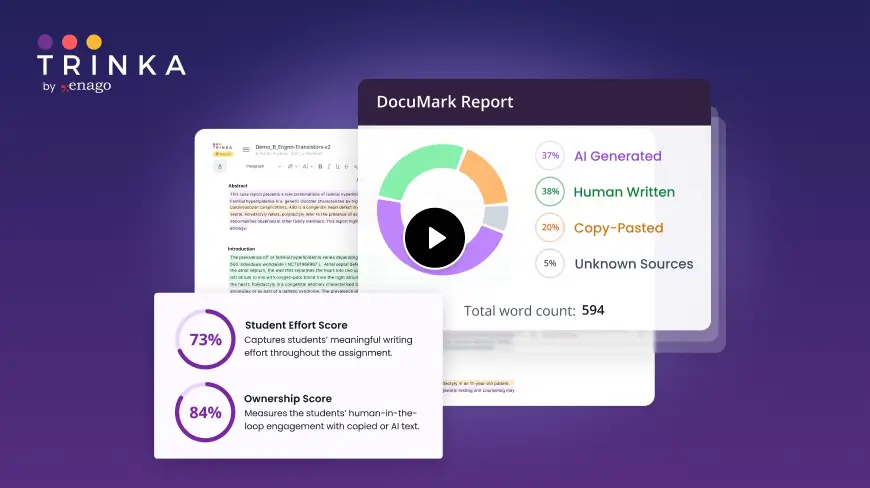
DocuMark: Responsible AI Use for Academic Integrity
Knowing your institution's AI policy is step one. DocuMark helps enforce it fairly by empowering universities to manage AI-generated content, prevent cheating, and support student writing through responsible AI use.
Common Questions About Bowdoin College's AI Policies
Bowdoin College has defined AI policies in 12 of 12 categories, with an overall coverage score of 100%.
Disclosure requirements are defined in specific contexts rather than through one universal student rule. Researchers using AI must disclose AI use to participants in human-subjects studies, and Bowdoin faculty guidance recommends being open about AI use in scholarly work and course materials; the faculty guide also notes that MLA, APA, and Chicago offer citation guidance for generative AI.
Bowdoin's cited materials do not define a dedicated AI detection tool policy. Enforcement is framed through the Academic Honor Code: academic dishonesty violates the code, and students affirm their commitment each time they submit academic work or examinations. The Academic Affairs start-of-semester memo may contain additional faculty-facing guidance on AI enforcement, but no institution-wide AI detection policy is documented in reviewed sources.
Bowdoin requires caution with data entered into AI tools and restricts high-sensitivity use. Public information is the default allowed input for generative AI tools, restricted data may not be used with AI tools, unlisted tools must be reviewed by IT for privacy, accessibility, and security, and LibreChat is presented as a secure institution-managed environment; for IRB-regulated human-subjects research, only LibreChat-accessible platforms are permitted.