Teaching & Learning
- Any AI-created part of submitted work must be clearly disclosed in line with course guidance
- Undisclosed AI-generated submission can be treated as academic misconduct and may lead to penalties up to expulsion
- Students may use AI in their studies, but they must use it responsibly, ensure submitted work reflects their own effort and understanding, and must not use AI to write an entire assignment or conceal authorship
22. AI tools can be helpful in your studies, but it’s important to use them responsibly. If you choose to use AI, you must follow the University’s rules to make sure your work still reflects your own effort and understanding.
23. Here’s what’s expected of you:
• Use AI tools ethically and be transparent about how you’ve used them.
• Clearly state if any part of your work was created using AI, following the guidance for your course.
• Don’t use AI to write your entire assignment or to hide who created the work.
24. Misusing AI can count as academic misconduct. For example:
• Submitting AI-generated work without saying it was created by AI.
25. Depending on how serious the misuse is, it could be treated as minor, major, or gross misconduct. Serious cases may lead to formal investigation and could result in expulsion.
- The AI policy does not provide an exam-specific permission rule; instead, misuse of AI in assessed work can be investigated and penalized under academic misconduct procedures
- AI use in assessments is governed by the same academic integrity rules as other assessment conduct: students must follow all rules for exams and assessments, and use of materials or behaviours that are not allowed counts as cheating
• Follow all rules for exams and assessments, including any legal or professional requirements.
• Cheating: Using materials or behaviours during an exam or assessment that aren’t allowed.
24. Misusing AI can count as academic misconduct. For example:
• Submitting AI-generated work without saying it was created by AI.
• Using AI to make up data or pretend you wrote something you didn’t.
• Trying to use AI to avoid plagiarism checks.
28. If someone raises a concern about your work, the University will investigate it carefully and fairly. If misconduct is confirmed, a penalty will be applied based on how serious the issue is.
- The university permits students to use AI as a study aid, provided they use it responsibly and within university rules
- Students are told AI can be helpful in their studies, but they must remain transparent about use and seek advice from their tutor or Academic Integrity Lead if unsure what is allowed
22. AI tools can be helpful in your studies, but it’s important to use them responsibly. If you choose to use AI, you must follow the University’s rules to make sure your work still reflects your own effort and understanding.
23. Here’s what’s expected of you:
• Use AI tools ethically and be transparent about how you’ve used them.
• If you’re unsure what’s allowed, ask your tutor or Academic Integrity Lead for advice.
26. Staff are encouraged to design assessments that support genuine engagement and reduce the risk of inappropriate AI use. You’ll also receive guidance to help you understand how to use AI tools properly and within the rules.
Research
Academic Integrity
- Disclosure of AI use is required in student work
- Students must be transparent about how they used AI and must clearly state when any part of their work was created using AI, following course guidance
23. Here’s what’s expected of you:
• Use AI tools ethically and be transparent about how you’ve used them.
• Clearly state if any part of your work was created using AI, following the guidance for your course.
• Use the correct referencing system to acknowledge all sources.
- The university may investigate suspected AI misuse, compare work against previous work, request a viva voce to establish authorship, and use Turnitin similarity reports as evidence in misconduct cases
- Undisclosed AI-generated work, using AI to fabricate content, or using AI to bypass plagiarism detection can be treated as academic misconduct, with penalties ranging from minor sanctions to expulsion
21. Academic Misconduct and Academic Integrity: While anonymous marking supports fairness in assessment, it can limit a tutor’s ability to detect misconduct based on known academic patterns. Where serious concerns arise, staff may refer to previous work or request a viva voce to help establish authorship. Anonymous marking should not prevent staff from investigating suspected misconduct or applying academic judgement appropriately.
24. Misusing AI can count as academic misconduct. For example:
• Submitting AI-generated work without saying it was created by AI.
• Using AI to make up data or pretend you wrote something you didn’t.
• Trying to use AI to avoid plagiarism checks.
25. Depending on how serious the misuse is, it could be treated as minor, major, or gross misconduct. Serious cases may lead to formal investigation and could result in expulsion.
28. If someone raises a concern about your work, the University will investigate it carefully and fairly. If misconduct is confirmed, a penalty will be applied based on how serious the issue is.
• Turnitin Similarity Reports showing unusual patterns or external sources
• Viva voce interviews where you’re unable to explain or discuss your work
Institutional & Administrative
- Staff are encouraged to design assessments that support genuine engagement and reduce the risk of inappropriate AI use
26. Staff are encouraged to design assessments that support genuine engagement and reduce the risk of inappropriate AI use.
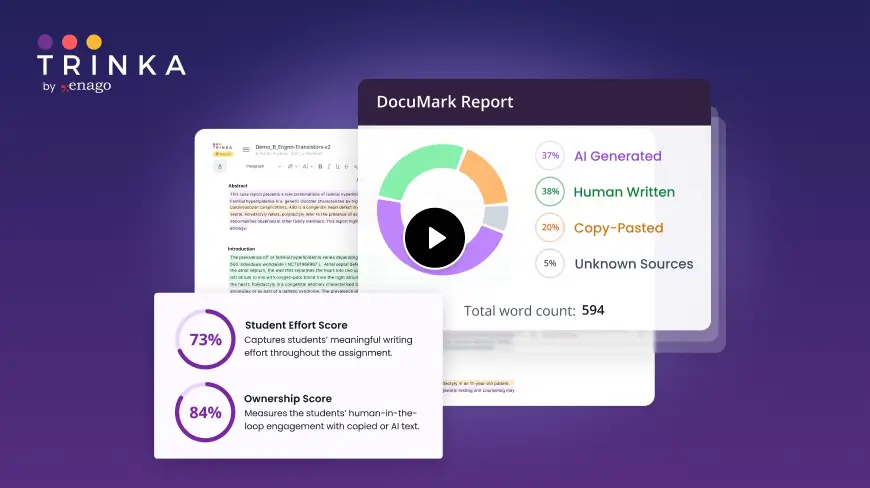
DocuMark: Responsible AI Use for Academic Integrity
Knowing your institution's AI policy is step one. DocuMark helps enforce it fairly by empowering universities to manage AI-generated content, prevent cheating, and support student writing through responsible AI use.
Common Questions About Buckinghamshire New University's AI Policies
Buckinghamshire New University has defined AI policies in 6 of 12 categories, with an overall coverage score of 50%.
Disclosure of AI use is required in student work. Students must be transparent about how they used AI and must clearly state when any part of their work was created using AI, following course guidance.
The university may investigate suspected AI misuse, compare work against previous work, request a viva voce to establish authorship, and use Turnitin similarity reports as evidence in misconduct cases. Undisclosed AI-generated work, using AI to fabricate content, or using AI to bypass plagiarism detection can be treated as academic misconduct, with penalties ranging from minor sanctions to expulsion.
No explicit data protection or approved AI platform policy is currently defined in the available policy sources.