Teaching & Learning
- For taught students, use of AI in assessed coursework is only allowed where the assessment brief explicitly permits it
- Any unauthorized use can be treated as unfair practice and students remain responsible for the accuracy, integrity, and proper acknowledgement of submitted work
Unless the use of Artificial Intelligence is explicitly permitted in the assessment brief, introducing any artificially generated material into assessed work is likely to constitute unfair practice irrespective of whether a student has sought to present the artificially generated material as their own work or attribute it to another source.
Where students are allowed to use Artificial Intelligence in relation to an assessment, they should be clear and specific as to which tools they have used and how they have used them. They should also consider the importance of critically evaluating any output generated by Artificial Intelligence and not relying on this output as if it were a credible source of information.
Any use of Artificial Intelligence should also be acknowledged in a way which demonstrates clearly which work has benefitted from the use of Artificial Intelligence and which has not.
- For examinations and other assessments, AI use is not permitted unless the assessment brief explicitly allows it
- Cardiff also states that students are responsible for ensuring they do not commit unfair practice or academic misconduct in connection with AI use
Unless the use of Artificial Intelligence is explicitly permitted in the assessment brief, introducing any artificially generated material into assessed work is likely to constitute unfair practice irrespective of whether a student has sought to present the artificially generated material as their own work or attribute it to another source.
Students are responsible for ensuring that they do not commit unfair practice or academic misconduct in relation to their use of Artificial Intelligence.
Artificial Intelligence means technology that may be used to create media or generate text and code based on user prompts. It may include Generative Artificial Intelligence tools such as Copilot, ChatGPT or Grammarly.
- This is guidance rather than a single mandatory university-wide permission rule for all study uses
- The university provides advisory guidance that students may use generative AI as a study support tool, including for finding literature, but they should verify outputs, avoid overreliance, and check copyright, bias, and privacy risks
There are multiple ways in which Gen AI can support your searching process, namely:
Developing your search strategy
Finding synonyms and related search terms
Creating search strings
Identifying key sources within a topic and summarising these
Translation and EAL support
Asking for feedback on the effectiveness of your searching process.
Always verify AI-generated information by cross-checking with trusted sources. AI is not infallible and may produce inaccurate or misleading information, often known as AI ‘hallucinations’. Prioritise peer-reviewed articles, books, and reputable databases when evaluating sources generated by AI.
Never provide AI tools with access to your own personal data, or use content from sources that may infringe copyright. Beware that some AI tools may use your data and content to train their models. Likewise, be vigilant to biases within AI-generated content and ensure that your research remains inclusive and representative.
- Cardiff expressly includes AI tools that generate code within its assessment rules
- For programming assignments and coding tasks, AI-generated code is only allowed when the assessment brief explicitly permits it; otherwise, its inclusion in assessed work is likely to be treated as unfair practice
Artificial Intelligence means technology that may be used to create media or generate text and code based on user prompts. It may include Generative Artificial Intelligence tools such as Copilot, ChatGPT or Grammarly.
Unless the use of Artificial Intelligence is explicitly permitted in the assessment brief, introducing any artificially generated material into assessed work is likely to constitute unfair practice irrespective of whether a student has sought to present the artificially generated material as their own work or attribute it to another source.
Research
- No explicit university rule on AI use in research writing is stated in the provided sources
- The university's research integrity code requires honesty, rigour, transparency, and open communication in research, but it does not define a specific AI policy for drafting or editing manuscripts, theses, or dissertations
Researchers should be honest in respect of their own actions in research and in their responses to the actions of other researchers. This applies to the whole range of research, including experimental design, generating and analysing data, publishing results, and acknowledging the direct and indirect contributions of colleagues, collaborators and others.
Researchers must always comply with all legal and ethical requirements laid down by the University or other properly authorised bodies, and should seek to ensure that their research abides by the terms and conditions of any grant or contract.
- In the provided sources, this area is not explicitly defined as an AI-specific use case
- Cardiff's research governance materials require responsible, honest, and legally compliant handling of research processes, but they do not define a specific policy on using AI for data collection, analysis, statistical processing, synthetic data, or interpretation of results
Researchers should be honest in respect of their own actions in research and in their responses to the actions of other researchers. This applies to the whole range of research, including experimental design, generating and analysing data, publishing results, and acknowledging the direct and indirect contributions of colleagues, collaborators and others.
Researchers must always comply with all legal and ethical requirements laid down by the University or other properly authorised bodies, and should seek to ensure that their research abides by the terms and conditions of any grant or contract.
- Cardiff has university-wide research integrity and misconduct frameworks requiring honesty, transparency, and compliance with ethical and legal requirements in research
- However, the provided sources do not set out AI-specific rules for grant proposals, ethics applications, or declarations; instead, any problematic AI use in research would fall under the general research integrity and misconduct regime
The University is committed to ensuring the highest standards of rigour and integrity in all aspects of research.
Researchers should be honest in respect of their own actions in research and in their responses to the actions of other researchers. This applies to the whole range of research, including experimental design, generating and analysing data, publishing results, and acknowledging the direct and indirect contributions of colleagues, collaborators and others.
Researchers must always comply with all legal and ethical requirements laid down by the University or other properly authorised bodies, and should seek to ensure that their research abides by the terms and conditions of any grant or contract.
Research misconduct is defined as the fabrication, falsification, plagiarism or deception in proposing, carrying out, or reporting results of research; or deliberate, dangerous or negligent deviations from accepted practice in carrying out research.
Academic Integrity
- Cardiff also directs students to follow any programme, School, or University guidance on acknowledgement and citation
- When AI use is allowed in an assessment, students are required to disclose the tools used and how they were used, and to acknowledge clearly which parts of the work benefited from AI
Where students are allowed to use Artificial Intelligence in relation to an assessment, they should be clear and specific as to which tools they have used and how they have used them.
Any use of Artificial Intelligence should also be acknowledged in a way which demonstrates clearly which work has benefitted from the use of Artificial Intelligence and which has not.
Students should ensure they follow any related Programme, School and University guidance in relation to acknowledgement of sources and citation.
- Undisclosed or unauthorized AI use in assessed work is handled through Cardiff's unfair practice and academic misconduct processes
- The sources provided do not set out a specific institutional position on AI detection tools, but they do state that impermissible AI-generated material is likely to constitute unfair practice and that students are responsible for avoiding misconduct
Unless the use of Artificial Intelligence is explicitly permitted in the assessment brief, introducing any artificially generated material into assessed work is likely to constitute unfair practice irrespective of whether a student has sought to present the artificially generated material as their own work or attribute it to another source.
Students are responsible for ensuring that they do not commit unfair practice or academic misconduct in relation to their use of Artificial Intelligence.
Examples of Unfair Practice are set out in the Unfair Practice Procedure and include plagiarism, collusion, contract cheating and AI misuse.
Institutional & Administrative
- The provided sources do not define a broader university-wide policy for faculty use of AI in grading, feedback, lesson planning, or recommendation letters
- Cardiff states that it does not use AI decision-making to evaluate applicants or make admissions decisions, and admissions staff receive training and guidance on equality, diversity, unconscious bias, and use of the applicant management system
The University does not use AI decision making software to assist staff in evaluating applications or making admissions decisions.
All Cardiff staff involved in applicant admissions and recruitment undertake regular training in equality, diversity, and unconscious bias. Staff using SIMS (applicant management system) receive comprehensive training in how to use the system effectively to support a fair and consistent admissions process.
- Cardiff's guidance warns users not to provide personal data to AI tools and notes that some tools may use submitted data to train their models
- Its information security framework also requires staff, students, and third parties to protect university information and handle data according to legal, regulatory, and policy requirements, but the provided sources do not identify a list of approved AI platforms
Never provide AI tools with access to your own personal data, or use content from sources that may infringe copyright. Beware that some AI tools may use your data and content to train their models.
Cardiff University holds and uses information in support of all its activities and recognises that this information is a valuable asset, requiring protection in line with legal, regulatory and contractual requirements. The University needs confidence that, where information is important to the conduct of its business or fulfilment of its legal obligations, it is held, maintained, shared and disposed of securely, in a manner proportionate to the information’s value, sensitivity and criticality.
The Information Security Policy applies to all persons who have access to Cardiff University information and the facilities used to store or process it, or who are responsible for handling such information. This includes members of Council and all University staff, students, workers and external parties.
- The evidence shows issue-specific governance rather than a comprehensive university-wide AI strategy document
- Cardiff has published institution-level statements and guidance on AI in specific areas, including admissions and assessment, but the provided sources do not set out a single overarching university AI strategy, committee structure, or formal AI governance roadmap
The University does not use AI decision making software to assist staff in evaluating applications or making admissions decisions.
Unless the use of Artificial Intelligence is explicitly permitted in the assessment brief, introducing any artificially generated material into assessed work is likely to constitute unfair practice irrespective of whether a student has sought to present the artificially generated material as their own work or attribute it to another source.
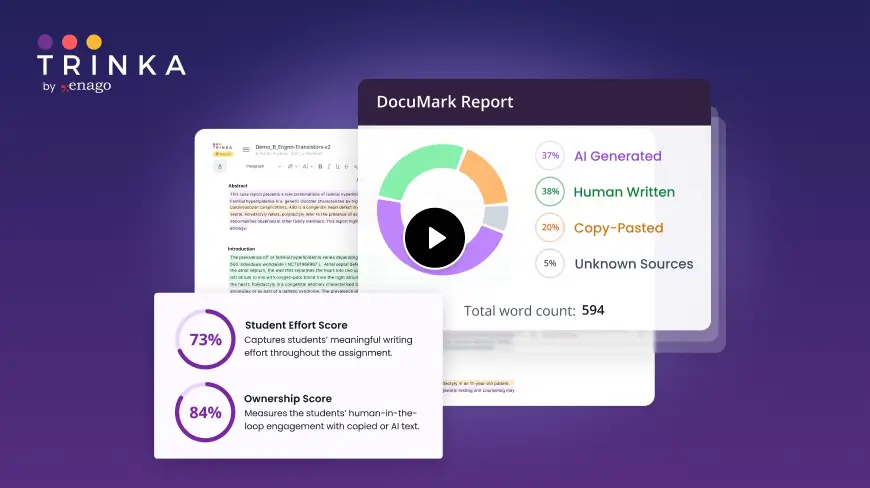
DocuMark: Responsible AI Use for Academic Integrity
Knowing your institution's AI policy is step one. DocuMark helps enforce it fairly by empowering universities to manage AI-generated content, prevent cheating, and support student writing through responsible AI use.
Common Questions About Cardiff University of Wales Institute (UWIC)'s AI Policies
Cardiff University of Wales Institute (UWIC) has defined AI policies in 12 of 12 categories, with an overall coverage score of 100%.
When AI use is allowed in an assessment, students are required to disclose the tools used and how they were used, and to acknowledge clearly which parts of the work benefited from AI. Cardiff also directs students to follow any programme, School, or University guidance on acknowledgement and citation.
Undisclosed or unauthorized AI use in assessed work is handled through Cardiff's unfair practice and academic misconduct processes. The sources provided do not set out a specific institutional position on AI detection tools, but they do state that impermissible AI-generated material is likely to constitute unfair practice and that students are responsible for avoiding misconduct.
Cardiff's guidance warns users not to provide personal data to AI tools and notes that some tools may use submitted data to train their models. Its information security framework also requires staff, students, and third parties to protect university information and handle data according to legal, regulatory, and policy requirements, but the provided sources do not identify a list of approved AI platforms.