Teaching & Learning
- This classification should be revisited against those sources
- No explicit AI-specific coursework policy was confirmed in the reviewed sources; however, the college catalog and TCSG policy manual may contain academic integrity provisions applicable to AI use in coursework that were not fully reviewed
Potential sources not fully reviewed: https://www.centralgatech.edu/wp-content/uploads/pdfs/catalog/catalog.pdf and https://www.tcsg.edu/about-tcsg/state-board/policy-manual/ — no confirmed verbatim evidence extracted.
- This classification should be revisited
- No AI-specific examination or assessment policy was confirmed in the reviewed sources; however, the CGTC catalog and TCSG policy manual are unreviewed sources that may contain relevant provisions
Potential sources not fully reviewed: https://www.centralgatech.edu/wp-content/uploads/pdfs/catalog/catalog.pdf and https://www.tcsg.edu/about-tcsg/state-board/policy-manual/ — no confirmed verbatim evidence extracted.
- The institution presents AI as a tool to enhance education rather than restricting it in this context
- The college publicly promotes AI-enabled learning support through student technology services and institutional initiatives, but the provided sources do not set a formal rule governing student use of AI for personal study
CGTC was awarded a grant to invest in and support the use of artificial intelligence (AI) in order to enhance educational opportunities for students.
The grant will be used to support the integration of AI into student instruction, including the implementation of a virtual tutor to support classroom instruction through personalized and adaptive learning experiences.
The Office of Adult Education’s AI Math Coach is available to assist students with math classes.
C.G.T.C. / HELP / Student Technical Support
Research
Academic Integrity
- This classification should be revisited
- No explicit AI disclosure or attribution policy was confirmed in the reviewed sources; however, the TCSG policy manual and CGTC catalog are unreviewed sources that may contain academic honesty provisions applicable to AI attribution
Potential sources not fully reviewed: https://www.centralgatech.edu/wp-content/uploads/pdfs/catalog/catalog.pdf and https://www.tcsg.edu/about-tcsg/state-board/policy-manual/ — no confirmed verbatim evidence extracted.
- No AI-specific detection or enforcement policy was confirmed in the reviewed sources
- The earlier reference to general academic misconduct language is unsupported by quoted evidence
- The CGTC catalog and policy pages may contain relevant academic integrity enforcement provisions that were not fully reviewed
No verbatim evidence confirmed. Potential sources not fully reviewed: https://www.centralgatech.edu/wp-content/uploads/pdfs/catalog/catalog.pdf and https://www.centralgatech.edu/faculty-staff/plans-forms-policies.
Institutional & Administrative
- The college states that it is integrating AI into instruction and faculty development
- The provided sources frame faculty use as part of institutional implementation and training, but they do not provide a detailed operational policy on grading, feedback, lesson planning, or other specific faculty uses
The grant will be used to support the integration of AI into student instruction, including the implementation of a virtual tutor to support classroom instruction through personalized and adaptive learning experiences. Funds will also be invested in professional development and training opportunities for faculty to learn how to use AI to create more engaging learning environments and personalized education plans.
- The provided sources do not define AI-specific data-entry restrictions, approved AI platforms, or prohibited tools
- However, the student technology page states that Microsoft Copilot is available through the college and emphasizes account-based access for college users
Microsoft Copilot is an AI-powered assistant integrated into the Microsoft 365 suite.
Copilot is available as a desktop app for Windows and Mac, a mobile app on iOS and Android, and in most web browsers at copilot.microsoft.com.
To fully use Copilot as part of your Microsoft 365 subscription, you must login with your school account.
- The college has an explicit institutional AI initiative centered on expanding AI capacity in teaching, student support, and workforce preparation
- The provided sources describe a grant-funded strategy for AI adoption and implementation, but they do not identify a formal AI governance policy, committee, or ethics framework
CGTC was awarded a grant to invest in and support the use of artificial intelligence (AI) in order to enhance educational opportunities for students.
This funding, awarded by the Technical College System of Georgia (TCSG), will assist the College in implementing AI technology to improve educational outcomes and prepare students for careers in high-demand fields.
The grant will be used to support the integration of AI into student instruction, including the implementation of a virtual tutor to support classroom instruction through personalized and adaptive learning experiences.
Funds will also be invested in professional development and training opportunities for faculty to learn how to use AI to create more engaging learning environments and personalized education plans.
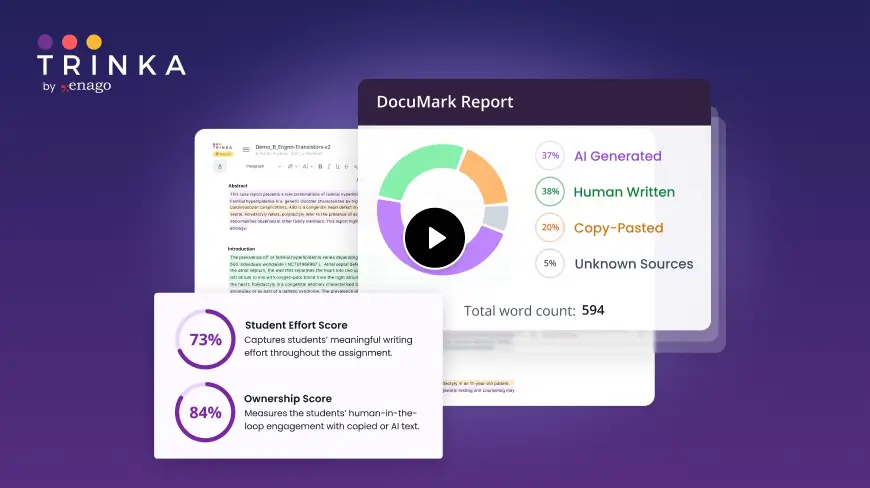
DocuMark: Responsible AI Use for Academic Integrity
Knowing your institution's AI policy is step one. DocuMark helps enforce it fairly by empowering universities to manage AI-generated content, prevent cheating, and support student writing through responsible AI use.
Common Questions About Central Georgia Technical College's AI Policies
Central Georgia Technical College has defined AI policies in 8 of 12 categories, with an overall coverage score of 67%.
No explicit AI disclosure or attribution policy was confirmed in the reviewed sources; however, the TCSG policy manual and CGTC catalog are unreviewed sources that may contain academic honesty provisions applicable to AI attribution. This classification should be revisited.
No AI-specific detection or enforcement policy was confirmed in the reviewed sources. The earlier reference to general academic misconduct language is unsupported by quoted evidence. The CGTC catalog and policy pages may contain relevant academic integrity enforcement provisions that were not fully reviewed.
The provided sources do not define AI-specific data-entry restrictions, approved AI platforms, or prohibited tools. However, the student technology page states that Microsoft Copilot is available through the college and emphasizes account-based access for college users.