Teaching & Learning
- AI use for graded coursework is set at the course level
- Separately, the academic honor code prohibits using AI tools to complete academic work when the instructor has not authorized it
- Faculty are requested to define acceptable AI use in the syllabus, and the syllabus policy may discourage AI entirely, allow limited use for specified tasks, or allow broader responsible use with citation
FIT faculty are requested to include language in the syllabus on acceptable AI use in the course.
Faculty should select one of the statements below to include in the syllabus—or may craft a unique statement—to clearly define acceptable AI use in the course:
■ Option 1: Discouraged use of AI
Due to our commitment to authenticity in this course, the use of AI to complete coursework is discouraged. All work presented by you for a grade in this course must be of your own work.
■ Option 2: Limited use of AI with permission
The use of AI is allowed in this course with the following limitations:
1. The use of AI in this course is allowed for specified tasks, such as assistive research, brainstorming, improvement of evaluation, critique, and analytical skills. Specific instructions or limitations may be posted in the prompts of individual assignments.
■ Option 3: Open Use of AI
Responsible use of AI is allowed in research and projects to enhance creativity; however, all AI-generated materials must be accurately cited and referenced following the style guidelines.
o Using unauthorized materials, notes, equipment, software, or Artificial Intelligence tools during an exam or to complete academic work (without authorization from the instructor);
- AI tools are prohibited during exams unless the instructor authorizes them
- FIT also states that AI may not be used for required assessments or other obligations meant to measure a person's own knowledge or skills
o Using unauthorized materials, notes, equipment, software, or Artificial Intelligence tools during an exam or to complete academic work (without authorization from the instructor);
AI may not be used to complete required training, assessments, or other obligations intended to measure personal knowledge or skills.
- However, the university does not set a single uniform student-wide rule for study assistance; acceptable use depends on course guidance and responsible use expectations
- FIT allows course-level policies to permit AI for specified support activities such as brainstorming and assistive research, and it also points students to study-related AI resources
1. The use of AI in this course is allowed for specified tasks, such as assistive research, brainstorming, improvement of evaluation, critique, and analytical skills. Specific instructions or limitations may be posted in the prompts of individual assignments.
Study Smarter with AI
Student AI Use Readiness Checklist
Research
- FIT permits AI use in research and projects when allowed under course or work context, but requires human review and, in some cases, disclosure or citation
- AI-assisted material must be reviewed for accuracy, cannot be presented as original without acknowledgment or citation, and official FIT communications, reports, or publications are expected to disclose AI-assisted content
Responsible use of AI is allowed in research and projects to enhance creativity; however, all AI-generated materials must be accurately cited and referenced following the style guidelines.
All AI-assisted material must be carefully reviewed for accuracy and ethical implications; relying solely on AI is not an excuse for errors or misrepresentations.
Ultimately, the AI user is fully responsible for the output.
* AI-assisted content cannot be presented as original work without appropriate acknowledgment or citation.
* AI-assisted content is expected to be reviewed for accuracy before use. If a reliable source cannot verify factual information, it should not be used.
* Users are expected to disclose when AI-assisted content is used in official FIT communications, reports, or publications.
- FIT prohibits falsifying or misrepresenting research data, including AI-generated content presented as original work
- It also bars entering confidential, proprietary, personally identifiable, student, employee, or financial data into AI tools, which limits AI use for data handling and analysis involving protected information
o Fabricating or falsifying data, whether partially or entirely.
o Inventing, altering, or engineering data, evidence, or other source materials;
o Omitting or modifying data to misrepresent findings or conclusions;
o Misrepresenting content, text, or images generated by Artificial Intelligence as original work.
Protecting data privacy and information security is critical when using AI. Users must never input non-public information, including confidential information, PII, or FIT’s financial data into AI tools.
* FIT data, including confidential, proprietary, or personally identifiable information (PII), may not be entered, uploaded, or submitted to any AI tool.
* AI tools must not be used to process or store legally protected information, including but not limited to student records (FERPA), employee records, or financial data.
* Under no circumstances should users connect AI tools to platforms that contain sensitive information.
- The provided IRB page does not set AI-specific rules for grant proposals, IRB applications, or research ethics filings
- FIT states general integrity and accountability requirements for AI use, including review for accuracy, prohibition on presenting AI-assisted work as original without acknowledgment, and user responsibility for outputs
Using AI at FIT requires integrity, accuracy, and accountability. AI must not be used to mislead, impersonate others, or produce biased, discriminatory, or harmful content.
All AI-assisted material must be carefully reviewed for accuracy and ethical implications; relying solely on AI is not an excuse for errors or misrepresentations.
Ultimately, the AI user is fully responsible for the output.
* AI-assisted content cannot be presented as original work without appropriate acknowledgment or citation.
* AI-assisted content is expected to be reviewed for accuracy before use. If a reliable source cannot verify factual information, it should not be used.
Academic Integrity
- In courses where AI is allowed, syllabus language can require that all generative AI materials be fully cited and referenced following the applicable style guidelines
- FIT requires acknowledgment or citation for AI-assisted content and expects disclosure when AI-assisted content is used in official FIT communications, reports, or publications
* AI-assisted content cannot be presented as original work without appropriate acknowledgment or citation.
* Users are expected to disclose when AI-assisted content is used in official FIT communications, reports, or publications.
2. All materials obtained using generative AI must be fully cited and referenced following the style guidelines.
Responsible use of AI is allowed in research and projects to enhance creativity; however, all AI-generated materials must be accurately cited and referenced following the style guidelines.
o Copying or using another person’s exact words, or an Artificial Intelligence tool’s actual words, images, or output, without quotation marks, proper citation, or crediting the source;
- FIT does not define a position on AI detection tools in the provided sources
- It does define unauthorized AI use and misrepresentation of AI output as academic dishonesty, states that such conduct is strictly prohibited, and notes that students may contest an instructor's findings through the academic integrity process
Ignorance of this policy will not be accepted as an excuse for violating it.
The following are considered instances of Academic Dishonesty and are strictly prohibited.1
o Using unauthorized materials, notes, equipment, software, or Artificial Intelligence tools during an exam or to complete academic work (without authorization from the instructor);
o Misrepresenting content, text, or images generated by Artificial Intelligence as original work.
Students have the right to:
● Be notified of alleged Academic Dishonesty;
● Request a hearing to contest an instructor’s findings or Accountability Measure;
Institutional & Administrative
- AI may support but should not replace professional expertise, and users must review and tailor outputs
- FIT tells employees and faculty to consult supervisors or department chairs before using AI, because use may be adjusted or denied based on policy and business needs
- For instructional work, faculty are strongly discouraged from using AI to assess, grade, or evaluate student work, and syllabi are expected to define acceptable course-level AI use
Discuss AI use with your supervisor/department chair. Employees should consult their supervisor and faculty should consult their department chairperson before using AI, as supervisors may adjust or deny usage based on FIT policies and business needs.
Use with purpose. AI can support, but should not replace, your professional expertise. While it may transform aspects of how you work, your role and judgement remain essential. Use it to streamline routine tasks, enhance clarity, generate ideas, or summarize information, but always review and tailor the final output.
* Faculty are strongly discouraged from using AI tools to assess, grade, or evaluate student work. Relying on AI for these purposes can introduce bias, compromise academic integrity, and undermine the trust that is essential to the student-faculty relationship. All evaluations should be conducted by qualified individuals who can fairly and contextually assess the quality and intent of student submissions.
FIT faculty are requested to include language in the syllabus on acceptable AI use in the course.
- The general FIT IT systems policy also requires use to be legal, ethical, and consistent with FIT policies
- FIT allows AI tools only with publicly available information or information classified as Public Information under its information security policy
- Non-public FIT data, including confidential, proprietary, personally identifiable, student, employee, financial, strategic, and internal information, may not be entered into AI tools, and AI tools must not be connected to platforms containing sensitive information
Protecting data privacy and information security is critical when using AI. Users must never input non-public information, including confidential information, PII, or FIT’s financial data into AI tools.
* AI tools may be used with publicly available data or information classified as Public Information under FIT’s Information Security policy . All usage must comply with this policy and FIT’s Acceptable Use policy .
* FIT data, including confidential, proprietary, or personally identifiable information (PII), may not be entered, uploaded, or submitted to any AI tool.
* AI tools must not be used to process or store legally protected information, including but not limited to student records (FERPA), employee records, or financial data.
* Under no circumstances should users connect AI tools to platforms that contain sensitive information.
* Users should not share sensitive, confidential, strategic, or internal FIT information with AI tools, given that use of many AI tools results in the licensing of the entered content to the AI vendor.
FIT IT systems shall be used for purposes that are legal, ethical, and consistent with FIT policies and the college’s mission.
- FIT has a formal institutional AI governance structure
- The university states that its AI guidance is developed collaboratively and identifies AURA as a cross-divisional working group leading FIT's institutional response to AI, supported by three subcommittees covering guidance and ethics, instruction and mentorship, and risk and technology
FIT’s development of AI guidance is a truly collaborative effort. We believe that the ethical, secure, and responsible use of AI should reflect the diverse perspectives, disciplines, and needs of our community. To achieve this charge, FIT created the AURA Committee. AURA (AI Usage, Responsibility, & Adaptation) is a cross-divisional working group, dedicated to leading our institutional response to AI developments.
AURA brings together faculty, staff, and administrators from across the college to ensure our approach to AI is thoughtful, inclusive, and aligned with FIT’s academic and ethical values. A diverse committee ensures broad input and coordination on this important effort. To further support this work, three subcommittees were established to focus on key areas:
* Supporting AI Guidance and Ethics (SAGE): Develops and maintains public facing guidance and educational materials to help our community use AI responsibly and securely and in support of FIT policies.
* AI in Instruction and Mentorship (AIM): Explores the evolving role of AI in teaching, learning, and academic support.
* Framework for Ongoing AI Risk and Technology (FORT): Focuses on cybersecurity, data governance, and long-term risk management for the use of AI.
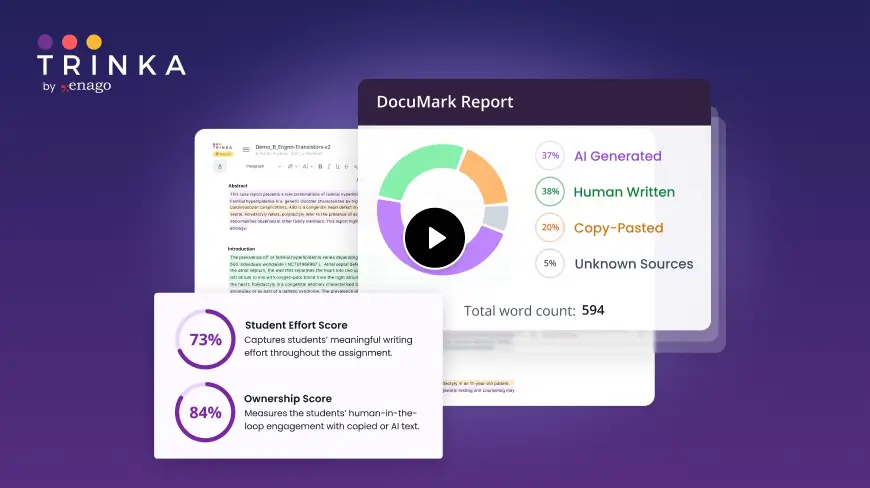
DocuMark: Responsible AI Use for Academic Integrity
Knowing your institution's AI policy is step one. DocuMark helps enforce it fairly by empowering universities to manage AI-generated content, prevent cheating, and support student writing through responsible AI use.
Common Questions About Fashion Institute of Technology's AI Policies
Fashion Institute of Technology has defined AI policies in 11 of 12 categories, with an overall coverage score of 92%.
FIT requires acknowledgment or citation for AI-assisted content and expects disclosure when AI-assisted content is used in official FIT communications, reports, or publications. In courses where AI is allowed, syllabus language can require that all generative AI materials be fully cited and referenced following the applicable style guidelines.
FIT does not define a position on AI detection tools in the provided sources. It does define unauthorized AI use and misrepresentation of AI output as academic dishonesty, states that such conduct is strictly prohibited, and notes that students may contest an instructor's findings through the academic integrity process.
FIT allows AI tools only with publicly available information or information classified as Public Information under its information security policy. Non-public FIT data, including confidential, proprietary, personally identifiable, student, employee, financial, strategic, and internal information, may not be entered into AI tools, and AI tools must not be connected to platforms containing sensitive information. The general FIT IT systems policy also requires use to be legal, ethical, and consistent with FIT policies.