Teaching & Learning
- Olin's academic integrity policy sets expectations for student honesty in all academic experiences and prohibits misrepresentation of academic work
- No explicit AI-specific coursework or assignment policy was identified, but the general academic integrity framework applies to coursework and assignments
Students are expected to maintain complete honesty and integrity in all their academic experiences, both in and out of the classroom.
The College defines violations of academic integrity as any actions of students to misrepresent their own academic work or to impede the academic work of others.
Violations of academic integrity are taken seriously and can result in disciplinary sanctions up to and including separation from the college.
- No explicit AI-detection or exam-specific AI rules were identified
- Olin does not define an AI-specific examination or assessment policy, but its academic integrity framework prohibits misrepresentation of academic work in all academic settings, which encompasses examinations and assessments
Students are expected to maintain complete honesty and integrity in all their academic experiences, both in and out of the classroom.
The College defines violations of academic integrity as any actions of students to misrepresent their own academic work or to impede the academic work of others.
Violations of academic integrity are taken seriously and can result in disciplinary sanctions up to and including separation from the college.
Research
- The provided research policies address authorship and publication responsibility in general terms, but they do not define any policy on using AI tools to draft, edit, format, or improve research manuscripts
The Principals and Co-Principal Investigators are expected to ensure that all faculty, students, and staff employed under grants and contracts for which they are responsible are familiar with and will adhere to all college and sponsor policies concerning publication and authorship, among others.
Each individual engaged in research at Olin is responsible for considering the ethical implications of the use of any research techniques and procedures and should conduct his or her research accordingly.
- The university requires responsible handling of research data and assigns investigators responsibility for data acquisition, management, sharing, and ownership, but it does not define any policy on using AI for data collection, analysis, statistical processing, synthetic data generation, or interpretation of results
The Principals and Co-Principal Investigators are expected to ensure that all faculty, students, and staff employed under grants and contracts for which they are responsible are familiar with and will adhere to all college and sponsor policies concerning acquisition and management of data, sharing and ownership of data, among others.
Each individual engaged in research at Olin is responsible for considering the ethical implications of the use of any research techniques and procedures and should conduct his or her research accordingly.
- The policies do not explicitly mention AI in grant proposals, IRB applications, or research ethics declarations, but they do define research misconduct standards and require ethical consideration of research techniques and procedures
- Olin has research integrity and ethics requirements that apply to faculty, staff, and students involved in research, including required responsible and ethical conduct of research training and compliance with federal research security training requirements
The primary responsibility for prevention and detection of misconduct lies with the faculty, staff and students carrying out the academic mission of the College. Accordingly, all members of the Olin community involved in research or scholarship have a responsibility to maintain intellectual integrity and high ethical standards.
Research misconduct means fabrication, falsification, or plagiarism in proposing, performing, or reviewing research, or in reporting research results.
The College requires all undergraduates funded through grants to complete Responsible and Ethical Conduct of Research (RECR) training. Graduate students funded by NSF to conduct research are also required to complete RECR training. Faculty and staff serving as principal investigators and co-principal investigators are required to complete RECR training.
Each individual engaged in research at Olin is responsible for considering the ethical implications of the use of any research techniques and procedures and should conduct his or her research accordingly.
The National Security Presidential Memorandum-33 directs institutions receiving more than $50 million per year in federal science and engineering support to certify that all Covered Individuals have completed federal research security training. A covered individual is defined as “an individual designated by the Federal research agency, who contributes in a substantive, meaningful way to the development or execution of a project proposed to a Federal research agency.”
At Olin, all faculty and staff submitting a federally funded proposal on or after October 1, 2025, will be designated as covered individuals and therefore required to complete federal research security training prior to proposal submission.
Academic Integrity
- The provided sources do not define any disclosure or attribution requirement for AI use in academic work
- They include general expectations around honesty, plagiarism, and research authorship responsibilities, but no explicit AI-specific citation or transparency rule
Students are expected to maintain complete honesty and integrity in all their academic experiences, both in and out of the classroom.
The College defines violations of academic integrity as any actions of students to misrepresent their own academic work or to impede the academic work of others.
Research misconduct means fabrication, falsification, or plagiarism in proposing, performing, or reviewing research, or in reporting research results.
The Principals and Co-Principal Investigators are expected to ensure that all faculty, students, and staff employed under grants and contracts for which they are responsible are familiar with and will adhere to all college and sponsor policies concerning publication and authorship, among others.
- Enforcement exists through academic integrity and research misconduct processes rather than AI-specific detection rules
- Olin defines academic integrity violations broadly and provides formal misconduct procedures and sanctions, but the provided sources do not define any AI-detection-tool policy
The College defines violations of academic integrity as any actions of students to misrepresent their own academic work or to impede the academic work of others.
Violations of academic integrity are taken seriously and can result in disciplinary sanctions up to and including separation from the college.
Research misconduct means fabrication, falsification, or plagiarism in proposing, performing, or reviewing research, or in reporting research results.
A finding of research misconduct made under this policy requires that there be: a significant departure from accepted practices of the relevant research community; and the misconduct be committed intentionally, knowingly, or recklessly; and the allegation be proven by a preponderance of the evidence.
Institutional & Administrative
- Research-related compliance duties apply to principal investigators and proposal submitters but are not AI-specific
- No policy governing faculty or staff use of AI tools for grading, feedback, lesson planning, recommendation letters, or administrative communications has been identified in Olin's available policies
not defined
- They do reference sponsor and college requirements for research data management and federal research security training obligations
- The provided sources do not define any AI platform approval list, AI-specific data classification scheme, or rule about entering institutional data into AI tools
The Principals and Co-Principal Investigators are expected to ensure that all faculty, students, and staff employed under grants and contracts for which they are responsible are familiar with and will adhere to all college and sponsor policies concerning acquisition and management of data, sharing and ownership of data, among others.
The National Security Presidential Memorandum-33 directs institutions receiving more than $50 million per year in federal science and engineering support to certify that all Covered Individuals have completed federal research security training.
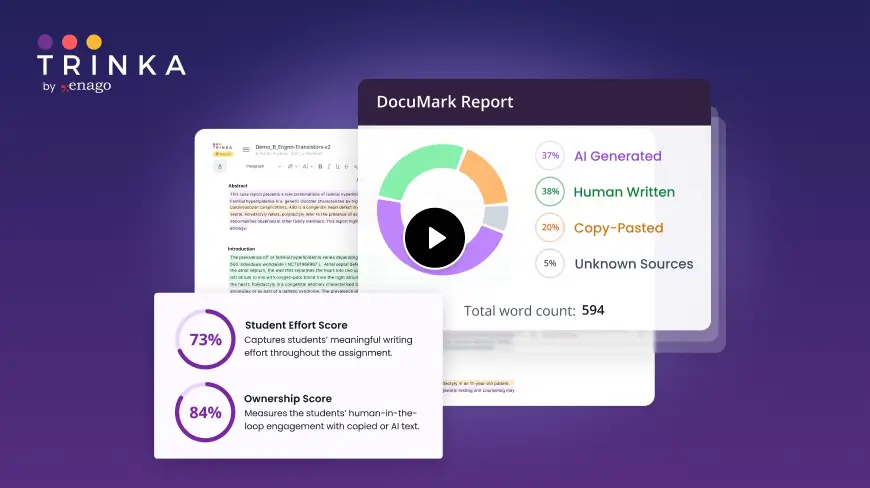
DocuMark: Responsible AI Use for Academic Integrity
Knowing your institution's AI policy is step one. DocuMark helps enforce it fairly by empowering universities to manage AI-generated content, prevent cheating, and support student writing through responsible AI use.
Common Questions About Franklin W. Olin College of Engineering's AI Policies
Franklin W. Olin College of Engineering has defined AI policies in 9 of 12 categories, with an overall coverage score of 75%.
The provided sources do not define any disclosure or attribution requirement for AI use in academic work. They include general expectations around honesty, plagiarism, and research authorship responsibilities, but no explicit AI-specific citation or transparency rule.
Olin defines academic integrity violations broadly and provides formal misconduct procedures and sanctions, but the provided sources do not define any AI-detection-tool policy. Enforcement exists through academic integrity and research misconduct processes rather than AI-specific detection rules.
The provided sources do not define any AI platform approval list, AI-specific data classification scheme, or rule about entering institutional data into AI tools. They do reference sponsor and college requirements for research data management and federal research security training obligations.