Teaching & Learning
- The university also requires students to reference and acknowledge AI use where permitted
- For taught-programme coursework, students may use generative AI only when its use is expressly allowed in the assessment brief or by the tutor; otherwise using it in assessed work is treated as poor academic practice or academic misconduct depending on the extent and how it is presented
Artificial intelligence and language generation models (such as ChatGPT) can be useful study aids and may also support your learning. However, while using these can be a good way to support your learning, there are restrictions around using this software in your assessments.
As a rule, if your tutor doesn’t specifically permit the use of generative AI in the assignment brief, then its use in assessments is not permitted.
The following are all considered examples of poor academic practice or academic misconduct where a student submits assessment work that:
• includes sections generated and/or paraphrased by AI software without clear acknowledgement and references to any sources referred to by the software
• includes sections generated and/or paraphrased by AI software where use of the software has not been permitted by the tutor in the assessment brief or other written instructions
• is entirely generated and/or paraphrased by AI software and passed off as the student's own work
• is based on fabricated sources generated by AI software and presented as genuine sources by the student.
If use of any AI software package is permitted by your tutor, then:
• you must reference any text generated in your assessment in line with the style expected by your department
• where your assignment includes a bibliography and/or reference list, you should include the source details of the AI software package and links to any web pages or source files referred to by the software package.
As for all sources and support, using AI software in your work without clear acknowledgement of its use and source details could be considered poor academic practice or academic misconduct under Goldsmiths’ Academic Misconduct Policy and Procedures.
- For assessments generally, generative AI use is not permitted unless a tutor specifically authorizes it in the assignment brief or other written instructions
- The assessment policy also allows departments to set additional conduct rules for examinations and in-class tests, but the provided sources do not give AI-specific exam permissions beyond the general assessed-work restriction
As a rule, if your tutor doesn’t specifically permit the use of generative AI in the assignment brief, then its use in assessments is not permitted.
The following are all considered examples of poor academic practice or academic misconduct where a student submits assessment work that:
• includes sections generated and/or paraphrased by AI software where use of the software has not been permitted by the tutor in the assessment brief or other written instructions
Schools / departments may issue procedures and regulations regarding the conduct of examinations and in-class tests which are additional to these procedures and regulations. These must be approved by the Chair of the Assessment and Progression Board and made available to students and staff in advance of the examination or in-class test.
- Separate careers guidance also recommends using AI as a support tool rather than relying on it to produce final application materials unchanged
- The university says generative AI can be used as a study aid to support learning, but students remain responsible for understanding academic integrity limits when moving from study support into assessed work
Artificial intelligence and language generation models (such as ChatGPT) can be useful study aids and may also support your learning.
AI is a great tool to support your job search, but don’t be tempted to rely on it too heavily. Remember that employers want to know about you and your unique fit for the role, and they are also becoming more adept at spotting an AI generated application.
Use AI to support and enhance your application materials but avoid over-reliance. AI should complement rather than replace your own ideas, experiences, and voice.
- The university does not set a separate institution-wide rule for AI code generation in programming assignments in the provided sources
- Programming work appears to fall under the general assessed-work rule that generative AI is not permitted unless a tutor specifically allows it and any permitted use is properly acknowledged
As a rule, if your tutor doesn’t specifically permit the use of generative AI in the assignment brief, then its use in assessments is not permitted.
If use of any AI software package is permitted by your tutor, then:
• you must reference any text generated in your assessment in line with the style expected by your department
Research
- The university's research integrity material requires researchers to ensure outputs accurately represent methods and findings and to acknowledge the contributions of others, but the provided sources do not define a specific policy on using AI to draft or edit research papers, theses, or manuscripts
Goldsmiths is committed to supporting and strengthening integrity in all aspects of research and scholarship. The College’s approach is informed by the Universities UK Concordat to Support Research Integrity and by other guidance including from the UK Research Integrity Office.
The College’s expectations of researchers include that they should strive to ensure that all outputs (including publications, performances, exhibitions and media appearances) accurately present methods and findings and that they fully acknowledge the contributions of all collaborators and others. They should ensure that records, findings and outputs are open to scrutiny and debate, subject to legal and ethical obligations, and where appropriate, to support replication. Any allegations of research misconduct will be investigated thoroughly and fairly.
- The provided sources do not define an AI-specific rule for using AI in research data collection, analysis, synthetic data generation, or interpretation of results
- However, the university's IT and data-protection rules prohibit entering confidential, restricted, highly restricted, or personal data into publicly accessible AI systems unless a proper review and contractual safeguards are in place
Publicly accessible AI systems may use any data entered into the systems to train the AI model, and as a result users should avoid inputting personal, confidential, restricted, or highly restricted information into publicly accessible AI systems.
Where possible, use enterprise AI solutions that offer data privacy and security guarantees. Examples of publicly accessible AI systems include ChatGPT, Copilot, Gemini, Grammarly etc.
A Data Protection Impact Assessment and, where the processing of special category personal data occurs, a Legitimate Interest Assessment, should be undertaken where personal data is being used or entered into an AI system. Personal data should only be entered into an AI system where the College has a written agreement with the provider which includes suitable safeguards for the use of personal data. Such processing should only be undertaken using systems approved by the College. Consultation should be made with the Information Governance team before entering into any such agreements.
- The clearest AI-related research control in the sources concerns data protection: personal data should only be entered into approved AI systems after the required assessments and contractual safeguards are in place
- Goldsmiths has a general research integrity framework and investigates allegations of research misconduct, but the provided sources do not set AI-specific rules for grant proposals, ethics applications, or declarations
Goldsmiths is committed to supporting and strengthening integrity in all aspects of research and scholarship. The College’s approach is informed by the Universities UK Concordat to Support Research Integrity and by other guidance including from the UK Research Integrity Office.
Any allegations of research misconduct will be investigated thoroughly and fairly.
A Data Protection Impact Assessment and, where the processing of special category personal data occurs, a Legitimate Interest Assessment, should be undertaken where personal data is being used or entered into an AI system. Personal data should only be entered into an AI system where the College has a written agreement with the provider which includes suitable safeguards for the use of personal data. Such processing should only be undertaken using systems approved by the College.
Academic Integrity
- Unacknowledged AI use can be treated as poor academic practice or academic misconduct
- When AI use is permitted in assessed work, students must clearly acknowledge it and provide references in the departmental style, including source details of the AI system and links to webpages or source files it referred to where a bibliography or reference list is included
If use of any AI software package is permitted by your tutor, then:
• you must reference any text generated in your assessment in line with the style expected by your department
• where your assignment includes a bibliography and/or reference list, you should include the source details of the AI software package and links to any web pages or source files referred to by the software package.
As for all sources and support, using AI software in your work without clear acknowledgement of its use and source details could be considered poor academic practice or academic misconduct under Goldsmiths’ Academic Misconduct Policy and Procedures.
The following are all considered examples of poor academic practice or academic misconduct where a student submits assessment work that:
• includes sections generated and/or paraphrased by AI software without clear acknowledgement and references to any sources referred to by the software
- The provided sources do not define a university position on using AI-detection tools, but they do define investigation and penalty processes for suspected misconduct
- Undisclosed or unauthorized AI use in assessed work is treated under the university's academic misconduct framework, with sanctions ranging from warnings for poor academic practice to penalties for misconduct
The following are all considered examples of poor academic practice or academic misconduct where a student submits assessment work that:
• includes sections generated and/or paraphrased by AI software without clear acknowledgement and references to any sources referred to by the software
• includes sections generated and/or paraphrased by AI software where use of the software has not been permitted by the tutor in the assessment brief or other written instructions
• is entirely generated and/or paraphrased by AI software and passed off as the student's own work
• is based on fabricated sources generated by AI software and presented as genuine sources by the student.
Poor academic practice is where a student has displayed poor scholarship and / or a lack of understanding of accepted academic conventions and / or academic integrity in relation to assessed work.
Academic misconduct is where a student has acted improperly, unfairly or dishonestly to gain an advantage in assessment.
Penalties available to Boards in relation to poor academic practice and academic misconduct are:
(i) where no previous offence has been found against the student, a warning and mark of zero for the assessment / task concerned or the failure of the assessment / task concerned and the re-sit of the assessment / task as if for the first time (uncapped mark);
(ii) where one previous offence has been found against the student, or there is evidence that the misconduct was significant or undertaken wilfully, a mark of zero for the assessment / task concerned or for the module concerned;
(iii) where two or more previous offences have been found against the student, or there is evidence that the misconduct was severe, more extensive penalties, including termination of studies, may be applied.
The student must be sent written confirmation and supporting evidence where possible.
Institutional & Administrative
- The provided sources do not define a faculty-specific policy for using AI in grading, feedback, teaching preparation, recommendation letters, or administrative communications
- The general IT and data-protection policies apply to all users and restrict entering confidential, restricted, highly restricted, or personal data into publicly accessible AI systems; staff should use approved systems where personal data is involved
The following rules apply to all IT systems and all Goldsmiths users:
You are prohibited from using the IT systems in any way which is contrary to any legislation or regulation, or the College's own regulations, procedures, policies and codes of conduct.
Publicly accessible AI systems may use any data entered into the systems to train the AI model, and as a result users should avoid inputting personal, confidential, restricted, or highly restricted information into publicly accessible AI systems.
Where possible, use enterprise AI solutions that offer data privacy and security guarantees.
Personal data should only be entered into an AI system where the College has a written agreement with the provider which includes suitable safeguards for the use of personal data. Such processing should only be undertaken using systems approved by the College.
- Goldsmiths restricts what data may be entered into AI systems
- Users should not put personal, confidential, restricted, or highly restricted information into publicly accessible AI tools, and personal data may only be processed in AI systems when the college has a written agreement with the provider, suitable safeguards, required impact assessments, and college approval
Publicly accessible AI systems may use any data entered into the systems to train the AI model, and as a result users should avoid inputting personal, confidential, restricted, or highly restricted information into publicly accessible AI systems.
Where possible, use enterprise AI solutions that offer data privacy and security guarantees. Examples of publicly accessible AI systems include ChatGPT, Copilot, Gemini, Grammarly etc.
A Data Protection Impact Assessment and, where the processing of special category personal data occurs, a Legitimate Interest Assessment, should be undertaken where personal data is being used or entered into an AI system. Personal data should only be entered into an AI system where the College has a written agreement with the provider which includes suitable safeguards for the use of personal data. Such processing should only be undertaken using systems approved by the College. Consultation should be made with the Information Governance team before entering into any such agreements.
- The provided sources do not set out a standalone university-wide AI strategy, AI task force, or roadmap
- The closest governance provisions are operational controls in IT and data-protection policy, plus general research-integrity governance
not defined
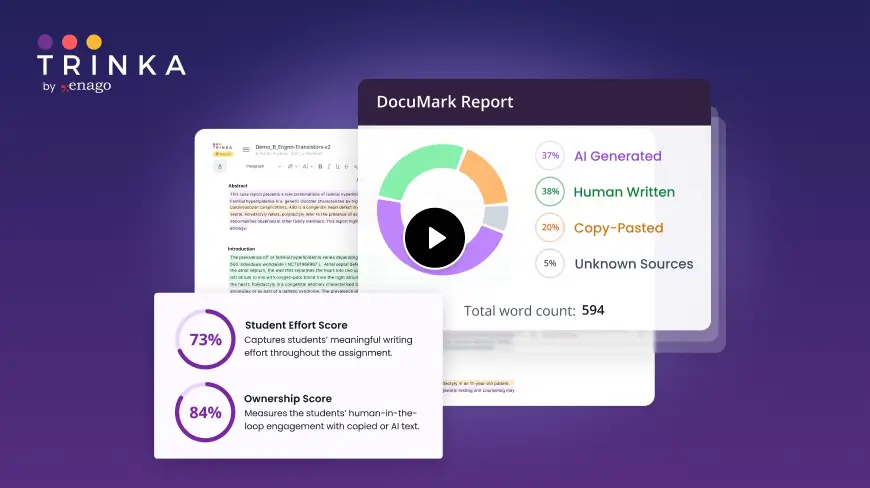
DocuMark: Responsible AI Use for Academic Integrity
Knowing your institution's AI policy is step one. DocuMark helps enforce it fairly by empowering universities to manage AI-generated content, prevent cheating, and support student writing through responsible AI use.
Common Questions About Goldsmiths, University of London's AI Policies
Goldsmiths, University of London has defined AI policies in 12 of 12 categories, with an overall coverage score of 100%.
When AI use is permitted in assessed work, students must clearly acknowledge it and provide references in the departmental style, including source details of the AI system and links to webpages or source files it referred to where a bibliography or reference list is included. Unacknowledged AI use can be treated as poor academic practice or academic misconduct.
Undisclosed or unauthorized AI use in assessed work is treated under the university's academic misconduct framework, with sanctions ranging from warnings for poor academic practice to penalties for misconduct. The provided sources do not define a university position on using AI-detection tools, but they do define investigation and penalty processes for suspected misconduct.
Goldsmiths restricts what data may be entered into AI systems. Users should not put personal, confidential, restricted, or highly restricted information into publicly accessible AI tools, and personal data may only be processed in AI systems when the college has a written agreement with the provider, suitable safeguards, required impact assessments, and college approval.