Teaching & Learning
- At the School of Pharmacy, AI may be used only as support or assistance, and using it to complete most of an assignment is prohibited
- The task force midyear report separately recommends that AI not be banned university-wide and that guidelines be created for appropriate student use, but it does not establish a final university-wide rule
AI technology can be used to support or assist student work, but it cannot be used to break academic
integrity. Any attempt to use AI technology to cheat will be considered a violation of the School’s policies
and may result in disciplinary action. Using AI Technology to complete a majority of an assignment is
prohibited.
■ Unanimous opinion of the task force that generative AI, including
but not limited to ChatGPT, should not be banned from the
university.
■ Thus, the task force formally recommends guidelines for
appropriate student and faculty use of generative artificial
intelligence programs and software.
- The School of Pharmacy handbook does not state a distinct AI-specific exam rule beyond the general integrity prohibition
- The task force materials state that some members favored prohibiting students from using AI to generate their work and adding plagiarism-policy language covering AI-generated assessment content, but these are recommendations and comments rather than a final university-wide examination rule
■ “Prohibiting students from using ChatGPT/AI to generate their work.”
■ “There should be no further policy enforcement on students; the current
code of conduct already covers plagiarism. At most, there should be an
addendum to the plagiarism policy to include the prohibition of the use of
generative AI to create some or all of an assessment meant to be
generated by the student.”
Using technology to cheat is strictly prohibited. Students must maintain academic integrity when using
technology. Plagiarism, cheating, or any other form of academic dishonesty will not be tolerated. All work
submitted by students must be original and adhere to the University's academic policies.
- In the School of Pharmacy handbook, AI is allowed to support or assist student work so long as it is not used to violate academic integrity
- The task force materials describe AI-assisted learning uses such as grammar checking, personalized learning, proofreading, and interview preparation as ethical uses when students receive proper guidance and training
■ ChatGPT also provides unparalleled approaches for
personalized learning.
■ “AI is already widely used (indeed encouraged) by students to
check their grammar and spelling.”
■ Yes, engineering students are already using ChatGPT for
technical work and interview prep.
■ Some students have been provided proper guidance on the ethical uses of
generative AI for proofreading, technical work, and interview preparation.
AI technology can be used to support or assist student work, but it cannot be used to break academic
integrity.
- The School of Pharmacy handbook also does not define a programming-specific AI policy
- The task force materials note that engineering students are already using ChatGPT for technical work, but no explicit rule is given that specifically governs AI code generation or programming assignments
■ Yes, engineering students are already using ChatGPT for
technical work and interview prep.
Research
Academic Integrity
- No Hampton-specific disclosure or citation requirement is established in the provided texts
- The task force slide deck notes that some universities allow AI tools with citation and that institutions vary, but this is background research rather than a Hampton rule
■ At 4% of universities, the tools are allowed (with citation) unless instructors prohibit
them.
- At the School of Pharmacy, AI misuse is treated as a policy violation that may lead to disciplinary action, and using technology to cheat is strictly prohibited
- The task force materials state that anti-plagiarism software may not easily detect AI-written work and call for clear guidance on penalties for misuse, but they do not set a university-wide detection protocol
Any attempt to use AI technology to cheat will be considered a violation of the School’s policies
and may result in disciplinary action.
Using technology to cheat is strictly prohibited. Students must maintain academic integrity when using
technology. Plagiarism, cheating, or any other form of academic dishonesty will not be tolerated.
questions, write assignments and draft academic essays without
being easily detected by current versions of anti-plagiarism
software.
■ “Clear guidance is needed on the appropriate use and penalty for
misuse of the tool.”
Institutional & Administrative
- The task force recommends that instructors be allowed to use AI tools ethically and that Hampton develop guidelines for faculty use
- It also includes comments suggesting best-practice guidance for professors and policy attention to faculty pedagogy and assessment design, but these are recommendations rather than a binding faculty policy
■ Although the potential of unethical use and academic dishonesty
remain major concerns, members of the task force believe that our
instructors should use every tool available, provided the instruction
demonstrates appropriate and ethical uses of said tools.
■ Thus, the task force formally recommends guidelines for
appropriate student and faculty use of generative artificial
intelligence programs and software.
■ “A list of best practices for professors.”
■ “Any additional policies should be directed towards the pedagogy and
assessments of instructional faculty. That is, policies should ensure that
faculty use and design assessments that are in essence ‘AI-proof’”.
- The task force's tentative position is that generative AI should not be banned and that the university should develop guidelines and integrity training related to ethical use
- Hampton has a ChatGPT/Artificial Intelligence Task Force charged with reviewing AI's impact on teaching and learning, deciding whether AI should be allowed in the classroom, and considering what policies should guide its use
■The purpose of the ChatGPT/Artificial
Intelligence (AI) Task Force at Hampton
University (HU) is to:
■ Review the current literature regarding the
impact of ChatGPT/AI tools on the teaching
learning process in higher education; and
■ To determine if HU should allow the use of these
tools in the classroom.
■To be more specific:
■ Should AI be banned?
■ Are students ready for ChatGPT/AI?
■ Will it be embraced fully?
■ If it is embraced, what policies should be
enacted to guide the use of ChatGPT and AI
tools in the teaching learning process?
■ Tentative Status of Generative AI at Hampton University
■ Unanimous opinion of the task force that generative AI, including
but not limited to ChatGPT, should not be banned from the
university.
■ Thus, the task force formally recommends guidelines for
appropriate student and faculty use of generative artificial
intelligence programs and software.
■ Formally recommends that HU requires academic integrity training as it
relates to the evolving forms of plagiarism.
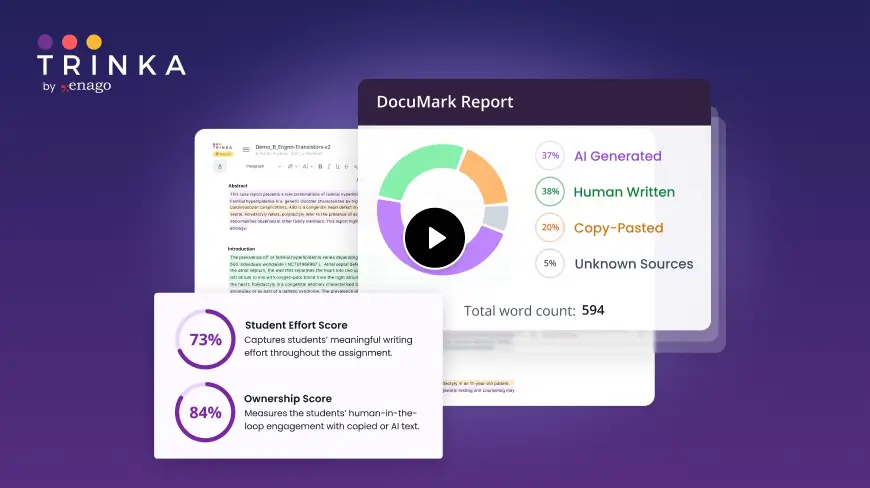
DocuMark: Responsible AI Use for Academic Integrity
Knowing your institution's AI policy is step one. DocuMark helps enforce it fairly by empowering universities to manage AI-generated content, prevent cheating, and support student writing through responsible AI use.
Common Questions About Hampton University's AI Policies
Hampton University has defined AI policies in 8 of 12 categories, with an overall coverage score of 67%.
No Hampton-specific disclosure or citation requirement is established in the provided texts. The task force slide deck notes that some universities allow AI tools with citation and that institutions vary, but this is background research rather than a Hampton rule.
At the School of Pharmacy, AI misuse is treated as a policy violation that may lead to disciplinary action, and using technology to cheat is strictly prohibited. The task force materials state that anti-plagiarism software may not easily detect AI-written work and call for clear guidance on penalties for misuse, but they do not set a university-wide detection protocol.
No explicit data protection or approved AI platform policy is currently defined in the available policy sources.