Teaching & Learning
- Use of generative AI in assessed work is permitted only when it is clearly identified and referenced, and course staff may set course-specific guidance on how and when it may be used
- If AI use is not appropriately referenced or if submitted work is not the student's own, the university treats this as academic misconduct under plagiarism or dishonest practice rules
1. Use of generative artificial intelligence is permitted provided that such use is clearly identified and referenced. Generative AI spelling and grammar checking (e.g. MS Word, Grammarly) does not need to be referenced unless specifically indicated within the course.
2. The use of generative AI should be referenced using the appropriate referencing format for the piece of work.
5. If generative AI is to be used, course staff will provide clear guidance to students on how and when generative AI may be used within the course.
• Misuse of Generative Artificial Intelligence (GenAI) Tools: any suspected misuse of generative artificial intelligence (GenAI) will be dealt with under this policy. In most instances misuse of GenAI would fall under the definition of plagiarism (either through failing to appropriately reference sources (i.e. GenAI) or presenting work that is not student’s own as if it were) but could also fall under the definition of dishonest practice where appropriate.
- The university treats unauthorized AI-related conduct in examinations as misconduct
- It also prohibits students from giving AI tools access to university systems to gain unfair academic advantage, and misuse of GenAI in assessment can be penalized under the academic misconduct policy
• Examination Misconduct: unauthorised materials or devices being in the vicinity of a student during an examination or the use of such materials, the use of electronic devices not permitted during an examination, or any other conduct not permitted under the University's Regulations, Policies, and Procedures on examinations.
• Deliberately authorising, facilitating, or voluntarily providing HWU credentials, to any third parties, including any AI tools, to take unfair academic advantage: this includes giving third party’s access to University systems, either directly or via another person. In the example of AI tools, they can normally only gain access to University systems (e.g. Canvas) if students deliberately or voluntarily provide their University login details (e.g. Canvas credentials) to the third party.
• Misuse of Generative Artificial Intelligence (GenAI) Tools: any suspected misuse of generative artificial intelligence (GenAI) will be dealt with under this policy.
- Course teams may use generative AI where appropriate for learning outcomes, but each course decides whether and how it will be used
- The university encourages students and staff to engage with AI for learning, teaching, and assessment, and permits generative AI use if it is clearly identified and referenced
Heriot-Watt University recognises the opportunities and challenges that developments in artificial intelligence, in particular generative AI, offer to learning, teaching and assessment. We will encourage and support students and staff to engage with artificial intelligence in keeping with the HW general principles on use of technology.
1. Use of generative artificial intelligence is permitted provided that such use is clearly identified and referenced.
4. Courses and programmes within HW may make use of generative AI where it is appropriate to support the learning outcomes, however there is no requirement for a course or programme to utilise generative AI.
5. If generative AI is to be used, course staff will provide clear guidance to students on how and when generative AI may be used within the course.
Research
- Research integrity procedures also already handle alleged misuse of AI in research cases
- For research, the university does not yet state a finalized detailed rule in the provided sources, but it states that future guidance will set standards and boundaries for appropriate AI use in research writing for postgraduate researchers, supervisors, and others
The second and third cases both involved alleged misuse of AI. The named person deemed both serious enough for formal consideration, and Screening Panels were established. In both cases, respondents were advised of corrective actions.
Ensure comprehensive guidance is available on the safe, ethical, and effective use of AI by postgraduate researchers (PGRs), supervisors and others. This will include:
o Clear standards and boundaries for appropriate AI use in research, writing, data analysis, and academic integrity.
Practical examples and case studies illustrating acceptable and unacceptable uses of AI tools.
- The university states that comprehensive guidance will be developed to set clear standards and boundaries for appropriate AI use in research data analysis, but currently provides no detailed operational rules
Ensure comprehensive guidance is available on the safe, ethical, and effective use of AI by postgraduate researchers (PGRs), supervisors and others. This will include:
o Clear standards and boundaries for appropriate AI use in research, writing, data analysis, and academic integrity.
- It also states that future AI guidance for research will be integrated with existing policies on research integrity, data protection, and academic misconduct
- The university places research misconduct involving postgraduate research students under research integrity procedures, and it reports that alleged misuse of AI has already been handled through formal research integrity processes
Research Misconduct is covered under the Research Integrity: Procedures for Investigating Research Misconduct.
1.17 For breaches of Research Integrity by postgraduate research students, these will initially be considered under the Research Integrity Procedures. Those procedures do not currently form part of the Student Academic Misconduct Policy and are concerned with the handling and investigation of allegations of research misconduct. Where an allegation of research misconduct is upheld, action(s) may be taken under those Policies and Procedures to safeguard research integrity. However, where disciplinary action(s) are appropriate, procedures will be initiated under the Student Academic Misconduct Policy.
The second and third cases both involved alleged misuse of AI. The named person deemed both serious enough for formal consideration, and Screening Panels were established.
Integration with existing policies on research integrity, data protection, and academic misconduct to provide consistency and transparency.
Academic Integrity
- Disclosure and attribution of generative AI use are required
- Students must clearly identify and reference AI use, use the appropriate referencing format, and failure to cite GenAI correctly is treated as academic misconduct; spelling and grammar tools are exempt unless a course says otherwise
1. Use of generative artificial intelligence is permitted provided that such use is clearly identified and referenced. Generative AI spelling and grammar checking (e.g. MS Word, Grammarly) does not need to be referenced unless specifically indicated within the course.
2. The use of generative AI should be referenced using the appropriate referencing format for the piece of work.
• Falsify References: It is a student’s responsibility to ensure that their references list or bibliography accurately reflects genuine sources from which they got their information from. Failing to cite and reference correctly, either intentional or unintentional, is a form of academic misconduct.
• Misuse of Generative Artificial Intelligence (GenAI) Tools: any suspected misuse of generative artificial intelligence (GenAI) will be dealt with under this policy. In most instances misuse of GenAI would fall under the definition of plagiarism (either through failing to appropriately reference sources (i.e. GenAI) or presenting work that is not student’s own as if it were) but could also fall under the definition of dishonest practice where appropriate.
- The university stated it would not use generative AI detection tools during AY23-24, though it would keep such tools under review
- Undisclosed or inappropriate GenAI use is enforceable under the academic misconduct policy, with tariffed penalties for contract cheating and inappropriate GenAI use, and giving AI tools university credentials for unfair academic advantage carries immediate expulsion
HW will keep under review developments on generative AI detection tools.
6. HW will not be utilising any generative AI detection tools for the period of AY23-24
• Misuse of Generative Artificial Intelligence (GenAI) Tools: any suspected misuse of generative artificial intelligence (GenAI) will be dealt with under this policy.
X9.2. Contract Cheating and inappropriate use of Generative Artificial Intelligence (GenAI) tools
The relevant Discipline Committee will follow Table 9.2 when determining an outcome for forms of Contract Cheating and inappropriate use of GenAI tools (as listed above):
Penalty: Immediate expulsion from the University
• This applies to all students who have been proven to have deliberately authorised, facilitated, or voluntarily provided their HWU credentials, to any third parties, including any AI tools, to take unfair academic advantage.
Institutional & Administrative
- Where a course uses generative AI, staff are responsible for providing clear guidance to students on how and when it may be used
- The university encourages and supports staff to engage with AI in learning, teaching, and assessment, and says it will ensure staff have appropriate digital capabilities and technologies
Heriot-Watt University recognises the opportunities and challenges that developments in artificial intelligence, in particular generative AI, offer to learning, teaching and assessment. We will encourage and support students and staff to engage with artificial intelligence in keeping with the HW general principles on use of technology.
5. If generative AI is to be used, course staff will provide clear guidance to students on how and when generative AI may be used within the course.
HW will also ensure that staff have the appropriate digital capabilities and the appropriate technologies to provide effective teaching, learning and assessment.
- The university has general institutional principles on technology and AI, including a general statement supporting engagement with AI in learning, teaching, and assessment
- In research governance, the University Committee for Research and Innovation oversees research governance and integrity, and the university states that developing comprehensive AI guidance for postgraduate researchers, supervisors, and others is a future priority
Heriot-Watt University recognises the opportunities and challenges that developments in artificial intelligence, in particular generative AI, offer to learning, teaching and assessment. We will encourage and support students and staff to engage with artificial intelligence in keeping with the HW general principles on use of technology.
The governance and integrity of all our research and related activities are the responsibility of our University Committee for Research and Innovation. This is chaired by our Deputy Principal for Research and Impact with representatives of all academic departments as well as key professional services areas involved in research management.
Ensure comprehensive guidance is available on the safe, ethical, and effective use of AI by postgraduate researchers (PGRs), supervisors and others.
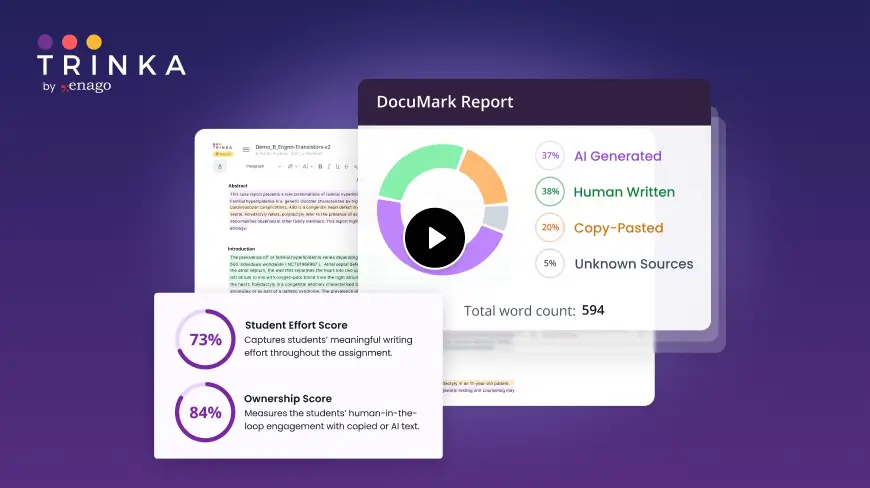
DocuMark: Responsible AI Use for Academic Integrity
Knowing your institution's AI policy is step one. DocuMark helps enforce it fairly by empowering universities to manage AI-generated content, prevent cheating, and support student writing through responsible AI use.
Common Questions About Heriot-Watt University's AI Policies
Heriot-Watt University has defined AI policies in 10 of 12 categories, with an overall coverage score of 83%.
Disclosure and attribution of generative AI use are required. Students must clearly identify and reference AI use, use the appropriate referencing format, and failure to cite GenAI correctly is treated as academic misconduct; spelling and grammar tools are exempt unless a course says otherwise.
The university stated it would not use generative AI detection tools during AY23-24, though it would keep such tools under review. Undisclosed or inappropriate GenAI use is enforceable under the academic misconduct policy, with tariffed penalties for contract cheating and inappropriate GenAI use, and giving AI tools university credentials for unfair academic advantage carries immediate expulsion.
No explicit data protection or approved AI platform policy is currently defined in the available policy sources.