Teaching & Learning
- Jackson State University does not set one uniform student AI rule for all coursework
- The policy is therefore at instructor discretion by course assignment, with some permitted cases requiring citation
- Instead, the university provides syllabus icons so faculty can specify assignment-level rules ranging from prohibited to limited use, permitted use, or suggested use
Faculty can use these icons in their syllabi to convey their expectation regarding AI use on course assignments.
Download AI Use Icons Here: No Generative AI Allowed | Caution: Limited Generative AI Allowed | Generative AI Permitted | Generative AI Suggested
This icon signifies that the assignment strictly prohibits the use of generative AI tools. Students must complete the work independently, ensuring that their submissions are entirely original and manual without generative AI assistance.
This icon indicates that generative AI tools can be used, but only within specific, limited contexts. Students should follow detailed guidelines to ensure compliance, such as using AI only for brainstorming or grammar checks, not for content creation.
This icon represents that the ethical use of generative AI tools is fully allowed in the assignment. Students can leverage AI to assist in writing, research, and problem-solving, provided they cite the tools they have used where appropriate.
This icon recommends the use of generative AI as a beneficial
- There is no single university-wide AI exam rule beyond those general integrity and instructor-controlled provisions
- Faculty also set assignment-level AI expectations through syllabus icons, and workshop materials note that faculty may decide AI is not permitted and treat that as academic misconduct
- The student handbook does not mention AI specifically for exams, but it states that using unauthorized information or devices and violating procedures that protect the integrity of tests or evaluations counts as cheating
• Using information or devices that are not allowed by the faculty; such as using formulas or data from a home computer program, or using unauthorized materials for a take-home exam;
• Violating procedures prescribed to protect the integrity of an assignment, test, or other evaluation;
Faculty can use these icons in their syllabi to convey their expectation regarding AI use on course assignments.
AI use not permitted
— constitutes academic misconduct
- Use remains dependent on instructor guidance where coursework is involved
- Jackson State University provides for limited or recommended AI use in learning contexts when faculty allow it
- Its syllabus icons specifically give examples such as brainstorming and grammar checks, and the faculty AI hub promotes AI tutoring tools for learning support
This icon indicates that generative AI tools can be used, but only within specific, limited contexts. Students should follow detailed guidelines to ensure compliance, such as using AI only for brainstorming or grammar checks, not for content creation.
This icon recommends the use of generative AI as a beneficial
Adaptive AI tutors that tailor learning based on student responses and pace.
Research
- Jackson State University provides access to Grammarly AI Premium for graduate students, research students, and faculty, and describes it as suitable for research writing
- This indicates an institutionally available AI writing support tool for research manuscript preparation, but the sources do not state a separate compliance policy beyond access control
Grammarly AI – Writing Support Powered by Artificial Intelligence
Grammarly AI helps elevate your writing by offering real-time grammar, spelling, tone, and clarity suggestions. It’s ideal for academic papers, research writing, professional communication, and more.
Grammarly AI Premium is available only to Graduate Students, Research Students, and Faculty.
Access is limited and must be requested.
- However, the provided sources do not define a formal university policy governing AI use for research data collection, analysis, or interpretation
- Jackson State University references AI work involving data management, custom AI applications, and impact evaluation in its faculty AI literacy programming
Dive into data management, custom AI applications, and impact evaluation. Access project templates, research articles, and advanced workshop opportunities.
Academic Integrity
- Where AI use is permitted or encouraged, Jackson State University requires or expects documentation, clear distinction from original work, and citation where appropriate
- The university's assignment-level AI materials state that permitted AI use should be cited, and workshop materials frame documentation and distinguishing AI from original work as policy options
Students can leverage AI to assist in writing, research, and problem-solving, provided they cite the tools they have used where appropriate.
AI use encouraged
for specific purposes (with
documentation)
AI use allowed
if clearly distinguished from original
work
- The university materials provided do not state a formal AI detection-tool policy
- For enforcement, Jackson State treats prohibited AI use as academic misconduct in faculty policy guidance, and the student handbook directs reports of plagiarism, cheating, and academic dishonesty to Academic Affairs while defining cheating broadly as submitting work that is not your own or using unauthorized tools or materials
AI use not permitted
— constitutes academic misconduct
Academic
Instructors:
plagiarism,
cheating,
academic
dishonesty, etc.
The Division of Academic Affairs
• Submitting material that is not yours as part of your course performance, such as copying another student’s course work, assignment and examor allowing a student to copy from you.
• Using information or devices that are not allowed by the faculty; such as using formulas or data from a home computer program, or using unauthorized materials for a take-home exam;
Institutional & Administrative
- Jackson State University actively supports faculty AI use in teaching
- The provided sources do not state rules on grading, recommendation letters, or administrative communications specifically
- Faculty are given syllabus tools to set course AI rules and are offered training on AI foundations, ethics, assessment design, practical integration, automated feedback, classroom analytics, and course redesign for meaningful AI integration
Faculty can use these icons in their syllabi to convey their expectation regarding AI use on course assignments.
Save time with tools that provide structured, formative feedback instantly.
Track student engagement and trends with visual dashboards and reports.
Four expert-led sessions (1-2 hours each via Zoom) covering AI foundations, ethics, assessment design, and practical integration. Complete accompanying work in Canvas at your own pace.
Intensive collaborative work to transform one of your courses with meaningful AI integration. You’ll be paired with an AI Tiger mentor and leave with a redesigned course ready for fall.
- The faculty AI hub also refers users to institutional guidance for protecting student data and equity
- However, the provided sources do not define detailed data-classification rules or a broader prohibited-platform list
- Jackson State University identifies an institutionally controlled AI platform by offering Grammarly AI Premium only to specified groups and requiring approval to access it
Grammarly AI Premium is available only to Graduate Students, Research Students, and Faculty.
Access is limited and must be requested.
Access university-specific policies and recommendations for responsible AI use in academic contexts. Review best practices for protecting student data and ensuring equity.
- No standing AI committee or formal governance charter is identified in the provided materials
- Jackson State University has an active institutional AI strategy centered on faculty development, course redesign, and growing university-wide AI teaching capacity
- The sources show university-specific guidelines and recommendations for responsible AI use, plus an implementation initiative running through 2026 to build an AI teaching knowledge base
Access university-specific policies and recommendations for responsible AI use in academic contexts. Review best practices for protecting student data and ensuring equity.
Four expert-led sessions (1-2 hours each via Zoom) covering AI foundations, ethics, assessment design, and practical integration. Complete accompanying work in Canvas at your own pace.
Intensive collaborative work to transform one of your courses with meaningful AI integration. You’ll be paired with an AI Tiger mentor and leave with a redesigned course ready for fall.
Teach your transformed course with ongoing community support. Share what works, troubleshoot challenges, and contribute to JSU’s growing AI teaching knowledge base.
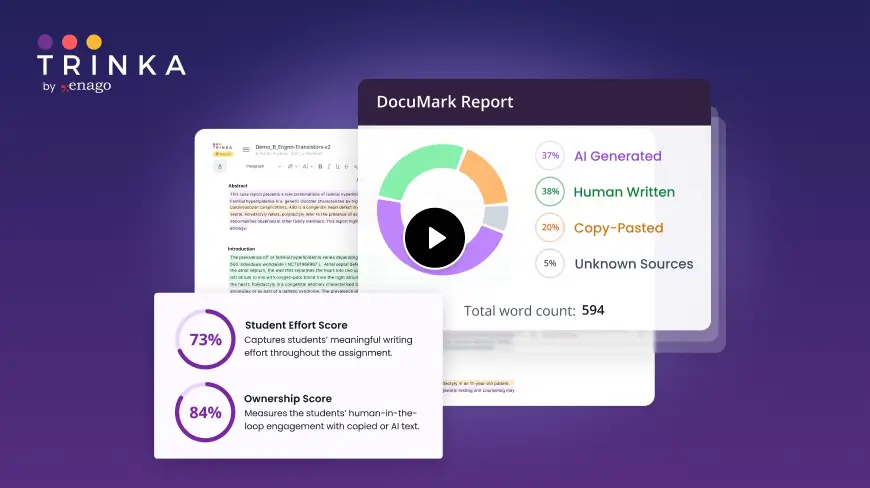
DocuMark: Responsible AI Use for Academic Integrity
Knowing your institution's AI policy is step one. DocuMark helps enforce it fairly by empowering universities to manage AI-generated content, prevent cheating, and support student writing through responsible AI use.
Common Questions About Jackson State University's AI Policies
Jackson State University has defined AI policies in 10 of 12 categories, with an overall coverage score of 83%.
Where AI use is permitted or encouraged, Jackson State University requires or expects documentation, clear distinction from original work, and citation where appropriate. The university's assignment-level AI materials state that permitted AI use should be cited, and workshop materials frame documentation and distinguishing AI from original work as policy options.
The university materials provided do not state a formal AI detection-tool policy. For enforcement, Jackson State treats prohibited AI use as academic misconduct in faculty policy guidance, and the student handbook directs reports of plagiarism, cheating, and academic dishonesty to Academic Affairs while defining cheating broadly as submitting work that is not your own or using unauthorized tools or materials.
Jackson State University identifies an institutionally controlled AI platform by offering Grammarly AI Premium only to specified groups and requiring approval to access it. The faculty AI hub also refers users to institutional guidance for protecting student data and equity. However, the provided sources do not define detailed data-classification rules or a broader prohibited-platform list.