Teaching & Learning
- Undisclosed or unauthorized AI use in assessed work is treated as potential academic misconduct
- Use of generative AI in coursework is not uniformly permitted or prohibited across the university; it is determined by the assessment design and module guidance
- Students may use AI only where the assessment brief or tutor allows it, and they remain responsible for the accuracy, integrity, and acknowledgement of any AI-assisted work
The use of GenAI in a module or assessment should be guided by the teaching staff and be linked to the learning outcomes and authentic nature of the assessment.
There should be clear guidance for students on what use of GenAI is, or is not, permitted in relation to each assessment item.
Students should be made aware that they are responsible for the accuracy, integrity and originality of any submitted work, including any content generated by AI tools.
If students are permitted to use GenAI in an assessment, they should acknowledge how the tool has been used.
Using GenAI inappropriately in assessed work, or failing to acknowledge its use where required, may constitute academic misconduct.
- AI use in examinations and formal assessments is controlled by assessment-specific rules
- Where AI use is not permitted or not acknowledged as required, this may be treated as academic misconduct
- The university states that students must not access unauthorized materials or technology in exams, and whether AI is allowed in an assessment must be explicitly stated by teaching staff
There should be clear guidance for students on what use of GenAI is, or is not, permitted in relation to each assessment item.
Using GenAI inappropriately in assessed work, or failing to acknowledge its use where required, may constitute academic misconduct.
A student shall not introduce into an examination any unauthorised material or equipment of any kind nor use any unauthorised material or equipment of any kind during the examination.
A student shall not communicate with or seek assistance from any other person during an examination, other than the invigilator, unless expressly permitted to do so by the Academic Registrar or nominee.
- Students are advised to use AI critically and not rely on it as a substitute for their own learning or judgment
- The university permits students to use generative AI as a learning support tool for activities such as explaining concepts, creating study materials, and getting feedback, but warns that outputs may be inaccurate or biased
Used critically, GenAI tools can be valuable partners in learning. They can support students to develop ideas, explore concepts, generate examples, summarise information, or receive instant feedback on draft work.
You can use AI tools to support your learning, for example to:
• explain a concept in a different way
• generate quiz questions for revision
• suggest structures for notes or essays
• help you identify gaps in your understanding
However, AI tools do not always provide accurate or reliable information. They can make things up, present bias as fact, or miss important context.
You should not rely on AI outputs without checking them carefully against trusted sources.
Research
- AI tools cannot be credited as authors, and researchers must check outputs carefully for accuracy, bias, and confidentiality risks
- Researchers may use AI tools to support drafting and editing research writing, but they remain fully accountable for the content and must ensure transparency where AI has been used
Researchers may use generative AI tools to support aspects of writing, editing and formatting, provided that such use is appropriate, transparent and does not compromise research integrity.
Researchers remain fully responsible for the accuracy, originality and integrity of their work, including any content generated or modified with the assistance of AI.
Generative AI tools must not be listed as authors on research outputs.
Any use of AI in the preparation of research outputs should be appropriately acknowledged where required by publishers, funders or disciplinary norms.
- The university allows AI use in research data and analysis only where it is methodologically appropriate and legally and ethically compliant
- Researchers must consider data protection, confidentiality, bias, validity, and reproducibility before using AI tools with research data, especially where personal or sensitive data are involved
The use of AI in data collection, analysis or interpretation must be appropriate to the research design and undertaken in ways that comply with legal, ethical and disciplinary standards.
Researchers must not input personal, confidential, commercially sensitive or otherwise restricted data into publicly available AI tools unless there is explicit approval and an appropriate legal basis.
Researchers should assess the limitations, potential biases and reproducibility of AI-supported methods and outputs.
The use of AI-generated or synthetic data must be clearly justified and documented.
- The university requires AI use in research to comply with research integrity and ethics standards
- Researchers must identify and manage ethical, legal, and integrity risks arising from AI use, and must not use AI in ways that undermine honesty, accountability, or ethical approval requirements
The use of AI in research must align with the University’s expectations for research integrity, ethics and good conduct.
Researchers are responsible for identifying and managing any ethical, legal, methodological and integrity risks associated with AI use.
Where AI use has implications for ethical review, data protection, consent or confidentiality, these must be addressed through the appropriate approval processes.
Researchers remain accountable for all aspects of their research and must not delegate core scholarly judgement to AI systems.
Academic Integrity
- Disclosure of AI use is required when the assessment or context requires it
- Students must acknowledge permitted AI use in assessed work, and researchers must acknowledge AI use in research outputs when required by publishers, funders, or disciplinary norms
If students are permitted to use GenAI in an assessment, they should acknowledge how the tool has been used.
Using GenAI inappropriately in assessed work, or failing to acknowledge its use where required, may constitute academic misconduct.
Any use of AI in the preparation of research outputs should be appropriately acknowledged where required by publishers, funders or disciplinary norms.
- The university treats inappropriate or undisclosed AI use as a possible academic misconduct matter and handles it through its academic honesty procedures
- The provided sources do not define a university-wide reliance on AI detection tools, but they do define sanctions and procedural investigation routes for misconduct in assessed work
Using GenAI inappropriately in assessed work, or failing to acknowledge its use where required, may constitute academic misconduct.
Academic misconduct includes any action or attempted action which may result in a student obtaining an unfair academic advantage.
The following are examples of academic misconduct:
...
(g) submitting work for assessment which has been produced in whole or in part by another person or another source and passing it off as the student’s own work;
Where there is reason to believe that academic misconduct may have occurred, the matter shall be investigated in accordance with the procedures set out in these Regulations.
Institutional & Administrative
- Teaching staff are responsible for deciding whether and how AI is permitted in assessments and for giving clear guidance to students
- Staff may use generative AI in teaching, assessment design, and related academic work, but they are expected to exercise professional judgment and maintain human oversight
The use of GenAI in a module or assessment should be guided by the teaching staff and be linked to the learning outcomes and authentic nature of the assessment.
There should be clear guidance for students on what use of GenAI is, or is not, permitted in relation to each assessment item.
Staff should use professional judgement when deciding whether and how to use generative AI tools in teaching, learning and assessment.
Human oversight remains essential. Staff remain responsible for the quality, appropriateness and accuracy of any outputs used in their practice.
- Its research guidance emphasizes data protection, confidentiality, and risk controls, but the provided sources do not set out a single university-wide list of approved AI platforms
- The university restricts entry of personal, confidential, commercially sensitive, or otherwise restricted information into public AI tools unless appropriate approval and legal basis are in place
Researchers must not input personal, confidential, commercially sensitive or otherwise restricted data into publicly available AI tools unless there is explicit approval and an appropriate legal basis.
Where AI tools are used, researchers must ensure compliance with data protection law, contractual obligations, intellectual property rights and confidentiality requirements.
Human oversight remains essential. Staff remain responsible for the quality, appropriateness and accuracy of any outputs used in their practice.
- The university has published institution-level principles for generative AI in academic practice and a separate responsible-use framework for AI in research
- These documents frame AI adoption around human responsibility, transparency, assessment validity, legal and ethical compliance, and discipline-appropriate use rather than a fully centralized AI strategy roadmap
These principles are intended to support a consistent, considered and educationally appropriate approach to the use of generative AI across the University.
The use of GenAI should support, and not undermine, the University’s academic standards, values and regulations.
The use of AI in research must align with the University’s expectations for research integrity, ethics and good conduct.
Researchers are responsible for identifying and managing any ethical, legal, methodological and integrity risks associated with AI use.
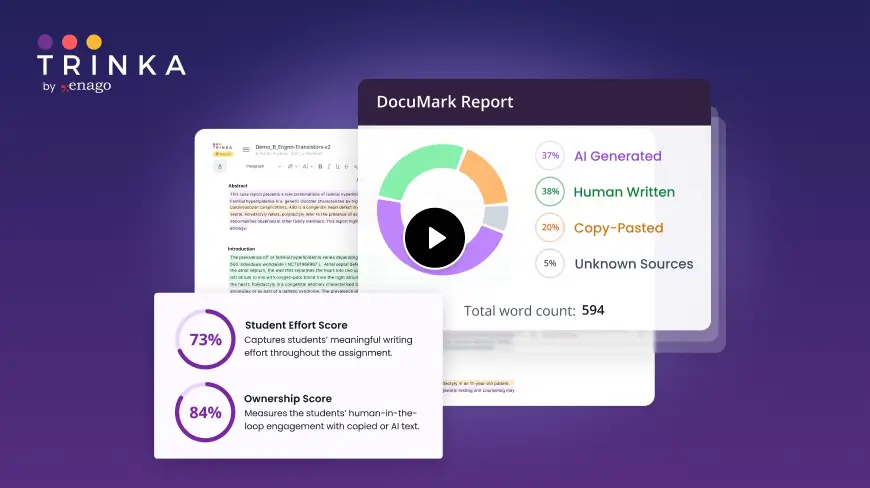
DocuMark: Responsible AI Use for Academic Integrity
Knowing your institution's AI policy is step one. DocuMark helps enforce it fairly by empowering universities to manage AI-generated content, prevent cheating, and support student writing through responsible AI use.
Common Questions About Leeds Metropolitan University's AI Policies
Leeds Metropolitan University has defined AI policies in 11 of 12 categories, with an overall coverage score of 92%.
Disclosure of AI use is required when the assessment or context requires it. Students must acknowledge permitted AI use in assessed work, and researchers must acknowledge AI use in research outputs when required by publishers, funders, or disciplinary norms.
The university treats inappropriate or undisclosed AI use as a possible academic misconduct matter and handles it through its academic honesty procedures. The provided sources do not define a university-wide reliance on AI detection tools, but they do define sanctions and procedural investigation routes for misconduct in assessed work.
The university restricts entry of personal, confidential, commercially sensitive, or otherwise restricted information into public AI tools unless appropriate approval and legal basis are in place. Its research guidance emphasizes data protection, confidentiality, and risk controls, but the provided sources do not set out a single university-wide list of approved AI platforms.