Teaching & Learning
- When AI is prohibited for an assignment, using it is treated as an Honor Code violation
- In sample syllabus language provided by the university, AI may be encouraged, prohibited, or allowed with limits, depending on the course
- Loyola does not set one uniform university-wide rule for AI use in coursework; faculty decide at the department and course level whether generative AI is allowed or prohibited, and they are expected to state that clearly in the syllabus or assignment directions
• The use or prohibition of generative AI
should be decided by faculty at the
department and course level in accordance
with practices in specific disciplines and
fields.
• Your stance on the use of AI tools in your
course should be clear in your syllabus
and/or assessment directions.
Permissive “In this graduate seminar, you are encouraged to use AI tools such as
ChatGPT for brainstorming, drafting, and editing. However, you must
document how and when AI was used and reflect on its impact on
your learning process. Cite AI-generated content as you would any
external source.”
Restrictive “Unless explicitly stated, the use of generative AI tools (e.g., ChatGPT,
Claude) is not permitted for assignments in this undergraduate course.
Unauthorized use will be treated as a breach of academic integrity and
a violation of the Honor Code.”
Balanced “AI tools may be used for idea generation and preliminary research,
but all final submissions must be your own work. Clearly indicate any
sections where AI contributed and be prepared to discuss your
process.”
“Students must disclose AI’s roles (e.g., copy editing using the prompt
“check grammar”) if using AI for assignments. If students include
material generated by an AI program, it should be cited like any other
reference material. If AI is explicitly prohibited in an assignment, the
use of AI (e.g., ChatGPT, Caktus, Claude, Copilot, or other generative
AI tools) for this assignment will violate the Honor Code.”
- The institution’s materials frame AI use in assessments as something instructors may permit or prohibit at the course level, with violations handled under academic integrity rules
- Loyola indicates that faculty should specify their AI rules in assessment directions, but the provided sources do not state a distinct university-wide rule specifically for exams, quizzes, or tests
• The use or prohibition of generative AI
should be decided by faculty at the
department and course level in accordance
with practices in specific disciplines and
fields.
• Your stance on the use of AI tools in your
course should be clear in your syllabus
and/or assessment directions.
Restrictive “Unless explicitly stated, the use of generative AI tools (e.g., ChatGPT,
Claude) is not permitted for assignments in this undergraduate course.
Unauthorized use will be treated as a breach of academic integrity and
a violation of the Honor Code.”
- Loyola provides examples in which AI may be used for learning support such as understanding complex articles, summarizing readings, brainstorming, and tutoring-like assistance
- These materials present AI as allowed in some contexts, but not as a uniform student entitlement; use still depends on course or assignment rules, and students may need to disclose or cite that use
Assignment
Specific
Analyzing Articles Using Claude.ai
Claude.ai is an AI tool that can help you understand complex articles.
You will be asked specifically to analyze one or two articles in each
Module. These articles are generally complex (i.e. academic) or long.
For those articles, you will post a summary of the article using
Claude.Ai (or another chatbot like ChatGPT as well as a short
paragraph in your own words about what was your main takeaway
from the article i.e. was the most important thing you learned. Put your
In one or two paragraphs, summarize the article. If you choose, you can use an AI
program (e.g., ChatGPT) to help with the summary – AI could do an excellent job for a
first draft.
This analysis should be your own words, not AI’s. Do not rehash or merely
summarize the contents of the article.
The Rizzo Career Center encourages students and alums to critically examine the benefits and hazards of generative AI. These tools can add efficiency to your career journey, but they should never replace the critical thinking and communication skills you develop as a Loyola Greyhound.
In combination with knowledge about general best practices regarding the format and content of career-related documents, AI can be a useful tool for researching, summarizing, and tailoring these documents.
AI can assist with brainstorming activities when you feel “stuck” and it can serve as a second “set of eyes” at times when another person is not available.
- The department treats this as cheating unless the assignment or professor explicitly allows such use
- In the Computer Science department, using ChatGPT or other AI to write code is prohibited when it is an unallowed resource
5. Using code copied from any other source (WWW, a friend, etc), unless explicitly stated to be OK in the assignment or by the professor upon inquiry.
6. Using code found online, from a friend, etc, that solves a similar or identical problem as a guide in how you write your code.
10. Using an un-allowed resource to write your code for you (ChatGPT or other AI, or any other program).
Research
- The Writing Department and Writing Center also state they are developing a broader policy on generative AI in writing
- Loyola does not provide a university-wide research-manuscript policy in the supplied sources, but the Writing Center states that researchers must document and properly cite AI-assisted writing according to current citation standards
The Writing Department and Writing Center are conducting comprehensive research on generative AI's role in academic writing. We are committed to developing a transparent, ethically grounded approach that supports academic integrity while acknowledging technological innovation.
Our current initiative involves:
* Gathering interdisciplinary perspectives on AI in writing
* Developing nuanced protocols for writing tutors and consultants
* Creating a flexible, responsive policy anticipated by 2025
Proper citation of generative AI tools is crucial for maintaining academic integrity and transparency. Researchers must document AI-assisted work according to current citation standards.
Academic Integrity
- The materials also indicate that students may be asked to explain how AI contributed to their work
- Loyola requires disclosure and citation of AI use when AI is used in assignments in the sample syllabus language it provides, and the Writing Center states that researchers must document AI-assisted work according to current citation standards
However, you must
document how and when AI was used and reflect on its impact on
your learning process. Cite AI-generated content as you would any
external source.
Clearly indicate any
sections where AI contributed and be prepared to discuss your
process.
“Students must disclose AI’s roles (e.g., copy editing using the prompt
“check grammar”) if using AI for assignments. If students include
material generated by an AI program, it should be cited like any other
reference material.
Please disclose AI’s roles, if any (e.g., summarizing the article using the prompt
“summarize the following article”).
Proper citation of generative AI tools is crucial for maintaining academic integrity and transparency. Researchers must document AI-assisted work according to current citation standards.
- Loyola’s provided sources focus on enforcement through Honor Code and academic integrity procedures rather than AI detection software
- Unauthorized AI use may be treated as a breach of academic integrity or Honor Code violation, and faculty are instructed to inform the chair and follow catalogue procedures when a violation occurs
Restrictive “Unless explicitly stated, the use of generative AI tools (e.g., ChatGPT,
Claude) is not permitted for assignments in this undergraduate course.
Unauthorized use will be treated as a breach of academic integrity and
a violation of the Honor Code.”
If AI is explicitly prohibited in an assignment, the
use of AI (e.g., ChatGPT, Caktus, Claude, Copilot, or other generative
AI tools) for this assignment will violate the Honor Code.
• When a violation occurs, inform chair and follow
process outlined in catalogue
Institutional & Administrative
- The On-Ramp to AI document also gives faculty sample approaches that range from permissive to restrictive and includes examples of using ChatGPT to create quizzes and journaling prompts
- Loyola provides faculty-facing guidance that instructors should decide, at the department and course level, whether generative AI is used or prohibited in their teaching, and they should communicate that stance in the syllabus or assessment directions
• The use or prohibition of generative AI
should be decided by faculty at the
department and course level in accordance
with practices in specific disciplines and
fields.
• Your stance on the use of AI tools in your
course should be clear in your syllabus
and/or assessment directions.
ChatGPT makes it very easy to customize common and routine assignments. For
example, if you have digital access to a textbook, it is very easy to load individual
chapters into ChatGPT to create multiple choice quizzes.
Using ChatGPT, it is easy to develop more specific instructions for journaling and then
modify them according to your learning aims.
- Loyola has institution-level AI development activity, but not a final comprehensive policy in the provided sources
- The university’s Writing Department and Writing Center say they are developing a policy on generative AI in writing, and the On-Ramp to AI document presents a values-based institutional approach to guiding ethical AI use in the classroom
The Writing Department and Writing Center are conducting comprehensive research on generative AI's role in academic writing. We are committed to developing a transparent, ethically grounded approach that supports academic integrity while acknowledging technological innovation.
Our current initiative involves:
* Gathering interdisciplinary perspectives on AI in writing
* Developing nuanced protocols for writing tutors and consultants
* Creating a flexible, responsive policy anticipated by 2025
As educators at a Jesuit university, we at Loyola University Maryland are
called to guide our students in thoughtful, ethical engagement with
emerging technologies. Integrating artificial intelligence (AI) into academic
curricula is essential. Students increasingly anticipate its inclusion, and
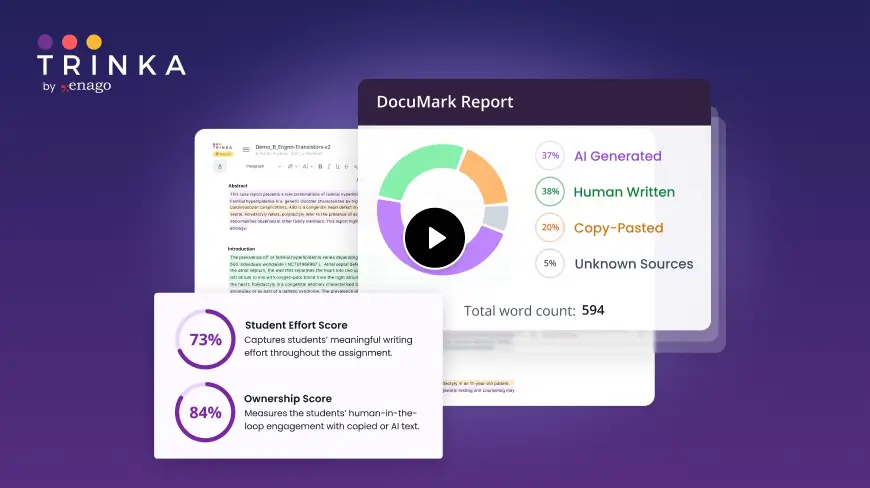
DocuMark: Responsible AI Use for Academic Integrity
Knowing your institution's AI policy is step one. DocuMark helps enforce it fairly by empowering universities to manage AI-generated content, prevent cheating, and support student writing through responsible AI use.
Common Questions About Loyola University Maryland's AI Policies
Loyola University Maryland has defined AI policies in 9 of 12 categories, with an overall coverage score of 75%.
Loyola requires disclosure and citation of AI use when AI is used in assignments in the sample syllabus language it provides, and the Writing Center states that researchers must document AI-assisted work according to current citation standards. The materials also indicate that students may be asked to explain how AI contributed to their work.
Loyola’s provided sources focus on enforcement through Honor Code and academic integrity procedures rather than AI detection software. Unauthorized AI use may be treated as a breach of academic integrity or Honor Code violation, and faculty are instructed to inform the chair and follow catalogue procedures when a violation occurs.
No explicit data protection or approved AI platform policy is currently defined in the available policy sources.