Teaching & Learning
- Use of generative AI in graded coursework is at instructor discretion, and students are responsible for following each course policy
- The university states that unauthorized AI use can be treated as academic dishonesty, while some instructors may permit it when students critically evaluate outputs, avoid overreliance, and document or acknowledge use as required
Students and faculty should be sure to understand individual course guidelines on the use of generative AI. If the use of generative AI tools is not explicitly permitted by the course instructor, students should assume that the use of such tools for assignments and course work is prohibited.
Unauthorized use of generative AI tools for coursework may be considered academic dishonesty and sanctions may be imposed according to Marshall University’s Academic Dishonesty policy.
As instructors and students, AI use should be acknowledged and documented. Take ownership of your work and critically evaluate all AI-generated suggestions and outputs.
Avoid overreliance on AI, which can hinder your ability to think critically and solve problems independently.
- AI use in exams and formal assessments is not governed by a single blanket permission; it depends on the instructor's stated course rules
- If AI use is not explicitly permitted, students are told to assume it is prohibited, and unauthorized use may be handled as academic dishonesty
Students and faculty should be sure to understand individual course guidelines on the use of generative AI. If the use of generative AI tools is not explicitly permitted by the course instructor, students should assume that the use of such tools for assignments and course work is prohibited.
Unauthorized use of generative AI tools for coursework may be considered academic dishonesty and sanctions may be imposed according to Marshall University’s Academic Dishonesty policy.
- Students are also reminded that using AI instead of developing their own understanding can undermine learning
- The university permits students to use AI as a learning aid for personalized support such as tutoring, examples, and practice, but advises them to verify outputs and avoid dependence
AI can provide personalized learning experiences by creating customized examples, practice problems, and explanations.
Generative AI can be a fantastic educational resource, but it’s important to balance its use with developing your own skills.
Always verify AI-generated information and outputs. Generative AI can provide incorrect or misleading information.
Avoid overreliance on AI, which can hinder your ability to think critically and solve problems independently.
- The university's guidelines acknowledge that AI can assist in generating computer code
- However, they stress that students are responsible for the functionality and security of any code they submit and must test and debug it thoroughly
AI tools can also assist in generating computer code, creating documentation, and identifying potential bugs. Always test and debug AI-generated code thoroughly. You are responsible for the functionality and security of any code you submit.
Research
- Separately, the student journal policy says AI cannot be listed as an author and requires disclosure and acknowledgment of AI-assisted writing or editing
- Marshall permits limited AI-assisted editing of theses and dissertations but prohibits AI-generated content from replacing the student's own scholarly work
- Graduate students must disclose any generative AI use in specific sections of the manuscript, and students remain responsible for originality, accuracy, and proper citation
Marshall University permits the use of Generative Artificial Intelligence (GAI) tools for revision and editing but not for replacing the original work expected of a thesis/dissertation student.
Thesis/dissertation students should clearly cite and disclose the use of Generative Artificial Intelligence (GAI) tools in the following ways:
In the section that details methods and/or materials (if GAI was used to edit the manuscript)
In the acknowledgements section of the manuscript (if GAI was used to inform writing, editing, etc.)
The student remains responsible for the originality, accuracy, and integrity of the content.
This policy reflects Marshall University’s commitment to uphold the integrity and originality of academic work while recognizing the evolving role of AI technologies in research and writing. Students are reminded that all use of GAI must conform to Marshall University’s policies on academic honesty, plagiarism, and proper attribution.
AI-generated content is not acceptable as a complete manuscript, article, note or artwork. AI is not acceptable as an author. Writing or editing completed by AI software must be disclosed in the methods or acknowledgments.
Any AI use should be detailed in the methods, acknowledgments, or a footnote. Authors should include a statement disclosing the use of AI-assisted writing/editing in the manuscript and acknowledge the specific tool used.
- For student research manuscripts, if AI contributes to methods or materials, the use must be clearly cited and disclosed
- The university does not provide a general research-data AI policy in the listed sources, but it does prohibit entering certain institutional data into public AI systems and recommends using approved enterprise tools with stronger protections
Do not input confidential or highly sensitive data into GenAI tools (e.g., social security numbers, protected student information, passwords, healthcare records, and classified institutional records), as these systems may retain or learn from the information.
If your work involves sensitive university data, use institutionally approved platforms with enterprise protections.
Thesis/dissertation students should clearly cite and disclose the use of Generative Artificial Intelligence (GAI) tools in the following ways:
In the section that details methods and/or materials (if GAI was used to edit the manuscript)
- Marshall ties AI use in research writing to academic honesty, plagiarism, attribution, and researcher responsibility
- The listed sources do not provide a specific rule for grant proposals or IRB applications, but they do require that students remain accountable for the integrity of AI-assisted thesis or dissertation content and disclose such use
The student remains responsible for the originality, accuracy, and integrity of the content.
This policy reflects Marshall University’s commitment to uphold the integrity and originality of academic work while recognizing the evolving role of AI technologies in research and writing. Students are reminded that all use of GAI must conform to Marshall University’s policies on academic honesty, plagiarism, and proper attribution.
Academic Integrity
- Disclosure of AI use is required in several contexts
- The university says AI use should be acknowledged and documented in academic work, provides citation guidance for generative AI outputs, and for theses, dissertations, and student-journal manuscripts it specifically requires disclosure in methods, acknowledgments, or footnotes, including the tool used where applicable
As instructors and students, AI use should be acknowledged and documented. Take ownership of your work and critically evaluate all AI-generated suggestions and outputs.
Whether to cite content created by an AI like ChatGPT, in your work is not yet determined by the style manuals. The APA says “When you quote or paraphrase text from ChatGPT, provide an in-text citation and an entry in the reference list.”
Thesis/dissertation students should clearly cite and disclose the use of Generative Artificial Intelligence (GAI) tools in the following ways:
In the section that details methods and/or materials (if GAI was used to edit the manuscript)
In the acknowledgements section of the manuscript (if GAI was used to inform writing, editing, etc.)
Any AI use should be detailed in the methods, acknowledgments, or a footnote. Authors should include a statement disclosing the use of AI-assisted writing/editing in the manuscript and acknowledge the specific tool used.
- Marshall states that unauthorized AI use for coursework may be treated as academic dishonesty and sanctioned under the university's academic dishonesty policy
- The listed sources do not establish a university-wide AI detection tool policy, but library guidance warns that AI detectors can be inaccurate and biased and should not be relied on alone
Unauthorized use of generative AI tools for coursework may be considered academic dishonesty and sanctions may be imposed according to Marshall University’s Academic Dishonesty policy.
Text generated by ChatGPT and other generative AI tools can be difficult to spot. Several tools, such as Turnitin AI Detection, GPTZero, and Winston AI, have emerged to address this issue, but these tools remain flawed and can have significant biases.
AI detectors should not be solely relied on for assessing academic integrity and should be used cautiously.
Institutional & Administrative
- The university provides access to tools like the Blackboard AI Design Assistant and Microsoft 365 Copilot Chat to support this
- Faculty are warned not to substitute AI for meaningful student engagement and are responsible for clearly communicating course-specific AI rules
- Faculty and staff may use AI for teaching preparation and administrative support, but are expected to review outputs for accuracy, maintain human responsibility, and follow privacy/copyright rules
Faculty and staff may use AI tools to support writing, planning, and idea generation for teaching, service, and administrative work. The AI Design Assistant for Learn is a new feature in Blackboard designed to help instructors create course content more efficiently. Faculty should clearly communicate expectations for student use of AI in their syllabus or assignment instructions. Review all AI-generated content for accuracy, quality, and appropriateness before using it. Microsoft 365 Copilot Chat is available to Marshall University faculty, staff, and students at no additional cost.
- Institutional systems must not be used in ways that violate privacy, security, or policy requirements
- Marshall prohibits entering confidential or highly sensitive data into generative AI tools and directs users handling sensitive university data to approved enterprise platforms
- The university identifies Microsoft 365 Copilot Chat as an available institutionally licensed option and distinguishes Copilot Pro as a personal paid upgrade not covered by the university
Do not input confidential or highly sensitive data into GenAI tools (e.g., social security numbers, protected student information, passwords, healthcare records, and classified institutional records), as these systems may retain or learn from the information.
If your work involves sensitive university data, use institutionally approved platforms with enterprise protections.
Do not include student records, grades, or personally identifiable information (PII) in generative AI tools unless the tool is approved and compliant with FERPA and institutional data policies.
Microsoft 365 Copilot Chat is available to Marshall University faculty, staff, and students at no additional cost under the university's existing Microsoft licensing agreement.
Copilot Pro is a premium, personal-use subscription offered directly by Microsoft. It is not currently licensed or reimbursed by Marshall University.
Users are responsible for ensuring that any use of University Information Technology Resources is legal, ethical, and complies with all applicable laws, regulations, and University policies.
Users shall not use University Information Technology Resources in ways that compromise the privacy, confidentiality, integrity, or security of University data or systems.
- Marshall has an institution-wide AI initiative that presents guidance, training, and approved-use resources for students, faculty, and staff
- Its published guidance emphasizes responsible, ethical, privacy-aware, and human-supervised use of generative AI across teaching, learning, and work, but the listed sources do not set out a formal committee charter or detailed long-term governance roadmap
Artificial intelligence is transforming higher education, and Marshall University is committed to fostering informed, ethical, and effective use of these tools across our community.
This site serves as a central resource for students, faculty, and staff exploring the opportunities and responsibilities that come with AI.
At Marshall University, we encourage thoughtful and responsible experimentation with AI tools while maintaining our values of academic integrity, privacy, accessibility, and human-centered learning.
Generative AI can support learning, teaching, research, and workplace productivity—but it also raises important questions about ethics, transparency, bias, data security, and intellectual ownership.
Marshall University is committed to supporting faculty, staff, and students in navigating the opportunities and responsibilities associated with generative AI tools.
These guidelines are intended to promote ethical, informed, and secure use of AI across academic and administrative settings.
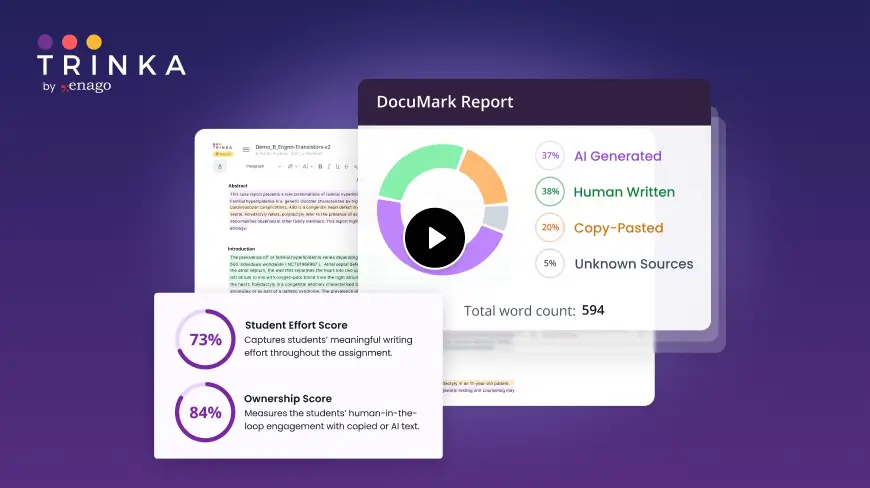
DocuMark: Responsible AI Use for Academic Integrity
Knowing your institution's AI policy is step one. DocuMark helps enforce it fairly by empowering universities to manage AI-generated content, prevent cheating, and support student writing through responsible AI use.
Common Questions About Marshall University's AI Policies
Marshall University has defined AI policies in 12 of 12 categories, with an overall coverage score of 100%.
Disclosure of AI use is required in several contexts. The university says AI use should be acknowledged and documented in academic work, provides citation guidance for generative AI outputs, and for theses, dissertations, and student-journal manuscripts it specifically requires disclosure in methods, acknowledgments, or footnotes, including the tool used where applicable.
Marshall states that unauthorized AI use for coursework may be treated as academic dishonesty and sanctioned under the university's academic dishonesty policy. The listed sources do not establish a university-wide AI detection tool policy, but library guidance warns that AI detectors can be inaccurate and biased and should not be relied on alone.
Marshall prohibits entering confidential or highly sensitive data into generative AI tools and directs users handling sensitive university data to approved enterprise platforms. The university identifies Microsoft 365 Copilot Chat as an available institutionally licensed option and distinguishes Copilot Pro as a personal paid upgrade not covered by the university. Institutional systems must not be used in ways that violate privacy, security, or policy requirements.