Teaching & Learning
- Course-level AI use for assignments is governed primarily at the instructor and course-design level rather than by a single university-wide rule in the provided text
- The university states that acceptable instructional and assignment use is defined in a separate AI instructional policy, and its graduate initiative also allows faculty to integrate AI into assignments in graduate courses when approved through the Grad-AI framework
Acceptable uses of AI in Instructional and Assignment is defined in MTSU Policy 323 Instructional and Assignment Use of Artificial Intelligence.
Pathway 1: Enhance ($1000 Stipend) – Integrate AI tools or assignments into an existing course. This is designed for a shorter timeline and moderate syllabus updates.
• Pathway 1 – Enhance (Existing Course Integration): This pathway focuses on incorporating AI into an existing graduate course through targeted assignments, activities, or instructional approaches.
• For Pathway 1 (Enhance), the emphasis is on targeted integration within an existing course. Faculty demonstrate how AI enhances learning through specific assignments and provide a revised syllabus along with a representative activity.
- Any exam-related restrictions are not explicitly stated in the accessible verified text
- The university acknowledges AI in assessment generally, but the provided sources do not define a specific institution-wide rule on student use of AI during exams, quizzes, or tests
Increasing efficiency in the teaching, assessment and learning process;
- The university supports AI use for learning support in principle
- Its university AI policy says AI can help students learn and understand information, and the graduate initiative emphasizes responsible, discipline-relevant AI capability development for students
MTSU supports the use of artificial intelligence (AI), including Generative AI (Gen AI), in the broadest sense, to assist students, faculty, and staff in achieving their goals more successfully.
Helping students to ethically and responsibly learn and understand information;
Mission: Prepare graduate students across all disciplines with applied, ethical, and discipline-relevant AI capabilities that support career readiness and long-term professional adaptability.
It is ethical and responsible: Responsible AI use is foundational. Grad-AI foregrounds transparency, accountability, and critical evaluation of AI tools and impacts.
Research
- The provided sources do not set a specific university rule on using AI to draft or edit manuscripts, theses, or dissertations
- The only explicit research-writing-related guidance in the verified text is within the Grad-AI framework, which allows AI to be integrated into graduate instruction and mentions writing processes as one possible area of use
Integration may include the use of AI in research workflows, data analysis, writing processes, or discipline-specific applications, allowing students to engage critically and practically with AI tools within the context of the course.
- MTSU permits AI to be used in research-related work, but users remain responsible for outputs and must protect confidential and sensitive data
- The university’s AI policy says AI can streamline research and forbids entering confidential information into public generative AI systems; the Grad-AI framework also explicitly identifies research workflows and data analysis as possible areas of AI integration in graduate education
Artificial Intelligence has the potential to enhance learning experiences, streamline research processes, improve administrative efficiency, and foster innovation across all aspects of education.
Users are responsible for Generative AI-produced content they use for their academic activities and in the course of their employment.
Confidential Information includes Personally Identifiable Information (PII) as defined in MTSU Policy 920 Information Security, confidential student information, financial information, individual health information, legally protected intellectual property (whether belonging to MTSU, a faculty member, or other individual or entity), sensitive research data, information that is not subject to disclosure under the Tennessee Public Records Act, information that is prohibited from disclosure in a license agreement or other contract, and any other information that should not be shared publicly.
Generally, prompts and other information entered into a Generative AI system are stored and may be used to further train the system. Therefore, Confidential Information should not be input into any public Generative AI system.
Integration may include the use of AI in research workflows, data analysis, writing processes, or discipline-specific applications, allowing students to engage critically and practically with AI tools within the context of the course.
- The university does explicitly connect AI use to research ethics, research security, and protection of sensitive research data
- MTSU frames AI use in research as subject to responsible, ethical, and policy-compliant use, but the provided sources do not define specific AI rules for grant proposals, IRB applications, or required research ethics declarations
This policy establishes flexible guidelines to encourage responsible and effective use of AI, while upholding academic integrity, information security, data governance, privacy, and ethical standards.
Supporting ethical teaching and research; and
Artificial Intelligence including Generative AI use must be consistent with existing policies including, but not limited to:
* Policy 910 Information Technology Resources;
* Policy 121, Privacy of Information;
* Policy 922, Data Classification;
* Policy, 540 Student Conduct;
* Policy 312 Academic Misconduct;
* Policy 407 MTSU Research Security;
* Policy 232 Instructional and Assignment Use of AI
* Policy 318 Access to Education Records;
* 950 Computer Software;
* Policy 140, Intellectual Property Policy;
* Policy 201, Academic Freedom, Responsibility;
* Policy 651 Safeguarding Nonpublic Financial Information; and
* All MTSU non-discrimination policies and guidelines.
Confidential Information includes Personally Identifiable Information (PII) as defined in MTSU Policy 920 Information Security, confidential student information, financial information, individual health information, legally protected intellectual property (whether belonging to MTSU, a faculty member, or other individual or entity), sensitive research data, information that is not subject to disclosure under the Tennessee Public Records Act, information that is prohibited from disclosure in a license agreement or other contract, and any other information that should not be shared publicly.
Academic Integrity
- The graduate AI framework requires transparency about how AI is incorporated into courses and applications for Grad-AI designation
- The provided sources do not state a university-wide student requirement for citing or disclosing AI use in submitted academic work
Across all pathways, we look for clear alignment between AI use and learning outcomes, structured opportunities for student engagement with AI tools, and transparency in how AI is incorporated into course or certificate materials.
All applications include a narrative describing how AI supports learning outcomes, how students will engage with AI, how the faculty member has prepared to teach with AI, and how ethical and responsible use is addressed.
- MTSU ties AI misuse to existing misconduct and disciplinary frameworks rather than stating a separate AI-specific detection regime in the provided text
- Employees may face discipline for improper AI use, and AI use must comply with student conduct and academic misconduct policies, but no explicit university stance on AI detection tools is stated in the accessible verified text
Artificial Intelligence including Generative AI use must be consistent with existing policies including, but not limited to:
* Policy 910 Information Technology Resources;
* Policy 121, Privacy of Information;
* Policy 922, Data Classification;
* Policy, 540 Student Conduct;
* Policy 312 Academic Misconduct;
* Policy 407 MTSU Research Security;
* Policy 232 Instructional and Assignment Use of AI
* Policy 318 Access to Education Records;
* 950 Computer Software;
* Policy 140, Intellectual Property Policy;
* Policy 201, Academic Freedom, Responsibility;
* Policy 651 Safeguarding Nonpublic Financial Information; and
* All MTSU non-discrimination policies and guidelines.
Improper use of AI tools, including MTSU Contracted Generative AI may subject an employee to disciplinary action in accordance with relevant policies and guidelines.
Institutional & Administrative
- MTSU permits and encourages employee use of AI to increase efficiency and productivity, subject to policy requirements, supervisory criteria, and training
- Faculty use in graduate instruction is also institutionally supported through the Grad-AI framework, which expects faculty to show readiness, explain how AI supports learning, and address ethical and responsible use
Employees are permitted and encouraged to use AI tools, including MTSU Contracted Generative AI to increase efficiency and productivity, subject to the requirements of this policy, other policies, and relevant supervisory criteria.
Employees must complete appropriate training related to the use of AI technology as assigned by the Information Technology Department.
Faculty may apply for the Grad-AI designation through the Dynamic Application Form.
The application captures how AI is integrated into graduate instruction, including alignment with learning outcomes, student engagement, faculty preparation, and ethical and responsible use.
Faculty are expected to show that they have developed sufficient familiarity with AI tools and their instructional implications to support meaningful integration.
This preparation may include formal training, institutional workshops, discipline-specific experience, or self-directed learning.
- MTSU prohibits entering confidential information into public generative AI systems and warns that prompts may be stored and used for model training
- AI procurements must be approved by the Information Technology Department, and IT may restrict or prohibit AI tools on university systems or credentials if they fail data-governance or security standards
Generally, prompts and other information entered into a Generative AI system are stored and may be used to further train the system. Therefore, Confidential Information should not be input into any public Generative AI system.
Confidential Information includes Personally Identifiable Information (PII) as defined in MTSU Policy 920 Information Security, confidential student information, financial information, individual health information, legally protected intellectual property (whether belonging to MTSU, a faculty member, or other individual or entity), sensitive research data, information that is not subject to disclosure under the Tennessee Public Records Act, information that is prohibited from disclosure in a license agreement or other contract, and any other information that should not be shared publicly.
Any purchase or other procurement of an AI tool must be consistent with applicable procurement policies and approved by the Information Technology Department, which should be consulted early in the procurement process.
The Information Technology Department may restrict or prohibit using AI tools, including Generative AI, on university computer systems or with university issued credentials. This action may be made if the IT Department determines that the tools do not comply with MTSU data governance standards, pose an unacceptable risk to information security, or for other reasons deemed necessary.
- MTSU has an institutional AI strategy centered on responsible, ethical, and flexible adoption across education, research, and administration
- Governance is reflected through formal policy review, IT oversight, faculty and administrator work groups that drafted teaching and research AI policies, and a graduate-level Grad-AI review committee that oversees designated AI integration in graduate education
MTSU supports the use of artificial intelligence (AI), including Generative AI (Gen AI), in the broadest sense, to assist students, faculty, and staff in achieving their goals more successfully.
This policy establishes flexible guidelines to encourage responsible and effective use of AI, while upholding academic integrity, information security, data governance, privacy, and ethical standards.
MTSU is committed to the responsible, efficient, and ethical use of artificial intelligence and other emerging technologies.
This policy will be reviewed every three (3) years or earlier whenever circumstances require review, by the Chief Information Security Officer, with recommendations for revision presented to the Vice President for Information Technology and Chief Information Officer.
Faculty and administrator work groups drafted teaching and research policies on AI use in response to HB 1630. For information on HB 1630, click here.
Oversight of the Grad-AI initiative is provided by a Grad-AI Ad Hoc Review Committee appointed by the College of Graduate Studies.
The committee is responsible for reviewing applications, ensuring alignment with institutional goals, and maintaining consistency across disciplines.
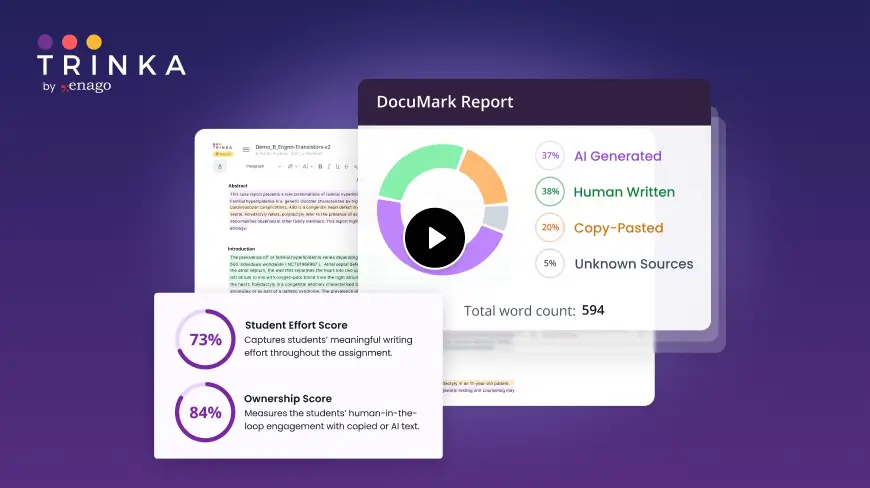
DocuMark: Responsible AI Use for Academic Integrity
Knowing your institution's AI policy is step one. DocuMark helps enforce it fairly by empowering universities to manage AI-generated content, prevent cheating, and support student writing through responsible AI use.
Common Questions About Middle Tennessee State University's AI Policies
Middle Tennessee State University has defined AI policies in 11 of 12 categories, with an overall coverage score of 92%.
The graduate AI framework requires transparency about how AI is incorporated into courses and applications for Grad-AI designation. The provided sources do not state a university-wide student requirement for citing or disclosing AI use in submitted academic work.
MTSU ties AI misuse to existing misconduct and disciplinary frameworks rather than stating a separate AI-specific detection regime in the provided text. Employees may face discipline for improper AI use, and AI use must comply with student conduct and academic misconduct policies, but no explicit university stance on AI detection tools is stated in the accessible verified text.
MTSU prohibits entering confidential information into public generative AI systems and warns that prompts may be stored and used for model training. AI procurements must be approved by the Information Technology Department, and IT may restrict or prohibit AI tools on university systems or credentials if they fail data-governance or security standards.