Teaching & Learning
- If an instructor does not clearly allow generative AI use, the default policy is that it is forbidden
- Submitting AI-produced work as one’s own without permission is treated as academic dishonesty under the UM System Standard of Conduct
- Use of generative AI for graded coursework and assignments is at instructor (or department) discretion, and students must have express permission to use it
Students who use ChatGPT and other AI systems on assignments without instructor approval or who misuse them violate the University of Missouri Collected Rules and Regulations 200.10 academic integrity rules.
YES, a student may use ChatGPT or AI technology with the instructor's express permission.
No, a student may not use ChatGPT if the instructor prohibits it or AI technology is misused.
As per the Standard of Conduct, the University of Missouri System has decided to leave to each individual faculty member or their departments the decision of whether students can use generative AI in their coursework. The default policy is that if an instructor does not clearly allow the use of generative AI, it is forbidden.
The term unauthorized use of artificially generated content, includes, but is not limited to (i) use of artificial intelligence tools or other tools that generate artificial content in taking quizzes, tests, examinations, or other assessments without permission from the instructor; (ii) submitting work for evaluation as one’s own that was produced in material or substantial part through use of artificial intelligence tools or other tools that generate artificial content without permission from the instructor; (iii) using artificial intelligence tools or other tools that generate artificial content in a manner contrary to instructions from the instructor; or (iv) using artificial intelligence tools or other tools that generate artificial content in a manner that violates any other provision of these rules concerning academic dishonesty.
- Use of AI during quizzes, tests, examinations, or other assessments is prohibited unless the instructor gives permission
- Using AI tools in assessments without instructor permission is defined as unauthorized use of artificially generated content and treated as academic dishonesty under the UM System Standard of Conduct
The term cheating includes but is not limited to: (i) use of any unauthorized assistance in taking quizzes, tests, examinations or other assessments; (ii) dependence upon the aid of sources beyond those authorized by the instructor in writing papers, preparing reports, solving problems, or carrying out other assignments; (iii) acquisition or possession without permission of tests or other academic material belonging to a member of the University faculty or staff; or (iv) knowingly providing any unauthorized assistance to another student on quizzes, tests, examinations, or other assessments.
The term unauthorized use of artificially generated content, includes, but is not limited to (i) use of artificial intelligence tools or other tools that generate artificial content in taking quizzes, tests, examinations, or other assessments without permission from the instructor;
- The sources emphasize that students should ask their instructor about AI use in a course and avoid unauthorized assistance
- The university’s provided sources do not define a specific policy distinguishing AI use for non-graded studying/tutoring from other academic work
Ask your instructor if you can use ChatGPT or similar tools within a course. This simple question will ensure that you are not violating academic integrity rules.
To uphold S&T values, students should commit to doing their own work without unauthorized assistance from other people or machines.
- The provided sources do not define a programming-specific AI policy (e.g., code generation tools) distinct from general coursework rules
- The general policy position is that AI use in coursework is at instructor (or department) discretion, and the default is forbidden unless clearly allowed
As per the Standard of Conduct, the University of Missouri System has decided to leave to each individual faculty member or their departments the decision of whether students can use generative AI in their coursework. The default policy is that if an instructor does not clearly allow the use of generative AI, it is forbidden.
Research
Academic Integrity
- The provided sources require instructor permission for student AI use in coursework and assessments, and characterize unauthorized AI-generated content as academic dishonesty
- The sources do not define a specific disclosure or citation format for permitted AI use, but they emphasize crediting statements/ideas/references where due and refraining from forbidden methods per instructor/campus standards
YES, a student may use ChatGPT or AI technology with the instructor's express permission.
The term unauthorized use of artificially generated content, includes, but is not limited to (i) use of artificial intelligence tools or other tools that generate artificial content in taking quizzes, tests, examinations, or other assessments without permission from the instructor; (ii) submitting work for evaluation as one’s own that was produced in material or substantial part through use of artificial intelligence tools or other tools that generate artificial content without permission from the instructor;
The Missouri S&T Honor Code states, "In the ideal student, honesty is represented by the attitude of individuality. This is represented by a student constantly striving to perform all work themselves and to credit all statements, ideas, references, etc., where it is due. ... A student must also refrain from using any sources or methods of completion that are unadvised and/or forbidden by individual instructors or campus standards…."
- The university indicates that AI-detection tools exist and that faculty may use them to identify improper AI use
- The UM System Standard of Conduct defines unauthorized AI-generated content as a form of academic dishonesty and requires instructors to report alleged academic dishonesty to the Primary Administrative Officer (while making an academic judgment about the student’s grade)
Tools designed to detect AI-created text exist. Faculty may employ them to discover improper behavior, which puts students at risk.
Academic dishonesty, including but not limited to cheating, plagiarism, unauthorized use of artificially generated content, or sabotage.
In all cases of academic dishonesty, the instructor shall make an academic judgment about the student's grade on that work and in that course, which shall not be considered a sanction for prohibited conduct under this rule. The instructor shall, consistent with other policies, report the alleged academic dishonesty to the Primary Administrative Officer.
Institutional & Administrative
- The provided sources do not define a specific policy governing faculty/staff use of AI for grading, feedback, lesson planning, letters, or administrative communications
- The UM Academic Technology guidance states that decisions about whether students can use generative AI in coursework are left to individual faculty members or their departments
As per the Standard of Conduct, the University of Missouri System has decided to leave to each individual faculty member or their departments the decision of whether students can use generative AI in their coursework.
- Separately, the University of Missouri (MU) Division of IT states that it evaluates AI-related technologies for compliance and that risk-level determination of free tools and purchases is essential; it encourages contacting IT compliance for consultations about purchasing/using new AI technology
- The university provides data-protection guidance related to Grammarly, stating that non-employee students using a personal email should disable generative AI features and only use Grammarly with public data to protect sensitive information (including student data, health information, and personally identifiable information)
Students who are not employees should update their Grammarly login to a personal email address by Jan. 9. They can disable Grammarly’s generative AI features in account settings only use Grammarly with public data when using a personal email address.
This change aims to protect sensitive information, including student data, health information and personally identifiable information from potential collection by Grammarly’s AI tools.
The Division of IT evaluates all IT-related products and solutions, including AI-related technologies, under UM policy BPM 12004. Determining the risk level of IT-related free tools and purchases are essential to maintaining an environment capable of supporting university activities in a safe and secure manner.
If you are interested in purchasing or using new AI technology or have questions about how AI could assist you in your roles, reach out to request an IT compliance consultation. Our team can assist you by discussing your needs and reviewing potential AI products for university and regulatory compliance.
- MU also describes an MU Task Force on AI and the Learning Environment that created a roadmap to become an “AI forward” institution and points to priorities and resources
- The University of Missouri (MU) Division of IT states that the university does not yet have a formal AI governance structure in place, and that Finance and Human Resources are engaged with IT and System/Campus leadership to establish governance and advise on AI use
Although the University of Missouri does not yet have a formal governance structure in place, the Offices of Finance and Human Resources are fully engaged with IT and System/Campus leadership to establish these, and in advising how AI can and should be used across campus.
The MU Task Force on Artificial Intelligence and the Learning Environment, gathered input from across campus, consulted with AI experts, and analyzed industry best practices to create a roadmap for MU to become an “AI forward” institution.
Please note that given the rapid pace of advancements and instructional applications in generative AI, these guidelines will continue to evolve.
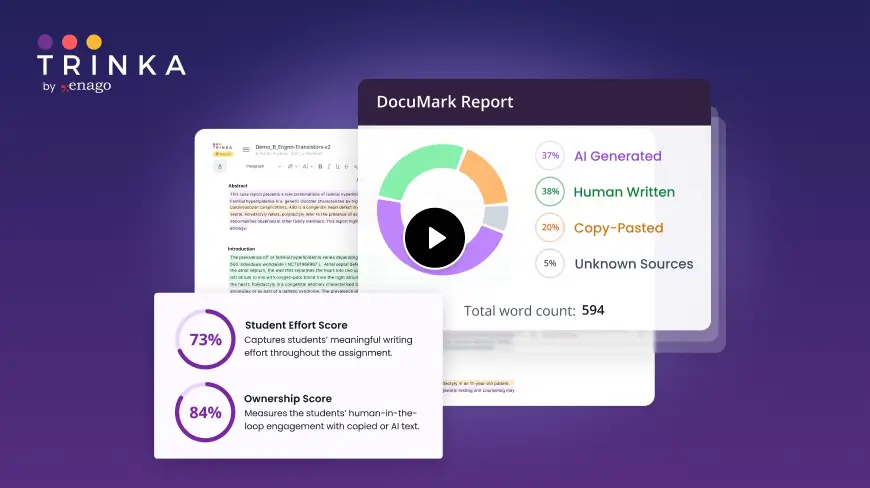
DocuMark: Responsible AI Use for Academic Integrity
Knowing your institution's AI policy is step one. DocuMark helps enforce it fairly by empowering universities to manage AI-generated content, prevent cheating, and support student writing through responsible AI use.
Common Questions About Missouri University of Science and Technology's AI Policies
Missouri University of Science and Technology has defined AI policies in 9 of 12 categories, with an overall coverage score of 75%.
The provided sources require instructor permission for student AI use in coursework and assessments, and characterize unauthorized AI-generated content as academic dishonesty. The sources do not define a specific disclosure or citation format for permitted AI use, but they emphasize crediting statements/ideas/references where due and refraining from forbidden methods per instructor/campus standards.
The university indicates that AI-detection tools exist and that faculty may use them to identify improper AI use. The UM System Standard of Conduct defines unauthorized AI-generated content as a form of academic dishonesty and requires instructors to report alleged academic dishonesty to the Primary Administrative Officer (while making an academic judgment about the student’s grade).
The university provides data-protection guidance related to Grammarly, stating that non-employee students using a personal email should disable generative AI features and only use Grammarly with public data to protect sensitive information (including student data, health information, and personally identifiable information). Separately, the University of Missouri (MU) Division of IT states that it evaluates AI-related technologies for compliance and that risk-level determination of free tools and purchases is essential; it encourages contacting IT compliance for consultations about purchasing/using new AI technology.