Teaching & Learning
- Students may not use AI for coursework or assignments unless the instructor expressly permits it
- The academic honesty policy treats unauthorized AI use in producing or modifying work as misconduct, including AI-created work, AI-assisted writing or creative work, code generation, and AI-produced presentation materials
Misuse of AI (Artificial Intelligence)
The unauthorized use of AI in the production or modification of work. Some potential examples of misuses of AI are:
• Presenting AI-created works as your own
• Using AI to produce, revise, or substantially edit written or creative work
• Solving equations or creating code with AI
• Using AI to produce speech outlines or slide decks
• Any other use that is not expressly permitted by your instructor
- AI use in exams or other assessments is not allowed unless authorized by the instructor
- The university's academic honesty policy prohibits unauthorized tools, materials, collaboration, and specifically bars any AI use not expressly permitted by the instructor
Cheating
An act or an attempted act of deception by which a student seeks to misrepresent that one has mastered information or a
skill on an academic evaluation instrument, such as (by example, not limitation) a test, exam, or quiz, that has not in fact been
mastered. Below are some examples:
• Unauthorized use of a course textbook or other materials, such as (by example, not limitation) a notebook, to
complete an examination or other assignment
• Collaborating on an examination, test, quiz, or other project with any other person(s) without authorization
• Using or processing specifically prepared materials during an examination such as (by example, not limitation)
notes, formula lists, notes written on the students clothing, calculators, and/or smart devices, that are not authorized
Misuse of AI (Artificial Intelligence)
The unauthorized use of AI in the production or modification of work. Some potential examples of misuses of AI are:
• Any other use that is not expressly permitted by your instructor
- Students using AI for study purposes are subject to course-specific instructor permissions and the general institutional AI guiding principles
- No dedicated policy for AI as a learning or study aid exists, but the university's AI Guiding Principles state that AI cannot substitute for human judgment and that AI tools can generate incomplete, incorrect, or biased responses requiring close human review
• AI tools can generate incomplete, incorrect, or biased responses, so any output should be closely reviewed and verified by a human.
• Keep 'Humans in the Loop.' We will maintain the perspective that AI cannot substitute for human judgment. Human judgment should never be replaced by AI.
• Any other use that is not expressly permitted by your instructor [is considered misuse of AI].
- The academic honesty policy specifically lists creating code with AI as a misuse when unauthorized
- For student academic work, AI use for coding is prohibited unless the instructor expressly permits it
Misuse of AI (Artificial Intelligence)
The unauthorized use of AI in the production or modification of work. Some potential examples of misuses of AI are:
• Solving equations or creating code with AI
• Any other use that is not expressly permitted by your instructor
Research
- The policy also requires that AI output be closely reviewed and verified by a human due to risks of incomplete, incorrect, or biased responses
- The university does not have a dedicated research writing AI policy, but its Intellectual Property Policy defines 'AI-Assisted Work' as human-created works incorporating generative AI outputs where the human maintains substantive intellectual contribution and authorship
AI-Assisted Work: Human-created works that incorporate or are informed by generative AI outputs but for which the human originator maintains substantive intellectual contribution, curation, or authorship.
• AI tools can generate incomplete, incorrect, or biased responses, so any output should be closely reviewed and verified by a human.
- AI use with research or other university data is governed by data-classification and security rules rather than a research-specific AI policy
- If a tool is not under a university contract or agreement, only public data should be used; all AI implementations are subject to university policies and a security review process
• If you are using AI tools that are NOT under a university contract or agreement, you should ONLY be
using data that is classified as PUBLIC (low sensitivity).
• Any implementation of artificial intelligence is subject to applicable university policies and standards, including a
security review process. If you have questions, please contact ITSecurity@mountunion.edu.
The University has defined four classifications of data for this
purpose: Public, Internal, Confidential and Restricted. All institutional data must be classified into only one of the following
four tiers, with the highest level possible being applied:
- The university also references the NIST AI Risk Management Framework as a formal approach to managing AI risks, and requires that all AI implementations undergo a security review process
- While no standalone research ethics AI policy exists, the university's AI Guiding Principles commit the institution to ethical AI use including addressing bias, fairness, privacy, transparency, and accountability in all AI-related decisions
1. Make ethical choices. We will ensure integrity is the highest priority. We will address bias, fairness, privacy, transparency, and accountability in all AI-related decisions.
• The National Institute of Standards and Technology (NIST) has published a draft AI Risk Management Framework to help organizations use a formal approach to managing AI risks.
• Any implementation of artificial intelligence is subject to applicable university policies and standards, including a security review process.
Academic Integrity
- The university does not provide an AI-specific citation format, but it requires documentation and citations for non-original work and states that unauthorized AI use is misconduct
- Students must clearly document and cite academic work when it is not entirely their own, and they are expected to follow course-specific documentation rules or seek clarification from the professor or DWOC
Students are expected to understand and comply with the limits of collaboration imposed by each faculty member,
and to know when to document appropriately in the assigned style for each course. Students who are unclear about
the rules and mechanics of documentation are expected to seek clarification for their professors or from the DWOC.
Unless clearly documented with citations indicating otherwise, all academic work is expected to be the student’s own.
Plagiarism occurs when you represent the work or ideas of another person as your own. Below are some examples:
• Quoting verbatim another person’s words (published or unpublished) without acknowledgement of the source
• Paraphrasing another person’s idea(s), opinions, or theory(ies) without giving sufficient reference
- The university does not state a position on AI detection tools in the provided sources, but it does define misuse of AI as academic dishonesty and sets enforcement procedures and sanctions
- Instructors may impose syllabus-based sanctions immediately, additional sanctions may be imposed through the conduct process, and serious cases can lead to hearings, suspension, dismissal, and appeals
Misuse of AI (Artificial Intelligence)
The unauthorized use of AI in the production or modification of work. Some potential examples of misuses of AI are:
• Presenting AI-created works as your own
• Using AI to produce, revise, or substantially edit written or creative work
• Solving equations or creating code with AI
• Using AI to produce speech outlines or slide decks
• Any other use that is not expressly permitted by your instructor
Depending upon the severity of the infraction and the circumstances of the situation, cases of academic dishonesty may
result in sanctions ranging from failure of an assignment up to and including dismissal from the University.
Having determined that an infraction has occurred, an instructor may immediately impose sanctions according to the
stated policies of the course syllabus. In addition, any instructor who suspects or has determined that a case of academic dishonesty
has occurred will present the evidence to the department chair and then to the conduct office, who may impose additional sanctions
as deemed appropriate.
Should a representative of Academic Affairs feel the evidence of academic dishonesty warrants possible suspension or
dismissal, they will convene a hearing committee.
Institutional & Administrative
- Faculty and staff may use AI in university work, but they remain responsible for appropriate use of AI output, and human review is required
- Faculty seeking to use AI in teaching are directed to consult the Center for Faculty Development or Digital Learning about syllabus language and assessment development
• University policies governing workplace behavior continue to apply when a university employee uses AI in their
university work. The employee and student generating output from AI is responsible for the appropriate us of that
output.
• AI tools can generate incomplete, incorrect, or biased responses, so any output should be closely reviewed and
verified by a human.
• If you have questions about using Artificial Intelligence tools in your teaching, including syllabus language,
developing assessments, etc., please contact the Center for Faculty Development or Digital Learning.
- The university sets explicit AI data-protection rules tied to data classification and tool approval status
- If an AI tool is not under a university contract or agreement, only public data may be used; all institutional data must be classified, some data may be stored only on approved university systems, and any AI implementation is subject to a security review process
• If you are using AI tools that are NOT under a university contract or agreement, you should ONLY be
using data that is classified as PUBLIC (low sensitivity).
• Any implementation of artificial intelligence is subject to applicable university policies and standards, including a
security review process. If you have questions, please contact ITSecurity@mountunion.edu.
The University has defined four classifications of data for this
purpose: Public, Internal, Confidential and Restricted. All institutional data must be classified into only one of the following
four tiers, with the highest level possible being applied:
Tier 2 (Internal) data include information intended for use within the University community that is not publicly distributed.
Minimum Controls: Access limited to university personnel or authorized partners
External transmission must occur over secure, authenticated channels
Storage permitted only on approved University systems
Tier 3 (Confidential) data include sensitive information restricted to authorized individuals with a legitimate institutional
need.
Storage on any
locations not sanctioned by the University is prohibited. This includes locations such as home computers, thumb drives,
non-institutionally supported cloud storage locations (i.e. Dropbox, personal cloud storage, etc.).
- The university has institution-wide AI guiding principles focused on ethical use, institutional benefit, human oversight, responsiveness to change, and confidentiality protection
- It also references responsible AI risk management, requires security review for AI implementation, and assigns cross-functional responsibility for AI through IT, Academic Affairs, Business Affairs, and Student Affairs
The purpose of these
guiding principles, as an institution of learning, is to outline our commitment to responsible, ethical, and beneficial AI
development and deployment, ensuring that our AI systems align with UMU’s mission and values and contribute positively
to society.
We strive to:
1. Make ethical choices. We will ensure integrity is the highest priority. We will address bias, fairness, privacy,
transparency, and accountability in all AI-related decisions.
2. Leverage AI to Empower Institutional Success. We will embrace AI’s potential to enhance our capabilities,
stimulate innovation, and drive operational efficiency.
3. Keep “Humans in the Loop.” We will maintain the perspective that AI cannot substitute for human judgment.
Human judgment should never be replaced by AI.
4. Respond to Continuous Change. We will balance careful consideration, agility, and urgency to respond to
continuous change.
5. Safeguard Confidential Information. We will protect confidential information through security measures. We will
follow data privacy regulations and strive to protect UMU faculty, staff and student data.
Responsibilities
Position or Office Responsibilities
AI Working
Information Technology
Academic Affairs
Business Affairs
Student Affairs
• The National Institute of Standards and Technology (NIST) has published a draft AI Risk Management
Framework AI Risk Management Framework | NIST to help organizations use a formal approach to
managing AI risks.
• Any implementation of artificial intelligence is subject to applicable university policies and standards, including a
security review process.
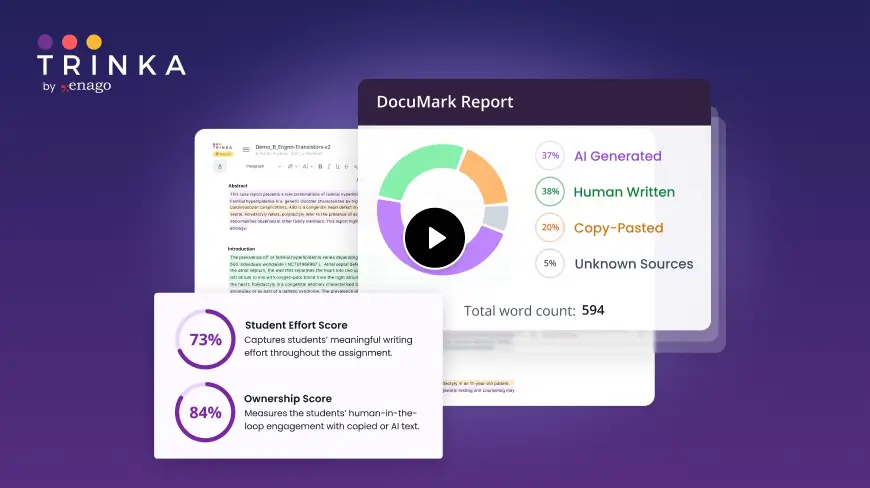
DocuMark: Responsible AI Use for Academic Integrity
Knowing your institution's AI policy is step one. DocuMark helps enforce it fairly by empowering universities to manage AI-generated content, prevent cheating, and support student writing through responsible AI use.
Common Questions About Mount Union College's AI Policies
Mount Union College has defined AI policies in 12 of 12 categories, with an overall coverage score of 100%.
Students must clearly document and cite academic work when it is not entirely their own, and they are expected to follow course-specific documentation rules or seek clarification from the professor or DWOC. The university does not provide an AI-specific citation format, but it requires documentation and citations for non-original work and states that unauthorized AI use is misconduct.
The university does not state a position on AI detection tools in the provided sources, but it does define misuse of AI as academic dishonesty and sets enforcement procedures and sanctions. Instructors may impose syllabus-based sanctions immediately, additional sanctions may be imposed through the conduct process, and serious cases can lead to hearings, suspension, dismissal, and appeals.
The university sets explicit AI data-protection rules tied to data classification and tool approval status. If an AI tool is not under a university contract or agreement, only public data may be used; all institutional data must be classified, some data may be stored only on approved university systems, and any AI implementation is subject to a security review process.