Teaching & Learning
- AI-generated content in student work is prohibited unless the instructor explicitly authorizes it
- The policy applies to student work generally, including class assignments, papers, and assignments submitted for a grade
Students are prohibited from engaging in any form of academic misconduct. This includes but is not limited to:
1. Cheating: No student shall give or receive unauthorized assistance in any class assignment or attempt to take class materials in an unauthorized manner. Cheating includes, but is not limited to, unauthorized assistance during quizzes, tests, or exams, using unauthorized sources for papers or assignments, and obtaining tests or academic materials without permission. Penalties for cheating may result in a zero for the assignment, project, or exam, and may extend to expulsion depending on the severity of the offense.
3. Artificial Intelligence (AI): AI, which encompasses the simulation of human intelligence processes by machines, is a pivotal component of our evolving technological landscape. In line with our dedication to cultivating a learning environment that nurtures critical thinking and responsible technological engagement, North Georgia Technical College (NGTC) emphasizes the significance of ethical considerations in AI utilization, encompassing tools such as ChatGPT. As part of our commitment to academic integrity, NGTC strictly prohibits the incorporation of AI-generated content into student work unless explicitly authorized by the instructor.
- AI-generated content in student work is prohibited unless explicitly authorized by the instructor, per the 2025-2026 Catalog
- Together, these provisions effectively prohibit unauthorized AI tool use during examinations, though there is no exam-specific AI clause
- The 2021 Policies-Procedures document separately classifies use or possession of unauthorized technology, including electronic devices, during examinations or graded work as cheating
From 2025-2026 College Catalog: "1. Cheating: No student shall give or receive unauthorized assistance in any class assignment or attempt to take class materials in an unauthorized manner. Cheating includes, but is not limited to, unauthorized assistance during quizzes, tests, or exams, using unauthorized sources for papers or assignments, and obtaining tests or academic materials without permission. Penalties for cheating may result in a zero for the assignment, project, or exam, and may extend to expulsion depending on the severity of the offense. 3. Artificial Intelligence (AI): ... NGTC strictly prohibits the incorporation of AI-generated content into student work unless explicitly authorized by the instructor." From NGTC-Policies-Procedures.pdf: "2. Cheating a) Use and/or possession of unauthorized material or technology during an examination, or any other written or oral work submitted for evaluation and/or a grade, such as tape cassettes, notes, tests, calculators, computer programs, cell phones and/or smart phones, or other electronic devices."
- AI-generated content in student work is prohibited unless the instructor explicitly authorizes it
- The older policy manual also treats unauthorized computer programs used in graded work as cheating, but it does not provide an AI-specific programming exception or separate coding policy
3. Artificial Intelligence (AI): AI, which encompasses the simulation of human intelligence processes by machines, is a pivotal component of our evolving technological landscape. In line with our dedication to cultivating a learning environment that nurtures critical thinking and responsible technological engagement, North Georgia Technical College (NGTC) emphasizes the significance of ethical considerations in AI utilization, encompassing tools such as ChatGPT. As part of our commitment to academic integrity, NGTC strictly prohibits the incorporation of AI-generated content into student work unless explicitly authorized by the instructor.
2. Cheating
a) Use and/or possession of unauthorized material or technology during an examination, or any other written or oral work submitted for evaluation and/or a grade, such as tape
b) cassettes, notes, tests, calculators, computer programs, cell phones and/or smart phones, or other electronic devices.
e) Possessing, using, distributing or selling unauthorized copies of an examination, computer program, or any other written or oral work submitted for evaluation and/or a grade.
Research
Academic Integrity
- The college requires proper credit and citation for others' work in student submissions, and AI-generated content is not allowed unless the instructor explicitly authorizes it
- The policy does not state a separate AI citation format or disclosure statement requirement; instead, it ties attribution expectations to plagiarism rules and instructor authorization
2. Plagiarism: Plagiarism is the act of utilizing another person’s ideas, words, or work without giving proper credit or citation, thus presenting it as one’s own. This encompasses direct copying, rephrasing without acknowledgment, buying assignments, employing ghostwriters, and neglecting to attribute sources appropriately.
b) Accidental plagiarism:
4) Failing to provide proper parenthetical documentation at the end of a quotation or paraphrase.
5) Neglecting to include a source on the Works Cited page.
3. Artificial Intelligence (AI): AI, which encompasses the simulation of human intelligence processes by machines, is a pivotal component of our evolving technological landscape. In line with our dedication to cultivating a learning environment that nurtures critical thinking and responsible technological engagement, North Georgia Technical College (NGTC) emphasizes the significance of ethical considerations in AI utilization, encompassing tools such as ChatGPT. As part of our commitment to academic integrity, NGTC strictly prohibits the incorporation of AI-generated content into student work unless explicitly authorized by the instructor.
4. Plagiarism
a) Submitting another’s published or unpublished work in whole, in part or in paraphrase, as one’s own without fully and properly crediting the author with footnotes, quotation marks, citations, or bibliographical reference.
b) Submitting as one’s own original work, material obtained from an individual or agency without reference to the person or agency as the source of the material.
c) Submitting as one’s own original work material that has been produced through unacknowledged collaboration with others without release in writing from collaborators.
- The sources provided do not define any AI detection tool policy
- Students also have a formal appeal process for decisions regarding plagiarism or academic misconduct
- Undisclosed or unauthorized AI use in student work is treated as academic misconduct, and the college states penalties can range from a zero on the assignment, project, or exam up to expulsion depending on severity
Students are prohibited from engaging in any form of academic misconduct. This includes but is not limited to:
1. Cheating: No student shall give or receive unauthorized assistance in any class assignment or attempt to take class materials in an unauthorized manner. Cheating includes, but is not limited to, unauthorized assistance during quizzes, tests, or exams, using unauthorized sources for papers or assignments, and obtaining tests or academic materials without permission. Penalties for cheating may result in a zero for the assignment, project, or exam, and may extend to expulsion depending on the severity of the offense.
3. Artificial Intelligence (AI): AI, which encompasses the simulation of human intelligence processes by machines, is a pivotal component of our evolving technological landscape. In line with our dedication to cultivating a learning environment that nurtures critical thinking and responsible technological engagement, North Georgia Technical College (NGTC) emphasizes the significance of ethical considerations in AI utilization, encompassing tools such as ChatGPT. As part of our commitment to academic integrity, NGTC strictly prohibits the incorporation of AI-generated content into student work unless explicitly authorized by the instructor.
Appeal Process:
1. Formal Appeal: Students have the right to appeal any decision regarding plagiarism or academic misconduct. A written appeal must be submitted, along with supporting documentation, to the Academic Affairs Dean of the Department within seven calendar days of receiving the instructor’s decision.
2. Departmental Review: The Dean of the Department will convene a review panel consisting of three faculty/staff members not previously involved in the course. The panel will examine the appeal, review relevant documentation, and may request additional information from the student, instructor, or other parties. A decision will be communicated in writing within ten business days.
A student who engages in academic misconduct as defined in the Student Code of Conduct, such as cheating, must face disciplinary charges under the Student Code of Conduct in addition to any loss of academic credit or standing that may result from having failed to meet a course’s academic requirements.
Institutional & Administrative
- The only explicit AI statement is tied to academic integrity in student work
- The college acknowledges AI as part of the technological landscape and emphasizes ethical considerations in AI utilization, but the provided sources do not define an institutional AI governance structure, committee, strategy, or roadmap
3. Artificial Intelligence (AI): AI, which encompasses the simulation of human intelligence processes by machines, is a pivotal component of our evolving technological landscape. In line with our dedication to cultivating a learning environment that nurtures critical thinking and responsible technological engagement, North Georgia Technical College (NGTC) emphasizes the significance of ethical considerations in AI utilization, encompassing tools such as ChatGPT. As part of our commitment to academic integrity, NGTC strictly prohibits the incorporation of AI-generated content into student work unless explicitly authorized by the instructor.
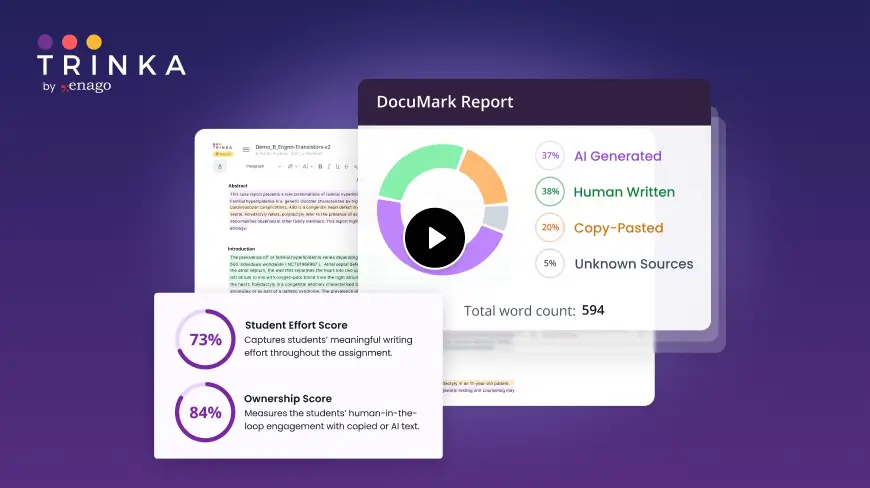
DocuMark: Responsible AI Use for Academic Integrity
Knowing your institution's AI policy is step one. DocuMark helps enforce it fairly by empowering universities to manage AI-generated content, prevent cheating, and support student writing through responsible AI use.
Common Questions About North Georgia Technical College's AI Policies
North Georgia Technical College has defined AI policies in 6 of 12 categories, with an overall coverage score of 50%.
The college requires proper credit and citation for others' work in student submissions, and AI-generated content is not allowed unless the instructor explicitly authorizes it. The policy does not state a separate AI citation format or disclosure statement requirement; instead, it ties attribution expectations to plagiarism rules and instructor authorization.
Undisclosed or unauthorized AI use in student work is treated as academic misconduct, and the college states penalties can range from a zero on the assignment, project, or exam up to expulsion depending on severity. Students also have a formal appeal process for decisions regarding plagiarism or academic misconduct. The sources provided do not define any AI detection tool policy.
No explicit data protection or approved AI platform policy is currently defined in the available policy sources.