Teaching & Learning
- Use of AI for coursework and assignments is at instructor discretion
- If AI is allowed on an assignment, instructors are advised to require citation or other documentation of use
- Northeastern’s teaching standards say instructors should tell students what AI use is permitted in their courses and assignments, and the university provides sample assignment labels ranging from prohibited to required use
2. Instructors should clearly communicate to students the permitted uses of generative AI
in each course.
Expectations In Assignments: Instructors should always make it clear how the use of AI is
to be cited. Consider using an easy to spot labeling system across all assignments. The
labels below can be used or adapted for assignment instructions (other variations of this
approach can be found online).
Sample Assignment Labeling
Prohibited Use of AI is prohibited on this assignment.
Permitted Use of AI is allowed on this assignment; specific
tools and uses must be cited (Example: “AI was
used for feedback on first draft.”).
Encouraged Use of AI is encouraged on this assignment; follow
the assignment instructions for guidance and
citation requirements.
Required Use of AI is required on this assignment; follow the
assignment instructions for guidance and citation
requirements.
If AI use is allowed on assignments, instructors should consider requiring students to
disclose how they use it. A simple statement may often suffice (e.g., “I used AI to
summarize my notes”), while in other contexts providing citations or evidence of use such
as complete chat logs may be more appropriate.
- Unauthorized AI use in exams or other academic work is treated as cheating under the academic integrity policy
- The teaching standards also place limits on instructor use of AI in assessment and grading, saying instructors should not outsource core feedback functions to AI and should consider disclosing such use
Unauthorized use of aids such as, but not limited to, notes, text, the internet, artificial intelligence, chatbots, cellphones, etc., to complete any academic assignment
Unauthorized communication during an examination
Assessment and Grading: Students need to have confidence that instructors are not
outsourcing core aspects of engagement and feedback to AI. Instructors should consider
disclosing when and how they use AI in support of assessment processes.
- The university permits AI to be used in learning contexts, but expectations vary by instructor and program
- Northeastern’s teaching standards frame AI as potentially valuable for learning, while some program-level statements discourage early use in the learning process and later encourage it as a constructive collaborator rather than a substitute for a student's own work
AI systems—referring primarily, though not exclusively, to generative AI tools in this
document—can be of great value in creating new opportunities for learning and building AI
skills that students will need in the workplace.
2. Instructors should clearly communicate to students the permitted uses of generative AI
in each course.
In accordance with these beliefs, we discourage the use of generative AI early in the learning process so
that you develop expertise in research design. Later, we will encourage you to use generative AI as a
constructive collaborator, as a tool to improve your original work, and as a tool for efficiency. AI should
never be the main author or creator of any work you claim as your own.
- It also notes that AI can be permitted as a programming partner for generating snippets, debugging, or translating code
- While there is no university-wide policy specific to code generation, guidance from the D'Amore-McKim School of Business states that instructors may prohibit AI use for writing code, asking students to start from scratch
For tasks such as writing text or code, you may be asked to start from scratch without GenAI assistance. This develops foundational skills and ensures independent thinking. ... GenAI can also be used as a programming partner. This may include generating code snippets, debugging assistance, or translating code into different languages. Always follow your instructor's guidelines on the extent and documentation of this collaboration.
Research
- For research-related writing, faculty and staff must provide attribution when AI-generated content is included in a scholarly publication, and they must review and revise AI outputs for accuracy and appropriateness
- In proposal writing, principal investigators may use generative AI only if they understand the risks, follow the university AI policy and research standards, keep track of how and when they use it, and take responsibility for all proposal content
1. Provide appropriate attribution when using an AI System to generate content that is included in a scholarly publication, or submitted to any body, publication or other organization that requires attribution of content authorship.
2. Regularly check the AI System’s output for accuracy and appropriateness for the required purpose, and revise/update the output as appropriate.
Generative AI may be used only if the PI understands the risks involved and adheres to the AI Policy and these Standards. PIs are responsible for signing off on the proposal and promising to do the work stated if funded. PIs should keep track of how/when they are using generative in a proposal. The PI is responsible for every part of the proposal content and should utilize generative AI in an appropriate way for their research and discipline.
- Northeastern’s research standards do not expressly authorize or prohibit AI for data analysis, data collection, or synthetic data generation
- However, they do require researchers not to enter confidential information, restricted research data, or personal information into an AI system without first completing AI Review Committee review for the specific use case, and the general AI policy requires approval when restricted research data or similar sensitive information is involved
Because of the potential loss of control over data submitted into AI Systems, it is important not to enter any University Confidential Information, Restricted Research Data or Personal Information (as defined by the AI Policy) into an AI System without first completing the AI Review Committee review process for your specific use-case.
4. If the AI System either (i) involves the processing of Confidential Information, Personal Information, or Restricted Research Data or (ii) takes actions that may impact the legal rights or physical safety of an individual:
o Submit the AI System and its use case for approval by the AI Review Committee (“AIRC”); and
o Submit the AI System and its use case for approval by the Office of Information Security review process for either vendor or internal systems (as applicable).
- Research-related AI use is tied to existing research misconduct and confidentiality rules
- For grant writing, PIs may use generative AI only under the stated conditions and remain fully responsible for the proposal
- The research standards prohibit using AI to assist in peer review, and they reiterate that research misconduct includes fabrication, falsification, and plagiarism in proposing, performing, reviewing, or reporting research
Reviewers are trusted and required to maintain confidentiality throughout the application process. Therefore, you may not use AI to assist in peer review.
Per the University’s Policy on Research Misconduct: Research Misconduct has the same definition as under federal regulations: “fabrication, falsification, plagiarism in proposing, performing, or reviewing research, or in reporting research results.” 42 C.F.R. § 93.103. It does not include honest error or honest differences in interpretations or judgments of data.
Generative AI may be used only if the PI understands the risks involved and adheres to the AI Policy and these Standards. PIs are responsible for signing off on the proposal and promising to do the work stated if funded. PIs should keep track of how/when they are using generative in a proposal. The PI is responsible for every part of the proposal content and should utilize generative AI in an appropriate way for their research and discipline.
Academic Integrity
- Disclosure and attribution requirements are explicit in both university-wide and teaching-specific guidance
- Faculty and staff must provide attribution for AI-generated content in scholarly publications or other submissions that require authorship attribution, and instructors are advised to require students to disclose, cite, or document AI use when it is permitted on assignments
1. Provide appropriate attribution when using an AI System to generate content that is included in a scholarly publication, or submitted to any body, publication or other organization that requires attribution of content authorship.
If AI use is allowed on assignments, instructors should consider requiring students to
disclose how they use it. A simple statement may often suffice (e.g., “I used AI to
summarize my notes”), while in other contexts providing citations or evidence of use such
as complete chat logs may be more appropriate.
Expectations In Assignments: Instructors should always make it clear how the use of AI is
to be cited.
Permitted Use of AI is allowed on this assignment; specific
tools and uses must be cited (Example: “AI was
used for feedback on first draft.”).
- Enforcement of unauthorized AI use falls under the general academic integrity policy, which defines it as cheating
- The university explicitly recommends against the use of AI-detection software, citing concerns about accuracy, equity, and the negative impact on student-instructor relationships
Unauthorized use of aids such as, but not limited to, notes, text, the internet, artificial intelligence, chatbots, cellphones, etc., to complete any academic assignment
We recommend not using AI-detection software. These tools have documented issues with accuracy and equity, and may also be trained on student work without consent. Instead of focusing on detection, we encourage instructors to design assignments that are 'AI-resistant' and have open conversations with students about appropriate AI use.
Institutional & Administrative
- Administrative faculty and staff use is governed by the university AI policy and additional administrative standards
- In assessment, instructors are advised not to outsource core engagement and feedback functions to AI and to consider disclosing when and how they use AI
- Faculty autonomy is recognized in course-level AI decisions, and instructors may use AI to design academic materials, but they remain responsible for quality and accuracy and must review and revise outputs before sharing them with students
1. The university supports faculty autonomy in determining appropriate AI use in their
courses. Instructors may use AI tools to help design academic materials. However,
instructors are responsible for the quality and accuracy of the materials, including
checking outputs for accuracy and making necessary revisions prior to sharing work
with students.
Assessment and Grading: Students need to have confidence that instructors are not
outsourcing core aspects of engagement and feedback to AI. Instructors should consider
disclosing when and how they use AI in support of assessment processes.
Any faculty or staff member seeking to incorporate the use of an AI System in University Operations or Outside Professional Activities must:
1. Provide appropriate attribution when using an AI System to generate content that is included in a scholarly publication, or submitted to any body, publication or other organization that requires attribution of content authorship.
2. Regularly check the AI System’s output for accuracy and appropriateness for the required purpose, and revise/update the output as appropriate.
- Northeastern prohibits using AI with confidential, personal, or restricted research data unless the system and use case are approved by the AI Review Committee
- The university provides and encourages the use of approved, enterprise-secure platforms, specifically naming Claude and Microsoft Copilot with commercial data protection as tools available to the community
If the AI System either (i) involves the processing of Confidential Information, Personal Information, or Restricted Research Data or (ii) takes actions that may impact the legal rights or physical safety of an individual:
o Submit the AI System and its use case for approval by the AI Review Committee (“AIRC”); and
o Submit the AI System and its use case for approval by the Office of Information Security review process for either vendor or internal systems (as applicable).
Because of the potential loss of control over data submitted into AI Systems, it is important not to enter any University Confidential Information, Restricted Research Data or Personal Information (as defined by the AI Policy) into an AI System without first completing the AI Review Committee review process for your specific use-case.
Claude, a secure, enterprise-level generative AI platform developed by the AI company Anthropic, is now available to all active students, faculty, and staff at Northeastern University.
All active Northeastern faculty and staff now have access to Microsoft Copilot with commercial data protection. This means your prompts and the data shared in your conversations—your intellectual property—will not be used to train any public AI models.
- Northeastern has a formal university-wide AI governance structure
- The central AI policy establishes core requirements for faculty and staff use of AI in university operations and references more detailed standards for teaching, research, and administrative work
- The policy also creates an AI Review Committee approval process, and university communications describe AI platform rollout as part of plans to integrate AI across learning, teaching, research, and administrative operations
The purpose of this policy is to establish core requirements applicable to Northeastern’s use of AI Systems in University Operations and Outside Professional Activities.
Operational components within the university may elect to publish more detailed standards implementing this policy, and are referenced in section IV below.
The following university functions / operational components have published more detailed standards implementing this Policy:
• Standards for the Use of Generative AI in Administrative Work
• Standards for the Use of AI in Research at Northeastern
• Standards for the Use of Generative AI in Teaching
If the AI System either (i) involves the processing of Confidential Information, Personal Information, or Restricted Research Data or (ii) takes actions that may impact the legal rights or physical safety of an individual:
o Submit the AI System and its use case for approval by the AI Review Committee (“AIRC”); and
o Submit the AI System and its use case for approval by the Office of Information Security review process for either vendor or internal systems (as applicable).
Claude, a secure, enterprise-level generative AI platform developed by the AI company Anthropic, is now available to all active students, faculty, and staff at Northeastern University. Access to Claude for Education, a specialized version of Claude tailored for higher education institutions, will accelerate the university’s plans to integrate AI into learning, teaching, research, and administrative operations across the global university system.
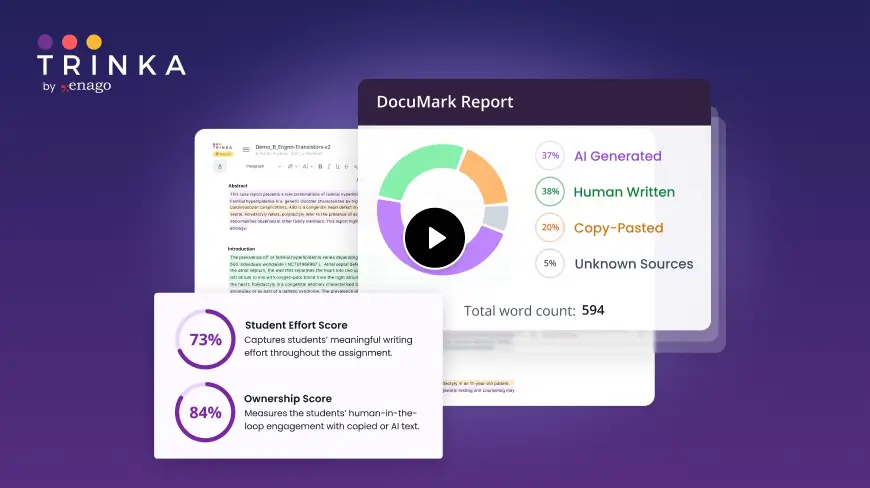
DocuMark: Responsible AI Use for Academic Integrity
Knowing your institution's AI policy is step one. DocuMark helps enforce it fairly by empowering universities to manage AI-generated content, prevent cheating, and support student writing through responsible AI use.
Common Questions About Northeastern University's AI Policies
Northeastern University has defined AI policies in 12 of 12 categories, with an overall coverage score of 100%.
Disclosure and attribution requirements are explicit in both university-wide and teaching-specific guidance. Faculty and staff must provide attribution for AI-generated content in scholarly publications or other submissions that require authorship attribution, and instructors are advised to require students to disclose, cite, or document AI use when it is permitted on assignments.
Enforcement of unauthorized AI use falls under the general academic integrity policy, which defines it as cheating. The university explicitly recommends against the use of AI-detection software, citing concerns about accuracy, equity, and the negative impact on student-instructor relationships.
Northeastern prohibits using AI with confidential, personal, or restricted research data unless the system and use case are approved by the AI Review Committee. The university provides and encourages the use of approved, enterprise-secure platforms, specifically naming Claude and Microsoft Copilot with commercial data protection as tools available to the community.