Teaching & Learning
- Students are prohibited from submitting AI-generated content as their own work, and violations may result in assignment- or course-level penalties
- Philander Smith College does not have a standalone AI-use policy for coursework, but its academic dishonesty framework applicable to academic exercises treats AI-generated work as plagiarism
Plagiarism: intentionally or knowingly representing the words or ideas of another as one's own in any academic exercise. [...] This includes any work generated by artificial intelligence (AI). Faculty, at their discretion, may impose sanctions upon the student that range from a reduction in grade on the assignment to an F in the course.
- Cheating is explicitly prohibited and subject to faculty-imposed sanctions, including a failing grade on the assignment or in the course
- Philander Smith College's academic integrity policy prohibits the use of unauthorized materials or assistance in any academic exercise, which encompasses examinations and assessments
Cheating: intentionally using or attempting to use unauthorized materials, information, notes, study aids, or other devices or materials in any academic exercise. [...] Faculty, at their discretion, may impose sanctions upon the student that range from a reduction in grade on the assignment to an F in the course.
Research
- AI-generated work is explicitly treated as plagiarism, and fabrication of information or citations is prohibited
- Philander Smith College does not have a standalone AI research ethics policy, but its academic integrity framework prohibits fabrication and plagiarism in academic exercises, which extends to research contexts
Fabrication: intentional and unauthorized falsification or invention of any information or citation in an academic exercise. Plagiarism: intentionally or knowingly representing the words or ideas of another as one's own in any academic exercise. [...] This includes any work generated by artificial intelligence (AI).
Academic Integrity
- Unattributed submission of AI-generated work is treated as plagiarism and is subject to disciplinary action
- Philander Smith College does not have a formal AI disclosure or attribution policy, but its plagiarism definition prohibits submitting AI-generated work as one's own
Plagiarism: intentionally or knowingly representing the words or ideas of another as one's own in any academic exercise. [...] This includes any work generated by artificial intelligence (AI). A student found guilty of plagiarism may be subject to disciplinary action which can include probation, suspension, or dismissal.
- In the CNA handbook, use of AI-generated work is expressly treated as plagiarism and can lead to disciplinary action, including dismissal from the program
- The provided sources do not state an AI-specific detection policy, but they do define general academic dishonesty rules and sanctions that would govern misconduct cases
- Students are prohibited from using unauthorized materials or assistance, and faculty may assign penalties for violations ranging from failure on the work to failure of the course
Academic dishonesty/misconduct is the actual or attempted deception and/or unauthorized use or furnishing of information and/or materials in any academic exercise. Academic dishonesty also includes knowingly assisting others in such acts. Examples of academic dishonesty include but are not limited to the following:
1. Cheating: intentionally using or attempting to use unauthorized materials, information, notes, study aids, or other devices or materials in any academic exercise.
2. Fabrication: intentional and unauthorized falsification or invention of any information or citation in an academic exercise.
3. Facilitating academic dishonesty: intentionally or knowingly helping or attempting to help another to commit an act of academic dishonesty.
4. Plagiarism: intentionally or knowingly representing the words or ideas of another as one’s own in any academic exercise.
Faculty, at their discretion, may impose sanctions upon the student that range from a reduction in grade on the assignment to an F in the course.
Plagiarism is the act of taking ideas, writings, etc., from another and passing them off as one’s own. This includes any work generated by artificial intelligence (AI).
A student found guilty of plagiarism may be subject to disciplinary action which can include probation, suspension, or dismissal.
Institutional & Administrative
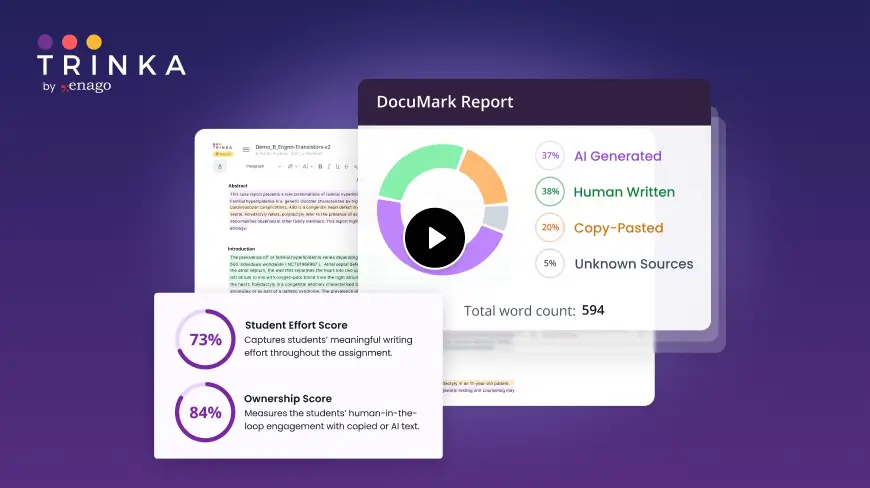
DocuMark: Responsible AI Use for Academic Integrity
Knowing your institution's AI policy is step one. DocuMark helps enforce it fairly by empowering universities to manage AI-generated content, prevent cheating, and support student writing through responsible AI use.
Common Questions About Philander Smith College's AI Policies
Philander Smith College has defined AI policies in 5 of 12 categories, with an overall coverage score of 42%.
Philander Smith College does not have a formal AI disclosure or attribution policy, but its plagiarism definition prohibits submitting AI-generated work as one's own. Unattributed submission of AI-generated work is treated as plagiarism and is subject to disciplinary action.
The provided sources do not state an AI-specific detection policy, but they do define general academic dishonesty rules and sanctions that would govern misconduct cases. Students are prohibited from using unauthorized materials or assistance, and faculty may assign penalties for violations ranging from failure on the work to failure of the course. In the CNA handbook, use of AI-generated work is expressly treated as plagiarism and can lead to disciplinary action, including dismissal from the program.
No explicit data protection or approved AI platform policy is currently defined in the available policy sources.