Teaching & Learning
- The policy treats unauthorized use of artificial intelligence as plagiarism under the Academic Honor Code
- Rollins College prohibits submitting AI-generated academic work as one’s own in coursework and other assigned work
Plagiarism. Offering the work of another as one’s own, including but not limited to turning in one’s own work completed for another course or assignment, in part or whole, as one’s own for a current assignment, with or without reusing or reformatting the original work; taking an examination for another student, or having another student take an examination for oneself; copying another student’s work; copying from another source such as a book, article, computer program, or website; using Artificial Intelligence (e.g. Chat GPT) and presenting the work as one’s own; or paraphrasing or otherwise using the words or ideas of another without proper acknowledgment. Plagiarism includes the unacknowledged use of materials prepared by another person or agency engaged in selling or otherwise distributing term papers, class notes, and other academic materials.
- Rollins College prohibits the unauthorized use of Artificial Intelligence applications or tools during any examination, quiz, or assignment, classifying it as a cheating violation under the Academic Honor Code
Cheating. Giving to or receiving from another any unauthorized assistance or information in any form or manner with respect to any examination, quiz, or assignment. This includes but is not limited to using books, notes, calculators, or other technology for unauthorized purposes during an examination, quiz, or assignment; copying from another student’s paper; allowing another student to copy from one’s own paper; unauthorized collaboration, and unauthorized use of any Artificial Intelligence applications/tools.
- Rollins College does not provide a separate programming-specific AI rule in the supplied sources
- However, unauthorized use of AI tools for assignments is prohibited under the cheating and plagiarism provisions, which would apply to coding assignments when AI use is not authorized
Cheating. Giving to or receiving from another any unauthorized assistance or information in any form or manner with respect to any examination, quiz, or assignment. This includes but is not limited to using books, notes, calculators, or other technology for unauthorized purposes during an examination, quiz, or assignment; copying from another student’s paper; allowing another student to copy from one’s own paper; unauthorized collaboration, and unauthorized use of any Artificial Intelligence applications/tools.
Plagiarism. Offering the work of another as one’s own, including but not limited to turning in one’s own work completed for another course or assignment, in part or whole, as one’s own for a current assignment, with or without reusing or reformatting the original work; taking an examination for another student, or having another student take an examination for oneself; copying another student’s work; copying from another source such as a book, article, computer program, or website; using Artificial Intelligence (e.g. Chat GPT) and presenting the work as one’s own; or paraphrasing or otherwise using the words or ideas of another without proper acknowledgment.
Research
Academic Integrity
- The supplied sources do not provide a detailed AI citation format, but they do require acknowledgment rather than undisclosed use
- Rollins requires proper acknowledgment when using another’s words or ideas, and presenting AI-generated work as one’s own is prohibited
Plagiarism. Offering the work of another as one’s own, including but not limited to turning in one’s own work completed for another course or assignment, in part or whole, as one’s own for a current assignment, with or without reusing or reformatting the original work; taking an examination for another student, or having another student take an examination for oneself; copying another student’s work; copying from another source such as a book, article, computer program, or website; using Artificial Intelligence (e.g. Chat GPT) and presenting the work as one’s own; or paraphrasing or otherwise using the words or ideas of another without proper acknowledgment.
- Rollins enforces unauthorized AI use through its Academic Honor Code process and classifies it as cheating or plagiarism depending on the conduct
- The supplied sources do not mention AI detection software, but they do define AI-related misconduct and connect violations to formal honor code procedures and penalties
Violations of the Academic Honor Code include: cheating, plagiarism, collusion, falsifying documents, and academic misconduct.
Cheating. Giving to or receiving from another any unauthorized assistance or information in any form or manner with respect to any examination, quiz, or assignment. This includes but is not limited to using books, notes, calculators, or other technology for unauthorized purposes during an examination, quiz, or assignment; copying from another student’s paper; allowing another student to copy from one’s own paper; unauthorized collaboration, and unauthorized use of any Artificial Intelligence applications/tools.
Plagiarism. Offering the work of another as one’s own, including but not limited to turning in one’s own work completed for another course or assignment, in part or whole, as one’s own for a current assignment, with or without reusing or reformatting the original work; taking an examination for another student, or having another student take an examination for oneself; copying another student’s work; copying from another source such as a book, article, computer program, or website; using Artificial Intelligence (e.g. Chat GPT) and presenting the work as one’s own; or paraphrasing or otherwise using the words or ideas of another without proper acknowledgment.
All Honor Council proceedings, records, and materials related to these proceedings, except final decisions, are confidential.
Institutional & Administrative
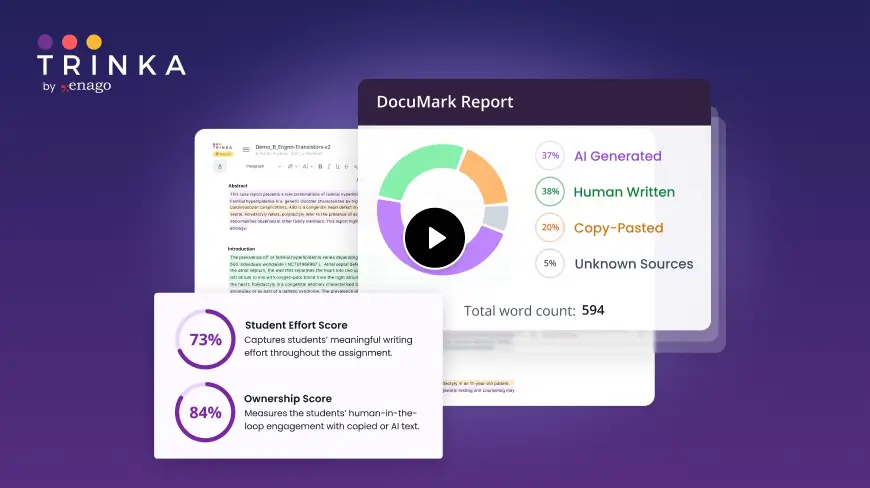
DocuMark: Responsible AI Use for Academic Integrity
Knowing your institution's AI policy is step one. DocuMark helps enforce it fairly by empowering universities to manage AI-generated content, prevent cheating, and support student writing through responsible AI use.
Common Questions About Rollins College's AI Policies
Rollins College has defined AI policies in 5 of 12 categories, with an overall coverage score of 42%.
Rollins requires proper acknowledgment when using another’s words or ideas, and presenting AI-generated work as one’s own is prohibited. The supplied sources do not provide a detailed AI citation format, but they do require acknowledgment rather than undisclosed use.
Rollins enforces unauthorized AI use through its Academic Honor Code process and classifies it as cheating or plagiarism depending on the conduct. The supplied sources do not mention AI detection software, but they do define AI-related misconduct and connect violations to formal honor code procedures and penalties.
No explicit data protection or approved AI platform policy is currently defined in the available policy sources.