Teaching & Learning
- Use of AI on graded coursework is governed by course- or assignment-specific instructor direction
- The university states that unauthorized AI use can be treated as academic misconduct, and students are responsible for following faculty expectations and citing AI when required
The use of AI tools for coursework is subject to individual faculty and departmental policies. Students should refer to their course syllabi and assignment guidelines for specific instructions regarding AI use.
Unauthorized use of AI-generated content in academic work may constitute plagiarism or cheating under SHU's Academic Integrity Policy.
Any use of AI-generated text, images, or code in your work should be acknowledged according to your instructor's requirements or citation style guidelines.
- The university does not set a separate AI rule specifically for exams in the provided sources
- However, exams and assessments fall under faculty or assignment rules, and unauthorized AI use may be treated as cheating under academic integrity policy
The use of AI tools for coursework is subject to individual faculty and departmental policies. Students should refer to their course syllabi and assignment guidelines for specific instructions regarding AI use.
Cheating includes but is not limited to, using, attempting to use, or assisting another in using unauthorized materials, information, technology or study aids in any academic exercise.
- The university also warns students not to enter sensitive or personal data into public AI systems
- AI tools are presented as permissible study-support resources for brainstorming, explanation, tutoring, and practice, but students are expected to verify accuracy and use them responsibly
AI tools can support your academic work, but it's important to use them ethically and in alignment with course policies and university expectations.
Examples of Acceptable Uses:
• Brainstorming ideas for papers or projects
• Clarifying concepts or getting tutoring support
• Generating study guides or practice questions
• Assisting with grammar or formatting (if permitted)
Always verify AI-generated content for accuracy and appropriateness.
Do not upload or share personal, confidential, or sensitive university information in public AI tools.
- AI-generated code may be used only within instructor or assignment rules, and any such use should be acknowledged when required
- The university explicitly includes code among the kinds of AI-generated content that may trigger disclosure expectations and academic integrity concerns
Any use of AI-generated text, images, or code in your work should be acknowledged according to your instructor's requirements or citation style guidelines.
Unauthorized use of AI-generated content in academic work may constitute plagiarism or cheating under SHU's Academic Integrity Policy.
Research
- The library guidance also directs users to acknowledge and cite any generative AI use in scholarly writing
- The graduate handbook prohibits submitting work written wholly or partly by AI as one's own and requires graduate students to follow their program's rules and citation standards when using AI in writing-related work
Submitting, without proper attribution, by oneself or with others, any materials created wholly or in part by artificial intelligence, as one’s own.
For the use of AI, students are expected to follow all departmental or school guidelines and those noted by the course instructor in the syllabus. Citation of AI should follow the requirements of the discipline and expectation of faculty.
If you use GenAI in any step of your writing process, from idea generation to final polishing, acknowledge and cite your use. Citation recommendations in APA, MLA, and Chicago/Turabian are listed below.
- The university requires caution with AI when handling research-related information because institutional data controls apply
- Public AI tools cannot be used for confidential or restricted data, while Microsoft Copilot is approved for certain internal data classifications but not for highly restricted information
Data entered into public or consumer-grade AI tools (e.g., standard ChatGPT, Google Bard, etc.) should not include confidential, sensitive, or restricted university information.
Copilot can securely access and process internal data classified as Public, Internal Use, and Sensitive, but it is not approved for use with Restricted data unless explicitly stated.
- The closest related statements are general academic integrity and attribution expectations rather than research-ethics-specific rules
- The provided sources do not define a specific university-wide AI policy for grant proposals, IRB applications, or formal research ethics declarations
not defined
Academic Integrity
- Disclosure of AI use is required when instructors or disciplinary conventions require it
- The university directs students to acknowledge AI-generated text, images, or code and the library provides citation guidance for APA, MLA, and Chicago/Turabian
Any use of AI-generated text, images, or code in your work should be acknowledged according to your instructor's requirements or citation style guidelines.
If you use GenAI in any step of your writing process, from idea generation to final polishing, acknowledge and cite your use. Citation recommendations in APA, MLA, and Chicago/Turabian are listed below.
Citation of AI should follow the requirements of the discipline and expectation of faculty.
- Undisclosed or unauthorized AI use can be enforced through the university's academic integrity process as plagiarism or cheating
- The graduate handbook expressly treats submitting AI-created material as one's own, without attribution, as misconduct, but the provided sources do not define a university stance on specific AI detection tools
Unauthorized use of AI-generated content in academic work may constitute plagiarism or cheating under SHU's Academic Integrity Policy.
Plagiarism consists of intentionally or knowingly representing the words or ideas of another as one’s own in any academic exercise.
Cheating includes but is not limited to, using, attempting to use, or assisting another in using unauthorized materials, information, technology or study aids in any academic exercise.
Submitting, without proper attribution, by oneself or with others, any materials created wholly or in part by artificial intelligence, as one’s own.
Institutional & Administrative
- The available AI guidance is directed mainly to students and general platform/data-use information
- The provided sources do not define a dedicated policy for faculty or staff use of AI in grading, feedback, recommendation letters, or administrative work
not defined
- The university sets explicit data-protection rules for AI use and distinguishes between approved and public tools
- The university also offers institutionally supported ChatGPT access through service request channels and references ChatGPT Edu information
- Public AI tools must not receive confidential, sensitive, or restricted university information; Microsoft Copilot is approved for Public, Internal Use, and Sensitive data, while Restricted data is excluded unless explicitly authorized
Do not upload or share personal, confidential, or sensitive university information in public AI tools.
Data entered into public or consumer-grade AI tools (e.g., standard ChatGPT, Google Bard, etc.) should not include confidential, sensitive, or restricted university information.
Copilot can securely access and process internal data classified as Public, Internal Use, and Sensitive, but it is not approved for use with Restricted data unless explicitly stated.
No PHI, PCI, or other regulated/restricted data should be entered into Copilot.
If you need access to a supported AI platform, submit a request through the SHU IT service catalog.
- No explicit university-wide AI governance body or strategic plan is stated in the provided materials
- The university presents general responsible-use guidance and directs users to institutionally supported AI services, but the provided sources do not define an overarching AI governance framework, committee structure, or formal university strategy roadmap
AI tools can support your academic work, but it's important to use them ethically and in alignment with course policies and university expectations.
If you need access to a supported AI platform, submit a request through the SHU IT service catalog.
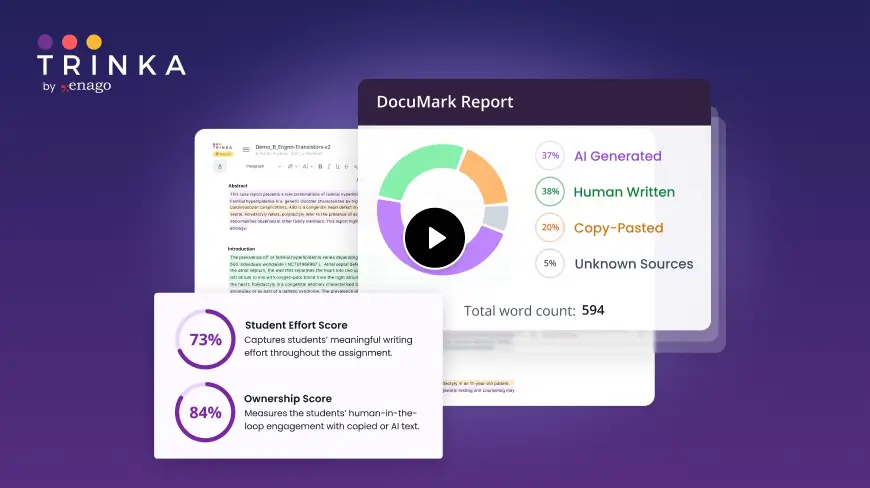
DocuMark: Responsible AI Use for Academic Integrity
Knowing your institution's AI policy is step one. DocuMark helps enforce it fairly by empowering universities to manage AI-generated content, prevent cheating, and support student writing through responsible AI use.
Common Questions About Sacred Heart University's AI Policies
Sacred Heart University has defined AI policies in 12 of 12 categories, with an overall coverage score of 100%.
Disclosure of AI use is required when instructors or disciplinary conventions require it. The university directs students to acknowledge AI-generated text, images, or code and the library provides citation guidance for APA, MLA, and Chicago/Turabian.
Undisclosed or unauthorized AI use can be enforced through the university's academic integrity process as plagiarism or cheating. The graduate handbook expressly treats submitting AI-created material as one's own, without attribution, as misconduct, but the provided sources do not define a university stance on specific AI detection tools.
The university sets explicit data-protection rules for AI use and distinguishes between approved and public tools. Public AI tools must not receive confidential, sensitive, or restricted university information; Microsoft Copilot is approved for Public, Internal Use, and Sensitive data, while Restricted data is excluded unless explicitly authorized. The university also offers institutionally supported ChatGPT access through service request channels and references ChatGPT Edu information.