Teaching & Learning
- Use of generative AI in coursework is governed by existing academic integrity rules and course-level standards set by the faculty member
- The university requires citation and disclosure when generative AI is used, but it does not provide a separate university-wide rule in the provided sources specifically permitting or prohibiting AI for graded assignments
Ethical Use. The utilization of GenAI shall be done in accordance with all existing policies, guidelines, standards, and norms.
Transparency. Proper citation and disclosure are required when GenAI has been utilized.
The Faculty Member for each course is responsible for setting and clarifying the academic integrity standards for that course within the course syllabus.
- The provided sources do not set an AI-specific rule for exams or assessments
- Exam-related academic integrity expectations are left to existing misconduct rules and to faculty members, who set standards for their courses in the syllabus
Ethical Use. The utilization of GenAI shall be done in accordance with all existing policies, guidelines, standards, and norms.
The Faculty Member for each course is responsible for setting and clarifying the academic integrity standards for that course within the course syllabus.
- The university encourages students to learn how to engage critically with generative AI and states that AI tools may assist and support innovation
- However, the provided sources do not define a specific policy for personal study assistance beyond the general requirements to use AI ethically, accurately, and with accountability
South Dakota Mines seeks to harness the power of and embrace the ethical and responsible use of GenAI across the institution.
Providing a quality and relevant STEM curriculum that educates students about how to critically engage with GenAI.
Innovation. GenAI tools may be appropriate to assist, augment, inspire, and support innovation; they shall not be utilized autonomously.
Accountability. GenAI tools are not infallible. Users of GenAI tools understand their responsibility to comply with all laws, policies, standards, and norms; ensure the accuracy of any GenAI-assisted works; understand the limitations of GenAI; and that they shall be held accountable for their actions.
Research
- The provided sources do not establish a separate research-writing rule for manuscripts, theses, or dissertations beyond these institution-wide principles
- For research writing, the university requires citation and disclosure when generative AI is used and says users are responsible for the accuracy of AI-assisted work
Transparency. Proper citation and disclosure are required when GenAI has been utilized.
Accountability. GenAI tools are not infallible. Users of GenAI tools understand their responsibility to comply with all laws, policies, standards, and norms; ensure the accuracy of any GenAI-assisted works; understand the limitations of GenAI; and that they shall be held accountable for their actions.
Innovation. GenAI tools may be appropriate to assist, augment, inspire, and support innovation; they shall not be utilized autonomously.
- The provided sources do not define specific rules on AI for data collection, statistical analysis, synthetic data, or interpretation of results
- The university's institution-wide AI principles apply to research data and analysis by requiring ethical use, user accountability, and accuracy review of AI-assisted work
Ethical Use. The utilization of GenAI shall be done in accordance with all existing policies, guidelines, standards, and norms.
Accountability. GenAI tools are not infallible. Users of GenAI tools understand their responsibility to comply with all laws, policies, standards, and norms; ensure the accuracy of any GenAI-assisted works; understand the limitations of GenAI; and that they shall be held accountable for their actions.
Innovation. GenAI tools may be appropriate to assist, augment, inspire, and support innovation; they shall not be utilized autonomously.
- Research-related AI use is tied to responsible conduct requirements
- The AI guidance also requires ethical use, citation and disclosure, and accountability for accuracy
- The university requires Responsible Conduct of Research training for faculty, staff, students, and other personnel supported by externally funded research projects, and places responsibility on the principal investigator to ensure training and oversight
All South Dakota Mines students and personnel who receive support or who cost share wages as part of an externally funded research project are required to receive RCR training through CITI.
It is the responsibility of the institutional principal investigator (PI) to ensure that RCR training and oversight occur for faculty, staff and students involved on their project(s).
Ethical Use. The utilization of GenAI shall be done in accordance with all existing policies, guidelines, standards, and norms.
Transparency. Proper citation and disclosure are required when GenAI has been utilized.
Accountability. GenAI tools are not infallible. Users of GenAI tools understand their responsibility to comply with all laws, policies, standards, and norms; ensure the accuracy of any GenAI-assisted works; understand the limitations of GenAI; and that they shall be held accountable for their actions.
Academic Integrity
- The university requires disclosure and citation whenever generative AI is used
- This is stated as a general institutional requirement and is not limited in the provided sources to any one type of academic or research submission
Transparency. Proper citation and disclosure are required when GenAI has been utilized.
- The provided sources do not mention AI detection tools
- For enforcement, suspected cheating or plagiarism is handled through the academic misconduct process, and faculty may seek academic consequences while the Community Standards Office may impose conduct sanctions
If a Faculty Member has a reason to believe you might have cheated or plagiarized work in their course, they will reach out to you to set up a meeting.
This information may be used when determining academic consequences (such as issuing a failing grade in the course).
By signing the form, you waive the right to appeal both the fact that you engaged in the Academic Misconduct and the academic consequence. This form is then sent to the Community Standards Office by the Faculty Member. After reviewing the form, a Student Conduct Officer will assess appropriate conduct sanctions to you via a letter to your student email.
Institutional & Administrative
- All use must follow existing policies, and AI-assisted work must be reviewed for accuracy rather than used autonomously
- The university supports faculty and staff use of generative AI by committing to provide resources, support, access, and training
- Faculty are specifically supported in developing skill and knowledge for teaching with AI, and employees are to receive access to and training on AI tools
The success of all faculty by providing the resources and support to develop faculty skill and knowledge about how to teach utilizing GenAI.
Reducing employee burden and workload while maximizing productivity and efficiency by providing all employees with access to and training on GenAI.
Ethical Use. The utilization of GenAI shall be done in accordance with all existing policies, guidelines, standards, and norms.
Accountability. GenAI tools are not infallible. Users of GenAI tools understand their responsibility to comply with all laws, policies, standards, and norms; ensure the accuracy of any GenAI-assisted works; understand the limitations of GenAI; and that they shall be held accountable for their actions.
Innovation. GenAI tools may be appropriate to assist, augment, inspire, and support innovation; they shall not be utilized autonomously.
- The provided sources do not name approved AI platforms or define data-classification rules for AI inputs
- They do state that AI use must comply with existing policies and that ITS regularly monitors use of computing, networking, and other resources to maintain compliance with applicable rules and procedures
Ethical Use. The utilization of GenAI shall be done in accordance with all existing policies, guidelines, standards, and norms.
Information Technology Services (ITS) provides computing, networking, and other technology enhanced services to the South Dakota Mines community. ITS endeavors to balance freedom of access with a safe and secure environment for our constituents. Director of ITS will maintain compliance with rules, regulations and procedures mandated by the federal and state governments, Board of Regents and Mines by regularly monitoring the usage of computing, networking and other resources and services.
All computing and networked systems controlled or managed by Mines ITS and all Mines personnel (faculty, staff, students, and other approved users).
- South Dakota Mines has an institution-wide AI strategy centered on embracing ethical and responsible use of generative AI across the institution
- It commits to curriculum development, faculty support, employee access and training, required transparency, accountability, equal access, non-autonomous use, and ongoing monitoring and updates to its guiding principles
South Dakota Mines seeks to harness the power of and embrace the ethical and responsible use of GenAI across the institution.
Specifically, the institution is committed to:
- Providing a quality and relevant STEM curriculum that educates students about how to critically engage with GenAI.
- The success of all faculty by providing the resources and support to develop faculty skill and knowledge about how to teach utilizing GenAI.
- Reducing employee burden and workload while maximizing productivity and efficiency by providing all employees with access to and training on GenAI.
The following principles outline the standards we expect all members of the South Dakota Mines community to adhere to.
Equitable Access. Adoption of GenAI tools shall be done in such a way as to ensure that all members of the South Dakota Mines community benefit from equal access to the same quality tools. Further, all members of the South Dakota Mines shall be supported in their training, knowledge acquisition, and skill development regarding the appropriate use of GenAI tools.
Monitoring and Improvement. Given the rapidly evolving nature of GenAI, the use of GenAI tools shall be regularly monitored and assessed, and these Guiding Principles updated accordingly.
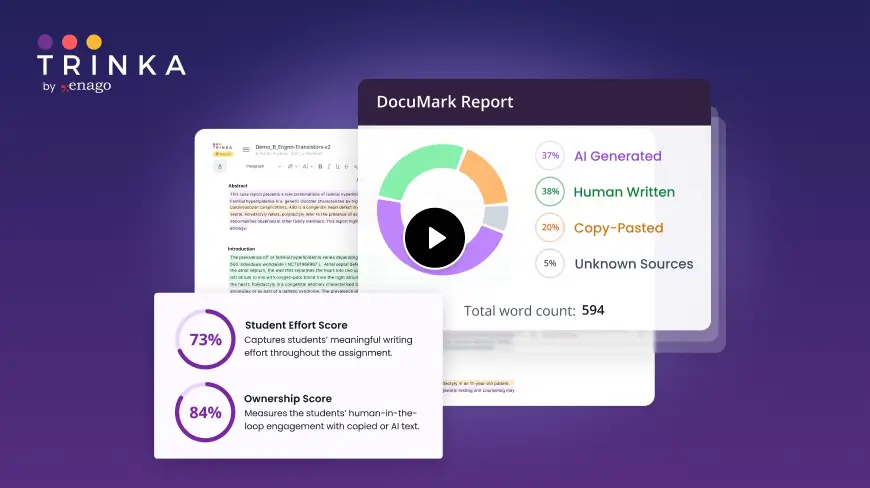
DocuMark: Responsible AI Use for Academic Integrity
Knowing your institution's AI policy is step one. DocuMark helps enforce it fairly by empowering universities to manage AI-generated content, prevent cheating, and support student writing through responsible AI use.
Common Questions About South Dakota School of Mines and Technology's AI Policies
South Dakota School of Mines and Technology has defined AI policies in 11 of 12 categories, with an overall coverage score of 92%.
The university requires disclosure and citation whenever generative AI is used. This is stated as a general institutional requirement and is not limited in the provided sources to any one type of academic or research submission.
The provided sources do not mention AI detection tools. For enforcement, suspected cheating or plagiarism is handled through the academic misconduct process, and faculty may seek academic consequences while the Community Standards Office may impose conduct sanctions.
The provided sources do not name approved AI platforms or define data-classification rules for AI inputs. They do state that AI use must comply with existing policies and that ITS regularly monitors use of computing, networking, and other resources to maintain compliance with applicable rules and procedures.