Teaching & Learning
- Generative AI use in graded coursework is prohibited unless the instructor specifically approves it in writing or in the course syllabus
- The available evidence appears to come from Southern Regional Technical College rather than Southwest Georgia Technical College, so this policy should be treated as unverified for the named institution
Presenting work generated or materially modified by AI without the course instructor's permission constitutes academic dishonesty.
Although permissible artificial intelligence use on student work may vary across courses and instructors, there are institutional principles for AI use in any coursework:
1. Unless specifically approved by the instructor in writing or in the course syllabus, the use of generative AI results is prohibited in an examination, or any work submitted for evaluation and/or a grade.
Faculty members will determine the appropriate role of AI in their courses and will provide specific guidelines for its use.
- Use of generative AI in examinations is prohibited unless the instructor has specifically approved it in writing or in the course syllabus
- The available evidence appears to come from Southern Regional Technical College rather than Southwest Georgia Technical College, so this policy should be treated as unverified for the named institution
Unless specifically approved by the instructor in writing or in the course syllabus, the use of generative AI results is prohibited in an examination, or any work submitted for evaluation and/or a grade.
Use and/or possession of unauthorized material or technology during an examination, or any other written or oral work submitted for evaluation and/or a grade such as tape cassettes, notes, tests, calculators, computer programs, cell phones and/or smart phones, or other electronic devices.
- Based on the available evidence, AI may support learning when used ethically
- However, the source documents appear to originate from Southern Regional Technical College rather than Southwest Georgia Technical College, so this policy status cannot be confirmed for the named institution
The use of Artificial Intelligence (AI) offers numerous ways to support a student's education.
The Radiologic Technology Program recognizes the potential of generative AI technologies, such as ChatGPT, to enhance education and professional development. These tools can support learning, improve critical thinking, and assist in understanding complex topics. However, their use must align with the program's educational objectives, ethical standards, and the commitment to academic integrity.
Faculty wish to provide a safe space to discuss ethical uses of AI within this program and are open to discussions with students on when the use is acceptable.
Generative AI should supplement learning, not replace critical thinking, hands-on experience, or independent effort.
Research
Academic Integrity
- Students are required to disclose AI use by citing the AI system and documenting the prompts used for final assignment outcomes, and failure to acknowledge AI use is penalized as plagiarism
- The available evidence appears to come from Southern Regional Technical College rather than Southwest Georgia Technical College, so this policy should be treated as unverified for the named institution
Students must cite the AI system and document the relevant prompts used in their process and research for final assignment outcomes. Failure to acknowledge the use of AI models will be penalized as plagiarism.
Students are responsible for adhering to set guidelines and ensuring that any AI-generated content is used ethically and attributed appropriately. Both APA and MLA citation guidelines have been updated to offer citation structures for large language models.
This will require intentional transparency for both educators and students.
- The detection and enforcement policy for Southwest Georgia Technical College cannot be confirmed from the provided sources
- The evidence cited references SRTC, indicating the enforcement policy was extracted from Southern Regional Technical College documents rather than Southwest Georgia Technical College
Note: The following evidence references SRTC (Southern Regional Technical College) and may not apply to Southwest Georgia Technical College:
Presenting work generated or materially modified by AI without the course instructor's permission constitutes academic dishonesty. Using generative AI in a way that violates a course syllabus will be considered a violation of the Student Code of Conduct.
Students must cite the AI system and document the relevant prompts used in their process and research for final assignment outcomes. Failure to acknowledge the use of AI models will be penalized as plagiarism.
Any student found to have committed any of the following types of misconduct is subject to the disciplinary sanctions outlined in the SRTC Student Disciplinary Procedure.
Institutional & Administrative
- Full operational rules for faculty administrative AI use are not detailed in the available sources
- Faculty determine the appropriate role of AI in their courses and provide specific usage guidelines
- TCSG has adopted Policy 3.5.2, Responsible Use of Artificial Intelligence, setting protocols for AI deployment across all colleges and work units including Southwest Georgia Technical College
Faculty members will determine the appropriate role of AI in their courses and will provide specific guidelines for its use.
This will require intentional transparency for both educators and students.
The Technical College System of Georgia (TCSG) delineates the protocols for deployment of Artificial Intelligence (AI), Generative AI, Deep Learning and Machine Learning tools within all Colleges and Work Units associated with TCSG. As AI technology evolves and further integrates into daily business operations, it is imperative for TCSG to utilize AI in an ethical, trustworthy, and responsible manner.
- Evidence referencing SRTC indicates institutional data protection and AI platform rules were extracted from another college's documents
- The available evidence states that sensitive or patient-related information must not be entered into AI platforms, but this policy cannot be confirmed for Southwest Georgia Technical College from the provided sources
Note: 'SRTC' in the following refers to Southern Regional Technical College, not Southwest Georgia Technical College:
Access Equity: Any AI platform used by students to meet course requirements must be freely accessible or offered via SRTC-provided subscription.
The program emphasizes the importance of privacy and security when using AI tools. Sensitive or patient-related information must never be entered into AI platforms.
- Program-level governance evidence cited from southernregional.edu cannot be confirmed as belonging to Southwest Georgia Technical College and has been excluded
- TCSG approved Policy 3.5.2, Responsible Use of Artificial Intelligence, establishing system-wide AI governance protocols for affiliated colleges including Southwest Georgia Technical College
MOTION: Motion is to approve Policy 3.5.2.: Responsible Use of Artificial Intelligence. The Motion passed State Board approval unanimously.
The Technical College System of Georgia (TCSG) delineates the protocols for deployment of Artificial Intelligence (AI), Generative AI, Deep Learning and Machine Learning tools within all Colleges and Work Units associated with TCSG. As AI technology evolves and further integrates into daily business operations, it is imperative for TCSG to utilize AI in an ethical, trustworthy, and responsible manner.
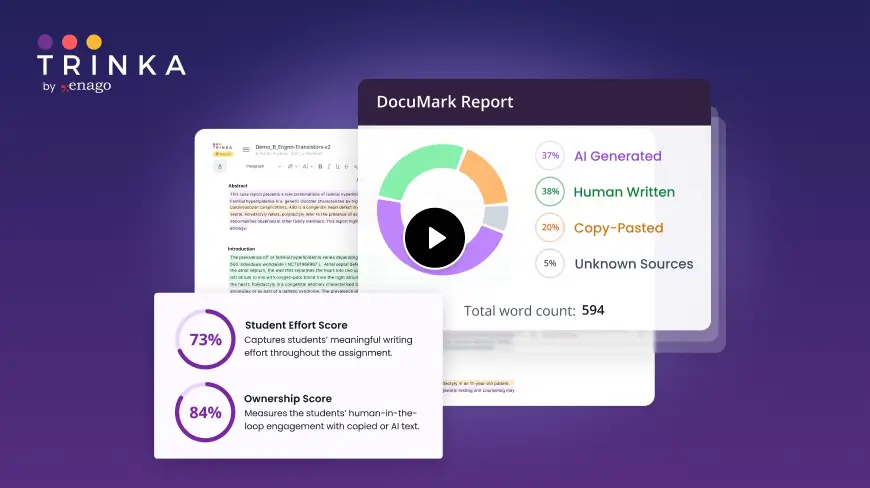
DocuMark: Responsible AI Use for Academic Integrity
Knowing your institution's AI policy is step one. DocuMark helps enforce it fairly by empowering universities to manage AI-generated content, prevent cheating, and support student writing through responsible AI use.
Common Questions About Southwest Georgia Technical College's AI Policies
Southwest Georgia Technical College has defined AI policies in 8 of 12 categories, with an overall coverage score of 67%.
Students are required to disclose AI use by citing the AI system and documenting the prompts used for final assignment outcomes, and failure to acknowledge AI use is penalized as plagiarism. The available evidence appears to come from Southern Regional Technical College rather than Southwest Georgia Technical College, so this policy should be treated as unverified for the named institution.
The evidence cited references SRTC, indicating the enforcement policy was extracted from Southern Regional Technical College documents rather than Southwest Georgia Technical College. The detection and enforcement policy for Southwest Georgia Technical College cannot be confirmed from the provided sources.
Evidence referencing SRTC indicates institutional data protection and AI platform rules were extracted from another college's documents. The available evidence states that sensitive or patient-related information must not be entered into AI platforms, but this policy cannot be confirmed for Southwest Georgia Technical College from the provided sources.