Teaching & Learning
- For coursework and other assessed work, AI use is not uniformly allowed or banned university-wide; it depends on the module and the examiner’s stated rules
- Students are told that using AI without disclosure can count as cheating when independent work was required, and that any permitted AI use must follow the examiner’s specifications and be documented transparently
Ob und inwieweit der Einsatz von KI-Werkzeugen in einer Prüfung gestattet ist, hängt von den Vorgaben der Prüfer*innen und den in den Modulen zu erwerbenden Kompetenzen ab.
Grundsätzlich gilt aber: Wenn die eigenständige Leistungserbringung vorausgesetzt wird und Studierende mit Hilfe von Künstlicher Intelligenz Texte generieren oder Lösungen erarbeiten und diese nicht offenlegen, kann dies als Täuschungsversuch bzw. Plagiat gewertet werden.
Falls in einem Modul KI-Werkzeuge genutzt werden dürfen, müssen Studierende unbedingt die entsprechenden Vorgaben der Lehrenden berücksichtigen.
Sie müssen die Verwendung von KI in ihren Arbeiten offenlegen und an den entsprechenden Textpassagen kenntlich machen.
As a rule, however, the following applies: If students use artificial intelligence to generate texts or work out solutions without disclosing this when they are expected to produce independent work, this may be regarded as an attempt to cheat or plagiarism.
- Use of AI in examinations and formal assessments is determined by the examiner and the competencies of the module, not by a blanket university-wide permission
- Where independent performance is required, undisclosed AI-supported answers can be treated as cheating or plagiarism, and students must follow any exam-specific rules and disclose allowed use
Der Einsatz von KI-gestützten Werkzeugen in Prüfungen kann nach den geltenden Prüfungsordnungen als Täuschungsversuch bewertet werden. Entscheidend sind insbesondere die Vorgaben der Prüfenden und die in den Modulen zu erwerbenden Kompetenzen.
Ob und inwieweit der Einsatz von KI-Werkzeugen in einer Prüfung gestattet ist, hängt von den Vorgaben der Prüfer*innen und den in den Modulen zu erwerbenden Kompetenzen ab.
Falls in einem Modul KI-Werkzeuge genutzt werden dürfen, müssen Studierende unbedingt die entsprechenden Vorgaben der Lehrenden berücksichtigen.
As a rule, however, the following applies: If students use artificial intelligence to generate texts or work out solutions without disclosing this when they are expected to produce independent work, this may be regarded as an attempt to cheat or plagiarism.
Whether and to what extent the use of AI tools is permitted in an examination depends on the specifications of the examiners and the competences to be acquired in the modules.
- However, the verified sources do not set a specific university-wide rule defining when students may use AI privately for non-graded study support
- TU Berlin encourages critical, reflective engagement with AI in teaching and learning contexts and provides guidance materials for using AI in university teaching
An der TU Berlin stehen wir vor der Herausforderung, den sinnvollen Einsatz von Künstlicher Intelligenz (KI) in der Lehre zu gestalten und dabei wichtige Aspekte wie Prüfungsformate, Datenschutz und akademische Integrität zu berücksichtigen.
Auf dieser Seite haben wir für Sie Hinweise und Ressourcen zusammengestellt, die Sie bei der Gestaltung Ihrer Lehre im Zusammenhang mit KI unterstützen sollen.
Not all topics listed are addressed comprehensively. We are constantly revising and adding to these pages, therefore, should you have any suggestions, comments or additions, please contact us.
Research
- For theses and scholarly writing, TU Berlin permits AI-assisted writing only with transparent disclosure and with human responsibility for the final text
- AI tools cannot be listed as authors, their use must be documented in the declaration of independence, and users remain responsible for checking content, citations, and possible plagiarism
All examination achievements completed with the aid of AI applications must be indicated and labelled as such. This includes all sections of the text or other forms of examination submission generated with AI. This requirement also applies if AI-based tools were used solely for proof-reading or translation purposes.
Please remember that AI systems are not authors in the sense of current law and generally cannot reliably indicate the provenance of generated content. Therefore, they may not be cited as sources and must not be listed as co-authors.
The declaration of independent work submitted with the thesis must include a statement specifying whether and in what form generative artificial intelligence was used in preparing the thesis.
Students remain fully responsible for the content of their thesis. This applies in particular to the correctness of all statements, references, quotations and citations, and to compliance with the principles of good scientific practice. AI-generated content may contain false, misleading or plagiarised information. It is therefore essential that all generated content be critically reviewed and independently verified before use.
- Where AI tools process data, the sources emphasize data protection, confidentiality, and careful review of outputs
- TU Berlin requires researchers to handle research data in ways consistent with legal requirements, ethical standards, and good scientific practice, but the verified sources do not define a specific AI rule for using AI in data analysis or synthetic data generation
The data processing principles according to the GDPR must also be considered if personal data is processed. Accordingly, only personal data should be uploaded if this processing is covered by a valid legal basis. If the processing is based on consent, consent must clearly state for which purpose and using which tool the personal data is being processed.
Confidential or personal data should not be entered into AI tools without permission and students should be made aware of this.
Generated results should always be critically reviewed. AI generated content can be inaccurate and contain false information or cite sources that do not exist. Use AI generated content with caution and always pay attention to anti-discrimination aspects and data protection.
- TU Berlin requires compliance with good scientific practice when AI is used in research-related writing and outputs
- Researchers and students remain personally responsible for accuracy, proper citation, and transparency, and AI-generated material must be critically checked because it may be false or plagiarized
Wissenschaftler*innen tragen die Verantwortung für den gesamten Inhalt ihrer Veröffentlichungen. Sie prüfen daher KI-generierte Ergebnisse sorgfältig und übernehmen nur nach sorgfältiger Prüfung die Verantwortung dafür.
Künstliche Intelligenz darf nicht als Autorin einer wissenschaftlichen Veröffentlichung genannt werden.
Students remain fully responsible for the content of their thesis. This applies in particular to the correctness of all statements, references, quotations and citations, and to compliance with the principles of good scientific practice. AI-generated content may contain false, misleading or plagiarised information. It is therefore essential that all generated content be critically reviewed and independently verified before use.
Researchers remain responsible for the integrity of their research-related outputs, irrespective of whether AI tools are used in their generation. This includes responsibility for the originality, validity, and proper attribution of any data, text, images, code, or analyses.
Academic Integrity
- TU Berlin requires disclosure when AI has been used in assessed academic work and theses
- Students must mark AI-generated passages, describe AI use in the declaration of independent work for theses, and should follow course-specific instructions on how to document AI assistance
Sie müssen die Verwendung von KI in ihren Arbeiten offenlegen und an den entsprechenden Textpassagen kenntlich machen.
All examination achievements completed with the aid of AI applications must be indicated and labelled as such. This includes all sections of the text or other forms of examination submission generated with AI. This requirement also applies if AI-based tools were used solely for proof-reading or translation purposes.
The declaration of independent work submitted with the thesis must include a statement specifying whether and in what form generative artificial intelligence was used in preparing the thesis.
There are different ways to make the use of GenAI transparent, e.g. documenting its use in the methodology section, in a footnote or in an appendix. The exact format is left to the teacher.
- TU Berlin states that undisclosed AI use can be treated as cheating or plagiarism when independent work is required
- The verified sources do not define a university-wide AI detection tool policy, but they do link AI misuse to existing examination misconduct rules and emphasize examiner discretion
Der Einsatz von KI-gestützten Werkzeugen in Prüfungen kann nach den geltenden Prüfungsordnungen als Täuschungsversuch bewertet werden.
Grundsätzlich gilt aber: Wenn die eigenständige Leistungserbringung vorausgesetzt wird und Studierende mit Hilfe von Künstlicher Intelligenz Texte generieren oder Lösungen erarbeiten und diese nicht offenlegen, kann dies als Täuschungsversuch bzw. Plagiat gewertet werden.
As a rule, however, the following applies: If students use artificial intelligence to generate texts or work out solutions without disclosing this when they are expected to produce independent work, this may be regarded as an attempt to cheat or plagiarism.
Institutional & Administrative
- Faculty are advised not to enter personal or confidential data into AI tools, to review outputs critically, and to communicate expectations clearly to students
- TU Berlin provides guidance for instructors using AI in teaching and leaves important implementation decisions, such as whether and how students may use AI, to teachers in many cases
Lehrende sollten mit Studierenden vorab besprechen, ob und wie der Einsatz von KI-Tools in Lehrveranstaltungen erlaubt bzw. sinnvoll ist. Hieraus lässt sich eine Orientierung für den Umgang mit KI in Prüfungen ableiten.
The exact format is left to the teacher.
Confidential or personal data should not be entered into AI tools without permission and students should be made aware of this.
Generated results should always be critically reviewed.
- TU Berlin requires compliance with data protection and confidentiality rules when using AI tools
- Personal or confidential data should not be entered without a valid legal basis or permission, and the verified sources do not identify a university-wide list of approved AI platforms
The data processing principles according to the GDPR must also be considered if personal data is processed. Accordingly, only personal data should be uploaded if this processing is covered by a valid legal basis. If the processing is based on consent, consent must clearly state for which purpose and using which tool the personal data is being processed.
Confidential or personal data should not be entered into AI tools without permission and students should be made aware of this.
Please also note data protection and copyright issues when using AI applications.
- The materials present AI as an area requiring ongoing review, support, and adaptation
- TU Berlin has institution-level guidance and support resources addressing AI in teaching, academic practice, and legal compliance, but the verified sources do not set out a single comprehensive university AI strategy or roadmap
An der TU Berlin stehen wir vor der Herausforderung, den sinnvollen Einsatz von Künstlicher Intelligenz (KI) in der Lehre zu gestalten und dabei wichtige Aspekte wie Prüfungsformate, Datenschutz und akademische Integrität zu berücksichtigen.
Auf dieser Seite haben wir für Sie Hinweise und Ressourcen zusammengestellt, die Sie bei der Gestaltung Ihrer Lehre im Zusammenhang mit KI unterstützen sollen.
Not all topics listed are addressed comprehensively. We are constantly revising and adding to these pages, therefore, should you have any suggestions, comments or additions, please contact us.
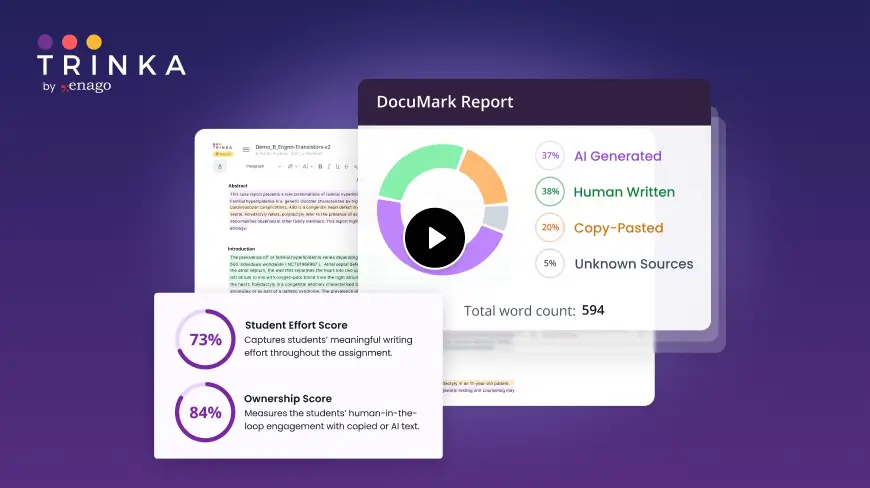
DocuMark: Responsible AI Use for Academic Integrity
Knowing your institution's AI policy is step one. DocuMark helps enforce it fairly by empowering universities to manage AI-generated content, prevent cheating, and support student writing through responsible AI use.
Common Questions About TU Berlin's AI Policies
TU Berlin has defined AI policies in 11 of 12 categories, with an overall coverage score of 92%.
TU Berlin requires disclosure when AI has been used in assessed academic work and theses. Students must mark AI-generated passages, describe AI use in the declaration of independent work for theses, and should follow course-specific instructions on how to document AI assistance.
TU Berlin states that undisclosed AI use can be treated as cheating or plagiarism when independent work is required. The verified sources do not define a university-wide AI detection tool policy, but they do link AI misuse to existing examination misconduct rules and emphasize examiner discretion.
TU Berlin requires compliance with data protection and confidentiality rules when using AI tools. Personal or confidential data should not be entered without a valid legal basis or permission, and the verified sources do not identify a university-wide list of approved AI platforms.