Teaching & Learning
- The source does not define any AI-specific rules for using AI on coursework or graded assignments
- It only states that students must follow academic integrity rules in their syllabus and institutional guidelines
2. Academic Integrity: Students must adhere to the academic integrity policies outlined in their course syllabus and institutional guidelines.
Research
Academic Integrity
- The source does not provide any AI-specific disclosure or citation rules
- It only requires students to follow academic integrity policies in their course syllabus and institutional guidelines
2. Academic Integrity: Students must adhere to the academic integrity policies outlined in their course syllabus and institutional guidelines.
- The policy also says students must follow academic integrity rules in their syllabus and institutional guidelines
- The source states that assignment content is shared with Turnitin for plagiarism checks, but it does not define any AI detection policy or AI-specific enforcement process
* Turnitin: Only assignment content is shared with Turnitin for plagiarism checks; personal data is not shared.
2. Academic Integrity: Students must adhere to the academic integrity policies outlined in their course syllabus and institutional guidelines.
Institutional & Administrative
- The source prohibits sharing confidential information in uLearn and describes what third-party integrations handle user data
- It states that Turnitin receives assignment content for plagiarism checks, uLearn does not share personal data except through listed integrations, and interactions with third-party services are encrypted
1. Acceptable Use: uLearn is for academic purposes only. Misuse, such as inappropriate behavior or sharing confidential information, is prohibited.
* Turnitin: Only assignment content is shared with Turnitin for plagiarism checks; personal data is not shared.
3. Data Sharing: uLearn does not share personal data with third parties, except for integration with Google, Microsoft, or Turnitin, which is governed by their privacy policies.
4. Security: uLearn uses encryption for all interactions with third-party services to ensure the protection of student data.
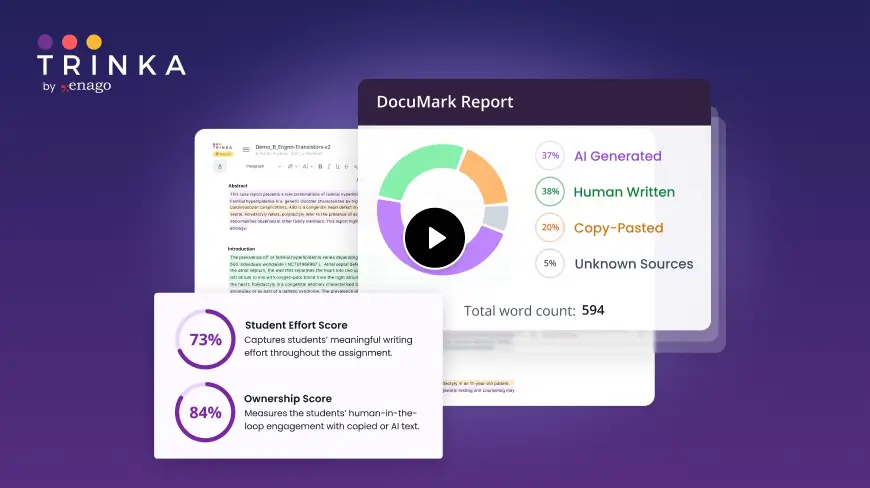
DocuMark: Responsible AI Use for Academic Integrity
Knowing your institution's AI policy is step one. DocuMark helps enforce it fairly by empowering universities to manage AI-generated content, prevent cheating, and support student writing through responsible AI use.
Common Questions About Union College Kentucky's AI Policies
Union College Kentucky has defined AI policies in 4 of 12 categories, with an overall coverage score of 33%.
The source does not provide any AI-specific disclosure or citation rules. It only requires students to follow academic integrity policies in their course syllabus and institutional guidelines.
The source states that assignment content is shared with Turnitin for plagiarism checks, but it does not define any AI detection policy or AI-specific enforcement process. The policy also says students must follow academic integrity rules in their syllabus and institutional guidelines.
The source prohibits sharing confidential information in uLearn and describes what third-party integrations handle user data. It states that Turnitin receives assignment content for plagiarism checks, uLearn does not share personal data except through listed integrations, and interactions with third-party services are encrypted.